Berberine Benefits: What Human Studies Actually Show
Explore berberine benefits for blood sugar, cholesterol, weight and gut health, with human trial results, 2026 updates, safety and formulation differences.
 By
Dr. Khaled Mahmoud, MBBCh
Critical Care Medicine, Longevity Science & Editorial Direction
 Reviewed by
Dr. Amr Yasser, PhD
Cardiometabolic, Musculoskeletal, Gut & Bioavailability
 Reviewed by
Dr. Abdulla Mostafa, PhD
Cellular Senescence, Neurological, Mitochondrial & Brain-Ageing Biology
- Published
- Last reviewed
- Reading time
- 10 min
- Sources cited
- 33

On this page
Berberine benefits are best supported by human research on blood glucose and blood lipids. That makes it an interesting metabolic supplement, particularly when the goal is measurable rather than vague: fasting glucose, HbA1c, LDL cholesterol or apolipoprotein B. The evidence for large weight loss, fertility treatment and longer human life is much less secure. [1] [2]
The useful question is not whether berberine “works” in every situation. It is which preparation was tested, in whom, against what comparator, and for which outcome. A capsule can be well made while a particular health claim remains uncertain.
What is berberine?
Berberine is a naturally occurring alkaloid found in several plants, including species of Berberis and Coptis. Supplements often use the hydrochloride salt, written as berberine HCl. It is not a vitamin, a probiotic or a GLP-1 receptor agonist. A traditional plant preparation, a standardized HCl capsule and an enhanced-delivery complex also need not deliver the same exposure. [3] [4]
That distinction matters because many articles borrow results from one preparation to sell another. Berberine combined with cinnamon, a phospholipid complex and the investigational compound berberine ursodeoxycholate each have their own evidence. Their findings cannot automatically be credited to a plain capsule. [5] [6]
The benefits at a glance
| Goal | What human research suggests | What remains unproven |
|---|---|---|
| Blood sugar | Improvements in glucose and HbA1c in several diabetes trials | Replacement for prescribed treatment or prevention of complications |
| Cholesterol | Reductions in selected atherogenic lipid markers | The same reduction in heart attacks demonstrated for established therapies |
| Weight management | Small average effects in pooled studies | Large, predictable transformations or selective belly-fat loss |
| Fatty liver | Earlier encouraging findings, with an important later null trial | Reliable liver-fat reduction across populations or fibrosis reversal |
| Digestive conditions | Condition-specific trials, including IBS-D and post-polypectomy recurrence | A universal gut reset or treatment for every cause of bloating |
| PCOS | Historical metabolic signals with substantial uncertainty | Reliable fertility improvement or a safe pregnancy regimen |
| Longevity | Mechanistic and animal findings | Longer human lifespan |
These categories summarize different studies rather than seven benefits established in one trial. [7] [8] [9] [10] [11] [12] [13]
Blood sugar: the strongest practical reason to investigate berberine
A 2008 placebo-controlled trial randomized 116 people with type 2 diabetes and dyslipidemia to berberine or placebo for three months. Glucose, HbA1c and several lipid measures improved more with berberine. In the active arm, HbA1c moved from approximately 7.5% to 6.6%. That 0.9-percentage-point change describes the active group; it should not be presented as the placebo-adjusted effect. [1]
The larger PREMOTE trial adds a useful perspective. In 409 participants with newly diagnosed diabetes, berberine-containing groups had greater HbA1c reductions than placebo. However, placebo participants improved too. The reported changes were approximately -0.99 percentage points with berberine alone and -0.59 with placebo, a difference of about 0.40 percentage points. The study also included antibiotic pretreatment, which matters when interpreting its microbiome findings. [14]
These results support a real research signal. They do not mean a person with already normal glucose needs to push it lower. Nor do they establish that berberine prevents kidney disease, eye disease or cardiovascular events. Our blood-sugar guide separates those questions.
Cholesterol: look beyond one impressive percentage
An early study in people with high cholesterol helped establish interest in berberine and LDL-receptor regulation. More recent placebo-controlled research has examined LDL, apoB and other lipid fractions. ApoB is useful because it reflects the number of atherogenic lipoprotein particles rather than simply the cholesterol carried inside them. [15] [2]
The 2026 BRAVO trial illustrates why endpoints deserve separate treatment. It found no significant improvement in its primary fat outcomes, but reported modest reductions in LDL cholesterol and apoB. A study can therefore be disappointing for a weight-related claim while still contributing interesting lipid evidence. Secondary findings remain less definitive when multiple outcomes are tested. [10]
People taking statins or other medicines should assess the interaction question before combining products. A lower LDL measurement is not permission to stop treatment. See the cholesterol evidence and interaction guide.
Weight loss: a modest signal, not a promised transformation
An updated meta-analysis of 23 articles estimated an average body-weight reduction of about 0.88 kg relative to comparison groups. That is roughly 1.9 lb. The pooled estimate combines different populations and regimens; it is not an expected result for every buyer. [9]
BRAVO then tested 1 g/day of berberine for six months in 337 diabetes-free adults with obesity and metabolic dysfunction-associated steatotic liver disease, or MASLD. It did not significantly improve CT-measured visceral fat or liver fat compared with placebo. Those are particularly relevant findings for the popular “belly-fat burner” story. [10]
An improvement in insulin signaling does not mathematically guarantee substantial fat loss. Appetite, energy intake, activity, sleep, medicines and the underlying metabolic condition all influence body weight. Our weight-loss article covers results, timelines and before-and-after claims together.
Gut health: the diagnosis changes the answer
Berberine's relatively low circulating exposure has encouraged research into intestinal actions. But a changed stool microbiome is not automatically a healthier person. Human trials need to connect those changes to relevant symptoms or clinical outcomes. PREMOTE did this in a diabetes setting; its findings should not be relabeled a universal microbiome upgrade. [14]
A randomized study in diarrhea-predominant irritable bowel syndrome reported improvements in selected symptoms. Separately, a large trial after colorectal polyp removal found fewer recurrent adenomas with berberine. Those findings concern different diagnoses, doses and outcomes. Neither establishes that berberine treats unexplained bloating, constipation, fungal infection or every form of IBS. [11] [16]
The six-year adenoma follow-up was a post-treatment observational extension, not six additional years of randomized daily supplementation. It also does not remove the need for surveillance colonoscopy. [17]
PCOS and fertility need a more careful reading
Older PCOS studies reported metabolic and hormonal changes, but a 2026 integrity-based reappraisal raised unresolved concerns about the trials eligible for its particular synthesis. Its conclusions cannot fairly be reduced to “all research is fraudulent”; equally, older positive summaries should not ignore it. [12]
A separate 644-participant fertility trial found that adding berberine to letrozole did not improve live births over letrozole alone. Changes in insulin or testosterone are not equivalent to a higher live-birth probability. Pregnancy safety is a separate question again. [18]
AMPK and longevity: a mechanism is a starting point
AMPK helps cells respond to energy availability. Experimental work links berberine to mitochondrial complex-I inhibition and changes in cellular energy signaling. Describing this as an exercise-like molecular signal does not establish exercise-like benefits for strength, fitness or lifespan. [19]
Mouse and worm lifespan studies justify further investigation, but they cannot supply a human longevity dose or a number of extra years. Context also matters: a mouse experiment in the Data Center reported increased liver lipid accumulation under its specific conditions despite AMPK activation. One pathway cannot serve as a universal benefit certificate. [13] [20] [21]
Dose, tolerability and quality determine whether a product makes sense
Several metabolic studies used divided doses totaling about 1,000–1,500 mg/day. Other indications used different regimens, and newer formulations may be studied at different active amounts. Research doses are exposure descriptions, not instructions to increase your intake. See the dosage guide for the full comparison. [1] [22] [4]
Gastrointestinal effects are the most frequent practical problem. Medicines add another consideration: repeated berberine use has inhibited several drug-metabolizing enzymes in a human probe study, and interaction studies have documented increased cyclosporine exposure. Pregnancy, breastfeeding and infant exposure require particular caution. [23] [24] [25]
Product quality is meaningful without proving efficacy. A historical assay of commercial products found substantial label-potency variation. It cannot rank today's brands, but it explains why a clear label and a batch-specific certificate of analysis matter more than a large number on the front of a bottle. [26]
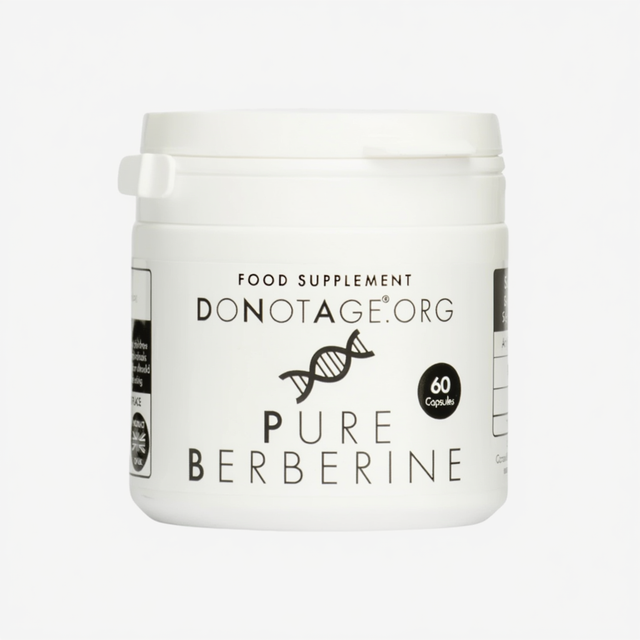
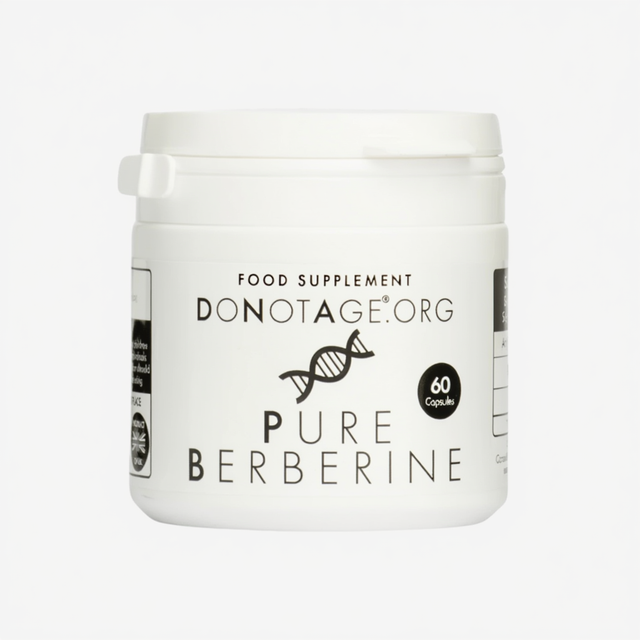
For readers comparing a straightforward 500 mg capsule, our DoNotAge Berberine review explains the formulation, manufacturer-reported testing and value. Biohack Blueprint earns commission from qualifying purchases through its affiliate links. The recommendation concerns product selection; the clinical evidence described here concerns the studied preparations.
How strong is the evidence for each claim?
The strongest-looking design is not automatically the most useful paper. A large review may pool many small or poorly described trials, while a single well-conducted placebo comparison may answer a narrower question more reliably. An animal mechanism can be rigorous and still fail to establish a human benefit.
Use four questions when assessing a benefit. First, was the outcome actually measured in humans? Second, was the intervention berberine alone or a combination? Third, was the finding a difference from a credible control? Finally, is the outcome meaningful for the person considering use?
The 2025 overview of systematic reviews and the earlier umbrella review are useful maps, but they do not make every included endpoint equally certain. Reviews may overlap substantially in their underlying trials. Counting each review as a fresh group of participants exaggerates the apparent amount of independent evidence. [27] [28]
A timeline of the clinical evidence
| Period or study | What changed in the evidence | Why it matters now |
|---|---|---|
| 2004 cholesterol work | Human lipid observations paired with mechanistic research | Started interest, but does not supply a universal expected percentage |
| 2008 metabolic trials | Comparative and placebo-controlled glucose evidence | Supports clinical investigation while requiring comparator-aware interpretation |
| 2015 fatty-liver trial | Encouraging liver-fat finding with lifestyle intervention | Its open-label design and cointervention must remain visible |
| PREMOTE | Larger randomized diabetes study with microbial analyses | Connects a clinical endpoint with a specific gut-metabolism hypothesis |
| Adenoma-recurrence trial | A large diagnosis-specific clinical outcome | Shows why berberine evidence is broader than weight marketing |
| 2026 BRAVO | Null primary fat outcomes in a substantial blinded trial | Challenges the strongest belly-fat and liver-fat claims |
| 2026 lipid and integrity reports | More detailed lipid findings and a critical PCOS reappraisal | Evidence can become more promising in one area and less certain in another |
This is a research timeline, not a claim that every study confirms the same proposition. [15] [1] [29] [14] [16] [10] [2] [12]
Benefits beyond metabolism: interesting, but diagnosis-specific
Clinical investigations have explored heart failure, postoperative atrial fibrillation, treatment-associated metabolic problems in schizophrenia, inflammatory bowel disease and other settings. These are not a general instruction to use a supplement for heart, brain and gut symptoms simultaneously. [30] [31] [32] [33]
A person taking antipsychotic treatment, for example, has a different clinical problem from a healthy person hoping for cognitive enhancement. A trial finding in that setting should not become a headline promising improved memory in everyone.
The same distinction applies to heart disease. A small study of a specialist clinical population does not make berberine an alternative to emergency care, guideline-directed therapy or diagnostic assessment. The original disease, background treatment and endpoint need to stay attached to the finding.
What a useful response looks like
Consider two hypothetical decisions. A person with an identified lipid abnormality and a clinician-agreed plan can evaluate whether a stable product and regimen changes the relevant marker while remaining tolerable. The decision can be revisited if the effect is absent or the burden outweighs the benefit.
Another person takes several “longevity” products with normal baseline markers and no defined outcome. Even if they feel better, it is much harder to identify which product helped, whether the change is durable or whether continued exposure is justified. More ingredients do not automatically produce more knowledge about the result.
The first approach is useful because the question can be answered. A supplement decision is strongest when the expected benefit, the uncertainty, the cost and the stopping or reassessment point can all be described plainly.
How to decide what to read next
Start with your actual goal: glucose, lipids, a diagnosed digestive condition or weight management. Then identify the study population and decide whether it resembles yours. Check medicines and contraindications before choosing a formulation. Finally, agree on an outcome and reassessment point rather than relying on whether you “feel” the supplement.
The Berberine Data Center provides the source records behind these guides, including study designs, intervention details, null findings and limitations. Berberine is most useful to evaluate as a specific metabolic tool with specific evidence, rather than a promise to improve every system at once.
Frequently asked questions
What are the main berberine benefits?
How long does berberine take to work?
Does berberine benefit men and women differently?
Is berberine good for healthy people with normal blood sugar?
Does DoNotAge Berberine have its own clinical trial?
Sources & article history
Sources (33)
-
Treatment of type 2 diabetes and dyslipidemia with the natural plant alkaloid berberine The Journal of clinical endocrinology and metabolism. 2008;93(7):2559-2565.
-
Sex-Specific Lipid, Apolipoprotein B, and Lipoprotein(a) Responses to Berberine Based on 2 Randomized Placebo-Controlled Trials JACC. Asia. 2026;6(10 Pt 1):2204-2216.
-
Berberine: Botanical Occurrence, Traditional Uses, Extraction Methods, and Relevance in Cardiovascular, Metabolic, Hepatic, and Renal Disorders Frontiers in pharmacology. 2018;9:557.
-
Development of an Innovative Berberine Food-Grade Formulation with an Ameliorated Absorption: In Vitro Evidence Confirmed by Healthy Human Volunteers Pharmacokinetic Study Evidence-based complementary and alternative medicine : eCAM. 2021;2021:7563889.
-
The efficacy and safety of berberine in combination with cinnamon supplementation in patients with type 2 diabetes: a randomized clinical trial European journal of nutrition. 2025;64(2):102.
-
Berberine Ursodeoxycholate for the Treatment of Type 2 Diabetes: A Randomized Clinical Trial JAMA network open. 2025;8(3):e2462185.
-
Effects of administering berberine alone or in combination on type 2 diabetes mellitus: a systematic review and meta-analysis Frontiers in pharmacology. 2024;15:1455534.
-
Overall and Sex-Specific Effect of Berberine for the Treatment of Dyslipidemia in Adults: A Systematic Review and Meta-Analysis of Randomized Placebo-Controlled Trials Drugs. 2023;83(5):403-427.
-
The effect of berberine on obesity indices: a systematic review and meta-analysis International journal of obesity (2005). 2026;50(1):53-73.
-
Berberine and Adiposity in Diabetes-Free Individuals With Obesity and MASLD: A Randomized Clinical Trial JAMA network open. 2026;9(1):e2554152.
-
A Randomized Clinical Trial of Berberine Hydrochloride in Patients with Diarrhea-Predominant Irritable Bowel Syndrome Phytotherapy research : PTR. 2015;29(11):1822-1827.
-
Questionable Evidence for Berberine in Polyendocrine Metabolic Ovarian Syndrome: An Integrity-Based Reappraisal Advances in therapy. 2026.
-
Berberine ameliorates cellular senescence and extends the lifespan of mice via regulating p16 and cyclin protein expression Aging cell. 2020;19(1):e13060.
-
Gut microbiome-related effects of berberine and probiotics on type 2 diabetes (the PREMOTE study) Nature communications. 2020;11(1):5015.
-
Berberine is a novel cholesterol-lowering drug working through a unique mechanism distinct from statins Nature medicine. 2004;10(12):1344-1351.
-
Berberine versus placebo for the prevention of recurrence of colorectal adenoma: a multicentre, double-blinded, randomised controlled study The lancet. Gastroenterology & hepatology. 2020;5(3):267-275.
-
Berberine for preventing colorectal adenoma recurrence and neoplasm occurrence: 6-Year follow-up of a randomized clinical trial Cell reports. Medicine. 2025;6(9):102293.
-
Randomized controlled trial of letrozole, berberine, or a combination for infertility in the polycystic ovary syndrome Fertility and sterility. 2016;106(3):757-765.e1.
-
Berberine and its more biologically available derivative, dihydroberberine, inhibit mitochondrial respiratory complex I: a mechanism for the action of berberine to activate AMP-activated protein kinase and improve insulin action Diabetes. 2008;57(5):1414-1418.
-
Berberine Extends Lifespan in C. elegans Through Multi-Target Synergistic Antioxidant Effects Antioxidants (Basel, Switzerland). 2025;14(4):450.
-
Activation of AMPK by berberine induces hepatic lipid accumulation by upregulation of fatty acid translocase CD36 in mice Toxicology and applied pharmacology. 2017;316:74-82.
-
Efficacy of berberine in patients with type 2 diabetes mellitus Metabolism: clinical and experimental. 2008;57(5):712-717.
-
Repeated administration of berberine inhibits cytochromes P450 in humans European journal of clinical pharmacology. 2012;68(2):213-217.
-
Effects of berberine on the blood concentration of cyclosporin A in renal transplanted recipients: clinical and pharmacokinetic study European journal of clinical pharmacology. 2005;61(8):567-572.
-
Displacement of bilirubin from albumin by berberine Biology of the neonate. 1993;63(4):201-208.
-
Variability in Potency Among Commercial Preparations of Berberine Journal of dietary supplements. 2018;15(3):343-351.
-
Berberine and health outcomes: an overview of systematic reviews BMC complementary medicine and therapies. 2025;25(1):147.
-
Berberine and health outcomes: An umbrella review Phytotherapy research : PTR. 2023;37(5):2051-2066.
-
Efficacy of Berberine in Patients with Non-Alcoholic Fatty Liver Disease PloS one. 2015;10(8):e0134172.
-
Efficacy and safety of berberine for congestive heart failure secondary to ischemic or idiopathic dilated cardiomyopathy The American journal of cardiology. 2003;92(2):173-176.
-
Preventive Effect of Berberine on Postoperative Atrial Fibrillation Circulation. Arrhythmia and electrophysiology. 2022;15(10):e011160.
-
Adjunctive berberine reduces antipsychotic-associated weight gain and metabolic syndrome in patients with schizophrenia: a randomized controlled trial Psychiatry and clinical neurosciences. 2022;76(3):77-85.
-
A Phase I Trial of Berberine in Chinese with Ulcerative Colitis Cancer prevention research (Philadelphia, Pa.). 2020;13(1):117-126.
Article history (1)
- Published with current study results, formulation distinctions, safety information and linked original sources.