Berberine for Blood Sugar: Diabetes, Insulin Resistance and HbA1c
Review berberine for blood sugar, HbA1c, insulin resistance and prediabetes. Compare controlled trials, real effect sizes, monitoring and safety.
 By
Dr. Khaled Mahmoud, MBBCh
Critical Care Medicine, Longevity Science & Editorial Direction
 Reviewed by
Dr. Amr Yasser, PhD
Cardiometabolic, Musculoskeletal, Gut & Bioavailability
 Reviewed by
Dr. Abdulla Mostafa, PhD
Cellular Senescence, Neurological, Mitochondrial & Brain-Ageing Biology
- Published
- Last reviewed
- Reading time
- 8 min
- Sources cited
- 13

On this page
Berberine for blood sugar has more human trial support than many of its fashionable claims. Studies in type 2 diabetes have reported improvements in fasting glucose, post-meal glucose and HbA1c. The important qualification is that the magnitude depends on the population, comparator, preparation and background treatment. A fall within a treatment group is not automatically the amount caused by berberine. [1] [2]
The practical question is whether a particular intervention adds useful, tolerable benefit to an appropriate care plan. That is different from declaring berberine a replacement for diabetes medicines or a necessity for people with normal glucose.
The measurements are not interchangeable
Fasting glucose is a measurement at a particular time under fasting conditions. Postprandial glucose describes the response after food. HbA1c reflects glycation over a longer period, influenced by red-cell biology as well as glucose. HOMA-IR is a calculated proxy based on fasting glucose and insulin, not a direct measurement of every aspect of insulin sensitivity.
Different endpoints can improve by different amounts. A study with a lower fasting reading does not necessarily establish prevention of diabetes complications or sustained disease remission. Likewise, a brief glucose-response experiment is not equivalent to a months-long HbA1c trial.
Three trials that clarify the evidence
| Study | Population and intervention | What it contributes |
|---|---|---|
| 2008 placebo-controlled trial | 116 people with type 2 diabetes and dyslipidemia; 1 g/day for 3 months | Improvements in glucose and lipid endpoints versus placebo |
| PREMOTE | 409 participants with newly diagnosed diabetes; berberine/probiotic factorial groups for 12 weeks | A larger controlled glycemic signal with microbiome analyses |
| Prediabetes pilot | 34 participants; HIMABERB 500 mg three times/day for 12 weeks | Encouraging but small and preparation-specific evidence |
The studies address different questions and should not be averaged informally into one promised effect. [1] [2] [3]
The 116-participant diabetes trial
In the 2008 randomized placebo-controlled study, active-arm HbA1c fell from approximately 7.5% to 6.6%. Several glucose and lipid outcomes differed significantly from placebo. Those findings support biological and clinical interest in berberine for people with the tested metabolic abnormalities. [1]
However, quoting “HbA1c fell 0.9%” needs care. It is a change of 0.9 percentage points within the active group, not necessarily a 0.9-point advantage over placebo and not a 0.9% relative reduction. Starting HbA1c also influences how much room there is to improve.
The study was measured in months, not decades. It cannot establish the same long-term complication outcomes demonstrated for particular established diabetes treatments.
PREMOTE: why the control group matters
PREMOTE randomized participants across berberine alone, berberine plus probiotics, probiotics alone and placebo. The reported HbA1c changes were approximately -0.99 percentage points with berberine alone, -1.04 with the combination and -0.59 with placebo. The berberine-alone versus placebo contrast is therefore about 0.40 percentage points, not the full active-arm decrease. [2]
The combination's numerically larger change does not by itself establish a clinically meaningful incremental probiotic benefit. Each comparison needs its own statistical interpretation.
Participants also underwent a one-week gentamicin pretreatment. This is important when discussing microbial mechanisms and generalizing to an ordinary supplement routine. The study supports a particular human research finding; it is not a recommendation to take an antibiotic before a supplement.
What the early metformin comparison can—and cannot—show
An early pilot included 36 participants in a randomized comparison and a separate 48-person add-on component. The randomized berberine arm had a large within-group HbA1c fall, from a high baseline around 9.5% to 7.5%. [4]
It is frequently cited as proof that berberine is “as effective as metformin.” A small pilot was not designed to establish therapeutic equivalence across patient groups, long-term outcomes and safety. Its uncontrolled add-on component should not be counted as a second randomized metformin comparison.
The detailed metformin article examines that question in detail. The main point here is that a promising glucose signal does not justify replacing prescribed treatment.
Prediabetes and preventing diabetes
The 34-person HIMABERB pilot reported improvements in glucose-related markers after 12 weeks. Its small sample, short duration and specific preparation mean it should be viewed as an encouraging signal rather than proof that berberine prevents progression to diabetes. [3]
Prevention requires measuring who develops diabetes over an appropriate period, not simply observing a lower average HbA1c during treatment. A post-treatment result also cannot automatically be called remission without the relevant diagnostic and follow-up criteria.
People with prediabetes should discuss the broader risk picture: weight, activity, family history, blood pressure, lipids, medicines and other conditions. A supplement is only one possible consideration within that assessment.
Insulin resistance: why mechanism and diagnosis matter
Experimental research links berberine to mitochondrial complex-I inhibition, AMPK signaling, gut microbial metabolism and pancreatic secretion pathways. These mechanisms explain scientific interest, but they do not replace clinical testing. [5] [2] [6]
A HOMA-IR change is a surrogate, while a clamp-based assessment measures insulin sensitivity differently. Results should be reported with the method rather than collapsed into a claim that berberine “fixes” insulin resistance.
Symptoms such as tiredness or food cravings are not enough to diagnose insulin resistance on their own. Nor is a social-media description of “blood sugar spikes” enough to establish that a healthy person's ordinary meal response needs supplement treatment.
What about people without diabetes?
Results in type 2 diabetes cannot automatically be transferred to normal-glucose populations. BRAVO studied diabetes-free adults with obesity and MASLD and did not reproduce a broad metabolic-transformation story. Its primary fat outcomes were null, and not all secondary metabolic measures improved. [7]
Lower is not automatically better for every glucose measurement. The decision should begin with a defined abnormality or clinical objective, then consider whether the relevant trial population resembles the individual.
Berberine is also not a substitute for insulin in type 1 diabetes. Any consideration of supplements in that setting needs the specialist team and should not interrupt essential treatment.
Dose, timing and monitoring
Conventional metabolic studies often used divided daily amounts of around 1–1.5 g. Preparation-specific doses can differ. The dosage guide provides the study table, while the timing guide addresses meal instructions. [1] [4]
If a clinician supports use, decide which outcome will be reassessed and when. Glucose readings, HbA1c and tolerability provide different information. A subjective feeling of reduced cravings is not a replacement for the agreed measurement, and a single improved reading does not prove sustained benefit.
Do not add berberine to insulin or another glucose-lowering regimen without reviewing monitoring and the possibility of additive effects. Medication interactions also extend beyond glucose physiology because repeated berberine exposure has affected drug-metabolizing enzymes. [8]
How to interpret an HbA1c claim
Suppose a trial reports HbA1c moving from 8.0% to 7.0%. That is a one-percentage-point fall, equivalent to a 12.5% relative reduction from the initial value. Those are two descriptions of the same change, not two different benefits. The clinically useful report usually gives the absolute percentage-point change and the comparison group.
Baseline matters too. A high starting HbA1c creates more room for improvement than a near-normal value. Trial participation can change eating, adherence to existing medicines and follow-up care, contributing to a control-group improvement. Randomization and a suitable comparator help isolate what the added intervention contributes.
If an article quotes only the biggest active-arm fall from a small study, ask what happened in the control group. The comparison is often more informative than the headline.
What would establish diabetes prevention or complication reduction?
A prevention trial would follow people at risk and assess the development of diabetes under clear diagnostic rules. A complications trial would measure clinically important outcomes over enough time, with adequate numbers and safety monitoring. A short-term marker study can inform those hypotheses without completing either task.
The distinction also applies to kidney-related biomarkers. The Data Center includes a report concerning cystatin C and urine albumin/creatinine ratio in type 2 diabetes. Such measures cannot automatically establish fewer cases of kidney failure or equivalence to medicines with relevant outcome trials. [9]
Similarly, an improved HbA1c should not be relabeled a permanent cure. What happens after treatment stops, how other medicines change and whether the improvement persists all matter.
Separate publications from independent trials
PREMOTE and its related postprandial-lipid report contribute different analyses from a linked research program. Counting them as two wholly independent replications of the same glucose finding would overstate the evidence. [2] [10]
Meta-analyses can overlap in the trials they include too. A list of ten reviews is not ten independent new patient populations. Check the underlying studies, especially when a review combines single-agent and add-on interventions.
Questions for a clinical review
Ask whether the proposed goal is fasting glucose, post-meal control, HbA1c or a broader treatment outcome. Identify which medicines are already doing what, whether their doses are stable and how a supplement could alter interpretation. Discuss what would count as useful benefit and what symptoms or measurements would trigger reassessment.
The strongest use of the evidence is a decision with a defined endpoint. It does not require treating every ordinary glucose fluctuation as pathology or constructing a large supplement stack before establishing the problem.
Choosing a product for an evidence-based trial
Look for an identifiable form and a clear amount per capsule. Study results for a berberine–cinnamon blend, phospholipid complex or investigational derivative cannot simply be assigned to every plain supplement. [11] [12] [13]
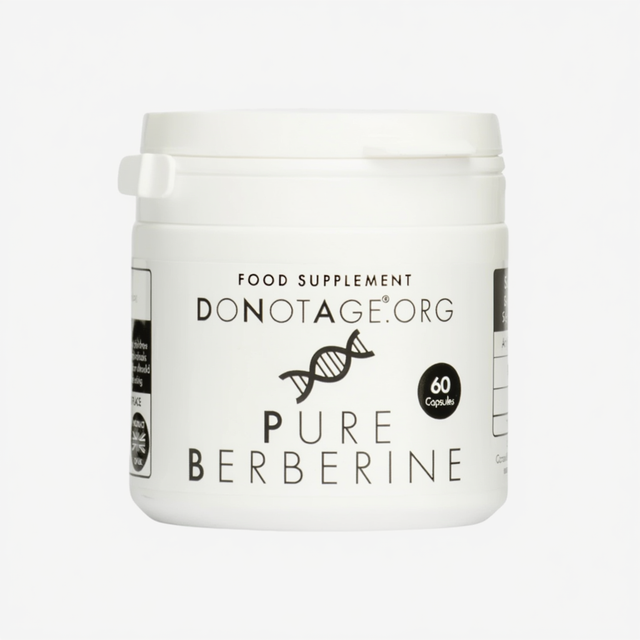
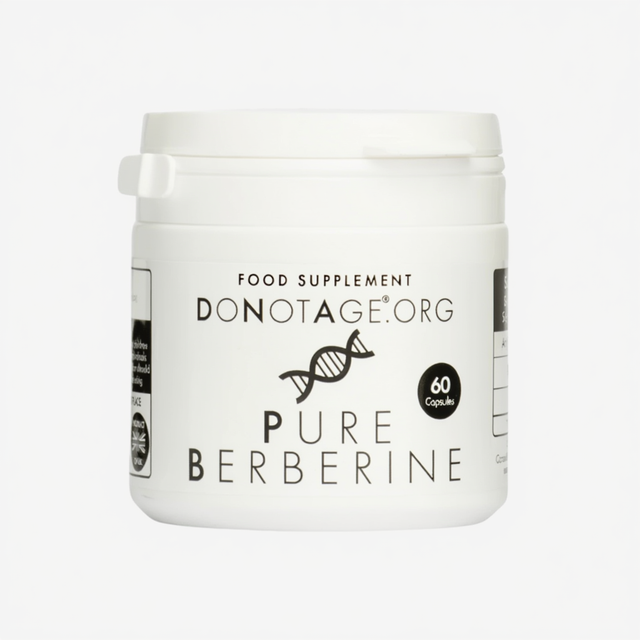
Our DoNotAge Berberine review assesses a straightforward 500 mg HCl option and the manufacturer's current information. Biohack Blueprint may earn commission from qualifying purchases. The review does not claim that DoNotAge's retail bottle was used in the diabetes trials discussed here.
Berberine deserves serious appraisal for glucose-related outcomes, with the same discipline applied to the comparator and absolute effect as to the positive headline. Explore the full source records in the Berberine Data Center.
Frequently asked questions
How much can berberine lower HbA1c?
Can berberine reverse insulin resistance?
Does berberine prevent diabetes?
Should non-diabetics take berberine for blood sugar?
Can berberine replace insulin?
Sources & article history
Sources (13)
-
Treatment of type 2 diabetes and dyslipidemia with the natural plant alkaloid berberine The Journal of clinical endocrinology and metabolism. 2008;93(7):2559-2565.
-
Gut microbiome-related effects of berberine and probiotics on type 2 diabetes (the PREMOTE study) Nature communications. 2020;11(1):5015.
-
Efficacy and safety of HIMABERB® Berberine on glycemic control in patients with prediabetes: double-blind, placebo-controlled, and randomized pilot trial BMC endocrine disorders. 2023;23(1):190.
-
Efficacy of berberine in patients with type 2 diabetes mellitus Metabolism: clinical and experimental. 2008;57(5):712-717.
-
Berberine and its more biologically available derivative, dihydroberberine, inhibit mitochondrial respiratory complex I: a mechanism for the action of berberine to activate AMP-activated protein kinase and improve insulin action Diabetes. 2008;57(5):1414-1418.
-
Berberine is an insulin secretagogue targeting the KCNH6 potassium channel Nature communications. 2021;12(1):5616.
-
Berberine and Adiposity in Diabetes-Free Individuals With Obesity and MASLD: A Randomized Clinical Trial JAMA network open. 2026;9(1):e2554152.
-
Repeated administration of berberine inhibits cytochromes P450 in humans European journal of clinical pharmacology. 2012;68(2):213-217.
-
[Effects of berberine on the serum cystatin C levels and urine albumin/creatine ratio in patients with type 2 diabetes mellitus] Zhonghua yi xue za zhi. 2018;98(46):3756-3761.
-
Combined berberine and probiotic treatment as an effective regimen for improving postprandial hyperlipidemia in type 2 diabetes patients: a double blinded placebo controlled randomized study Gut microbes. 2022;14(1):2003176.
-
The efficacy and safety of berberine in combination with cinnamon supplementation in patients with type 2 diabetes: a randomized clinical trial European journal of nutrition. 2025;64(2):102.
-
Development of an Innovative Berberine Food-Grade Formulation with an Ameliorated Absorption: In Vitro Evidence Confirmed by Healthy Human Volunteers Pharmacokinetic Study Evidence-based complementary and alternative medicine : eCAM. 2021;2021:7563889.
-
Berberine Ursodeoxycholate for the Treatment of Type 2 Diabetes: A Randomized Clinical Trial JAMA network open. 2025;8(3):e2462185.
Article history (1)
- Published with current study results, formulation distinctions, safety information and linked original sources.