Berberine Dosage: Study Doses, Capsule Strengths and Safety
Compare berberine study doses for glucose, weight and lipids. Understand 500 mg capsules, formulation differences, dose limits, duration and safety.
 By
Dr. Khaled Mahmoud, MBBCh
Critical Care Medicine, Longevity Science & Editorial Direction
 Reviewed by
Dr. Amr Yasser, PhD
Cardiometabolic, Musculoskeletal, Gut & Bioavailability
 Reviewed by
Dr. Abdulla Mostafa, PhD
Cellular Senescence, Neurological, Mitochondrial & Brain-Ageing Biology
- Published
- Last reviewed
- Reading time
- 7 min
- Sources cited
- 13

On this page
Berberine dosage should start with the preparation and the reason it is being considered. Many metabolic studies used conventional berberine at 1,000–1,500 mg/day, often divided across meals. Those are research exposures, not a universal prescription, a proven maximum safe amount or permission to exceed a product's instructions. [1] [2]
The phrase “500 mg berberine” also needs context. It may refer to a capsule of HCl, a total blend, a phospholipid complex or a plant extract standardized to a particular percentage. These amounts are not always interchangeable.
Study doses organized by purpose
| Research setting | Intervention | Duration | Interpretation |
|---|---|---|---|
| Type 2 diabetes and dyslipidemia, 116 participants | 1,000 mg/day | 3 months | Placebo-controlled metabolic trial |
| Early diabetes pilot | 500 mg three times/day | 13 weeks | Small comparison plus separate add-on cohort |
| BRAVO obesity and MASLD trial | 500 mg twice/day | 6 months | No significant primary fat-outcome benefit |
| Prediabetes pilot, 34 participants | 500 mg three times/day of HIMABERB | 12 weeks | Small, branded-preparation study |
| Fatty-liver open-label trial | 500 mg three times/day with lifestyle intervention | 16 weeks | Not a blinded placebo comparison |
| Adenoma-recurrence trial | 300 mg twice/day | Up to 2 years | A specific post-polypectomy clinical setting |
The doses above come from the named studies and should be interpreted with their eligibility criteria and supervision. The adenoma regimen, for example, is not a general longevity schedule. [1] [2] [3] [4] [5] [6]
Is 500 mg enough?
Five hundred milligrams can be a capsule strength rather than the daily amount studied. One 500 mg capsule taken once daily supplies 500 mg/day; two supply 1,000 mg/day; three supply 1,500 mg/day. Multiplying capsule strength by the actual number taken is basic but important when the bottle presents “per serving” prominently.
Whether 500 mg/day is useful depends on the indication, formulation and individual. A study showing benefit at 1,000 mg/day does not establish that half the exposure works equally well. Conversely, the fact that a trial used more does not establish that a person should increase their dose.
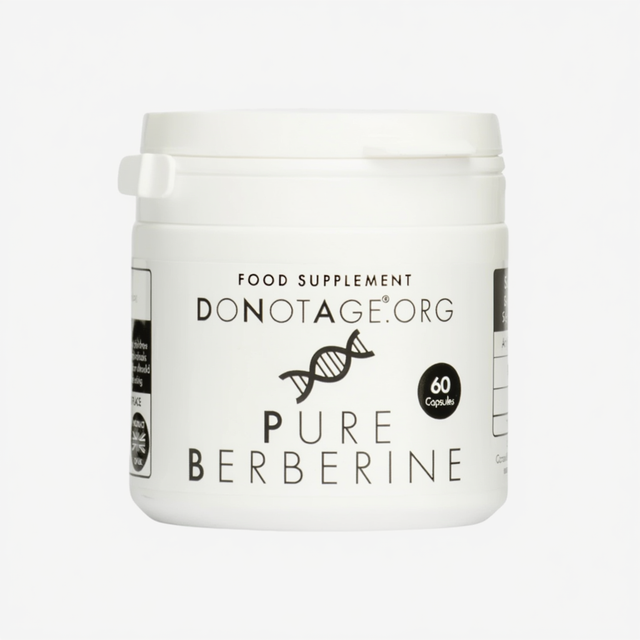
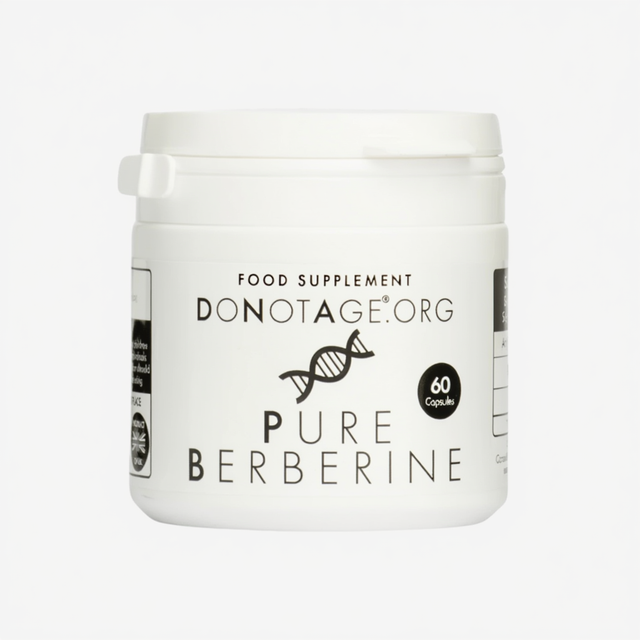
Product instructions can also differ from research schedules. The official DoNotAge product page states 500 mg per capsule and currently describes a typical daily amount of 500–1,000 mg in its FAQ. Other sections list subscription quantities for different daily intakes. A subscription option is a supply calculation, not a clinical endorsement of that intake.
Weight-loss dosage: why the popular numbers need qualification
Many weight-related results come from broader metabolic trials, and pooled studies use differing regimens. The updated obesity synthesis found a small average effect; it did not establish one optimal amount for every person seeking weight loss. [7]
BRAVO is particularly instructive. A full six months at 1,000 mg/day did not improve its primary visceral- and liver-fat outcomes. Increasing to 1,500 mg because a lower amount failed is a hypothesis, not a demonstrated solution. [3]
Our weight-loss evidence article evaluates the outcomes. The study amounts should be considered alongside the actual outcomes and the preparation tested.
Blood sugar and cholesterol: studied amounts are not treatment substitutions
The 116-participant diabetes/dyslipidemia trial used 1 g/day, while the early pilot used 1.5 g/day. Both provide useful exposure information, but participants had specific baseline abnormalities and study monitoring. Their results do not define an unsupervised regimen for someone taking insulin or other diabetes medicines. [1] [2]
Similarly, lipid studies differ in whether they test berberine alone, add it to a medicine or combine it with another ingredient. A multi-ingredient product's total milligram amount cannot be treated as a dose of isolated berberine. [8] [9]
The relevant outcome should determine monitoring. HbA1c, fasting glucose and a lipid panel describe different physiology and time windows. A clinician may decide that a supplement is unnecessary, that a medication needs adjustment or that a different therapy has better evidence.
HCl, active berberine and extract mass
There are three label distinctions worth separating:
- Salt mass: the amount of berberine HCl, including its associated chemical components.
- Standardized extract: the weight of plant material or extract multiplied by its specified berberine content, where clearly stated.
- Delivery complex: a total mass that can include phospholipids, proteins or other carriers as well as berberine.
In one pharmacokinetic study, 500 mg of the comparator chloride preparation supplied 452 mg berberine, while 550 mg of the studied Phytosome preparation supplied 188 mg. The figures describe those study materials and should not be generalized to every capsule bearing a similar name. [10]
For a simple arithmetic example, 500 mg of extract standardized to 10% would supply 50 mg of the standardized constituent if the label genuinely defines it that way. It would not supply 500 mg of berberine. This is a label-reading example, not a description of the DoNotAge product.
Dihydroberberine cannot be converted with a universal multiplier
A five-man crossover pilot compared 100 or 200 mg dihydroberberine with 500 mg berberine and placebo. Dihydroberberine produced higher measured berberine exposure, but glucose and insulin responses did not significantly differ in that acute experiment. [11]
Therefore, “one fifth the amount works five times better” goes beyond the result. Plasma exposure, glucose control and adverse effects require their own data. The same caution applies to liposomal, micellar and phospholipid formulas. See the formulation comparison.
Is there a maximum safe berberine dose?
The studies reviewed here do not establish a universally applicable upper safe intake. The highest exposure somebody has studied is not automatically a safe everyday ceiling, particularly for a different formulation or a person taking interacting medicines.
Gastrointestinal adverse effects occurred in the early metabolic research, and some participants required dose reduction. A human enzyme-probe study also demonstrated interaction potential after repeated use at 300 mg three times daily. Interaction risk is not confined to exceptionally large amounts. [2] [12]
Avoid treating a side effect as a signal to “push through.” Persistent diarrhea, vomiting, marked dizziness, palpitations or symptoms suggestive of low glucose need assessment. People with pregnancy-related questions should consult the pregnancy and breastfeeding guide before considering any amount.
Dividing doses, meals and missed doses
Several metabolic trials divided intake across the day, but this does not prove an exact clock-time requirement. The early diabetes pilot administered berberine at the beginning of major meals. Other products provide different instructions. We examine those differences in the timing guide. [2]
Do not double a later dose simply to compensate for a missed one. Follow the label and ask the pharmacist or clinician supervising the regimen when it is unclear. Taking more at once changes exposure and may worsen digestive tolerance without recreating the original study schedule.
Duration, cycling and reassessment
Many metabolic trials lasted roughly 8–16 weeks; BRAVO lasted six months, and a specialized adenoma trial was longer. The latter does not establish indefinite safety for every population or purpose. A later six-year follow-up followed participants after the original treatment phase rather than proving six years of continuous use. [3] [6] [13]
There is no established universal “cycle” shown to preserve benefit or eliminate interactions. Choosing eight weeks on and two weeks off because it sounds cautious is not the same as testing that schedule. A more useful approach is to define the intended outcome, check tolerability and agree on a review date.
A practical dose-review checklist
Before starting, record the exact product, form, amount per capsule and labeled daily serving. Review all prescriptions and supplements. Identify the relevant baseline measurement, then agree how and when to reassess it. Keep the formulation stable so a change can be interpreted.
For a simple 500 mg capsule option, read our DoNotAge review, which separates current label information from research doses. Biohack Blueprint may earn commission from qualifying DoNotAge purchases. The complete trial records are available in the Berberine Data Center.
Frequently asked questions
What is the recommended berberine dosage per day?
Can you take 1,500 mg of berberine at once?
Is 2,000 mg more effective than 1,000 mg?
How many 500 mg capsules equal 1,000 mg?
Should berberine be cycled?
Sources & article history
Sources (13)
-
Treatment of type 2 diabetes and dyslipidemia with the natural plant alkaloid berberine The Journal of clinical endocrinology and metabolism. 2008;93(7):2559-2565.
-
Efficacy of berberine in patients with type 2 diabetes mellitus Metabolism: clinical and experimental. 2008;57(5):712-717.
-
Berberine and Adiposity in Diabetes-Free Individuals With Obesity and MASLD: A Randomized Clinical Trial JAMA network open. 2026;9(1):e2554152.
-
Efficacy and safety of HIMABERB® Berberine on glycemic control in patients with prediabetes: double-blind, placebo-controlled, and randomized pilot trial BMC endocrine disorders. 2023;23(1):190.
-
Efficacy of Berberine in Patients with Non-Alcoholic Fatty Liver Disease PloS one. 2015;10(8):e0134172.
-
Berberine versus placebo for the prevention of recurrence of colorectal adenoma: a multicentre, double-blinded, randomised controlled study The lancet. Gastroenterology & hepatology. 2020;5(3):267-275.
-
The effect of berberine on obesity indices: a systematic review and meta-analysis International journal of obesity (2005). 2026;50(1):53-73.
-
Overall and Sex-Specific Effect of Berberine for the Treatment of Dyslipidemia in Adults: A Systematic Review and Meta-Analysis of Randomized Placebo-Controlled Trials Drugs. 2023;83(5):403-427.
-
Impact of Berberine or Berberine Combination Products on Lipoprotein, Triglyceride and Biological Safety Marker Concentrations in Patients with Hyperlipidemia: A Systematic Review and Meta-Analysis Journal of dietary supplements. 2024;21(2):242-259.
-
Development of an Innovative Berberine Food-Grade Formulation with an Ameliorated Absorption: In Vitro Evidence Confirmed by Healthy Human Volunteers Pharmacokinetic Study Evidence-based complementary and alternative medicine : eCAM. 2021;2021:7563889.
-
Absorption Kinetics of Berberine and Dihydroberberine and Their Impact on Glycemia: A Randomized, Controlled, Crossover Pilot Trial Nutrients. 2021;14(1):124.
-
Repeated administration of berberine inhibits cytochromes P450 in humans European journal of clinical pharmacology. 2012;68(2):213-217.
-
Berberine for preventing colorectal adenoma recurrence and neoplasm occurrence: 6-Year follow-up of a randomized clinical trial Cell reports. Medicine. 2025;6(9):102293.
Article history (1)
- Published with current study results, formulation distinctions, safety information and linked original sources.