Berberine for Cholesterol: LDL, ApoB and Triglyceride Evidence
Berberine for cholesterol explained: LDL, triglycerides, apoB, 2026 sex-specific findings, statin questions, study limitations and product selection.
 By
Dr. Khaled Mahmoud, MBBCh
Critical Care Medicine, Longevity Science & Editorial Direction
 Reviewed by
Dr. Amr Yasser, PhD
Cardiometabolic, Musculoskeletal, Gut & Bioavailability
 Reviewed by
Dr. Abdulla Mostafa, PhD
Cellular Senescence, Neurological, Mitochondrial & Brain-Ageing Biology
- Published
- Last reviewed
- Reading time
- 8 min
- Sources cited
- 13

On this page
Berberine for cholesterol has a credible human research signal: several studies report improvements in LDL cholesterol, triglycerides or related markers. The effect is not identical across populations, and the evidence for fewer heart attacks or strokes is much less established than the evidence for changes on a lipid panel. [1] [2]
The most useful appraisal separates berberine alone from combinations, uncontrolled changes from placebo-adjusted effects, and cholesterol concentration from particle number and clinical outcomes. Those distinctions explain why different articles can quote very different numbers.
Which lipid markers matter?
LDL cholesterol measures the amount of cholesterol carried in LDL particles. ApoB provides information about the number of atherogenic lipoprotein particles. Triglycerides describe another part of lipid metabolism, while lipoprotein(a), or Lp(a), is a distinct inherited risk-related marker. They are not interchangeable measures of “heart health.”
An HDL increase should not automatically be treated as proof of fewer cardiovascular events. Similarly, a favorable laboratory result over twelve weeks does not directly establish the effect of years of treatment on heart attacks.
When interpreting a study, identify whether its main endpoint was LDL, apoB, another biomarker or an actual clinical event. Then check whether the reported result was prespecified and whether multiple comparisons increase uncertainty.
The early study behind the familiar LDL claim
A 2004 paper reported that three months of berberine in 32 people with hypercholesterolemia reduced LDL cholesterol by about 25%, alongside other lipid changes. It also investigated a mechanism distinct from statins involving LDL-receptor regulation. [3]
The human component was not a large blinded outcomes trial. Its often-repeated percentage should not be advertised as the amount every consumer can expect or as proof of the same cardiovascular protection provided by established lipid-lowering treatment.
It is a useful historical starting point, not the end of the evidence. Later randomized studies and evidence syntheses offer better ways to assess the average effect and uncertainty. [1] [4]
A newer trial gives a more modest, concrete comparison
BRAVO randomized 337 diabetes-free adults with obesity and MASLD to 1 g/day berberine or placebo for six months. It did not significantly improve its primary visceral-fat or liver-fat outcomes. The secondary LDL difference favored berberine by approximately 7.72 mg/dL, and apoB by about 3.42 mg/dL. [5]
These secondary findings are interesting for lipid research. They are also substantially more specific than “berberine transforms cardiovascular health.” The population, daily amount and multiplicity of analyses need to accompany the numbers.
| Evidence example | Result worth noting | Limitation |
|---|---|---|
| Early hypercholesterolemia study | Approximately 25% within-group LDL reduction | Small, not a modern placebo-controlled outcomes trial |
| BRAVO | Modest placebo-adjusted LDL and apoB changes | Secondary endpoints; primary fat outcomes were null |
| 2026 sex-specific report | Atherogenic lipid changes with larger effects in women for selected measures | Two trial cohorts and partly reused male samples |
| Combination-product reviews | Some larger pooled lipid changes | Cannot isolate berberine or transfer results to every formula |
The 2026 sex-specific lipid report
A 2026 publication studied 100 women receiving 500 mg twice daily or placebo for twelve weeks and compared findings with stored samples from an earlier 84-man randomized trial using the same intervention. It reported reductions in apoB and selected lipid measures, with greater response magnitudes in women for some endpoints. [2]
The male findings should not be counted as an entirely new independent male trial: that cohort had already contributed to earlier work. The distinction matters when several publications are presented as multiple confirmations. [6]
The report also used standardized effect sizes. A difference expressed in standard-deviation units is not a percentage reduction and should not be converted to mg/dL without the required underlying data. Its Lp(a) finding is interesting but does not establish berberine as a proven Lp(a)-targeted outcomes treatment.
How might berberine affect cholesterol?
Experimental work has linked berberine to LDL-receptor expression and stability, energy-sensing pathways and intestinal or bile-acid metabolism. These mechanisms provide plausible explanations for the observed marker changes. [3] [7]
However, “different from statins” does not mean universally safer, superior or appropriate in place of a statin. A distinct mechanism can still involve adverse effects and interactions, and it does not supply clinical outcome evidence by itself.
Several pathways may operate together. The microbiome research is especially interesting, but a change in a bacterial pathway should not be used to promise a particular LDL reduction in an individual.
Berberine alone, statin combinations and red yeast rice
Some studies combine berberine with simvastatin, bezafibrate, silymarin or other ingredients. A favorable result for a combination describes that intervention. It does not establish the independent effect of each component or the safety of recreating it with arbitrary retail products. [8] [9] [10]
Red yeast rice is particularly important because it may supply statin-like monacolins. If a trial tests berberine plus red yeast rice and chitosan, the lipid result cannot be attributed to berberine alone. “Natural” also does not mean that the combination lacks drug-like effects. [11]
Our milk-thistle combination guide explains the preparation-specific evidence. The interaction guide addresses medication questions.
Can berberine replace a statin?
The evidence reviewed here does not justify replacing prescribed lipid treatment based solely on a supplement claim. Treatment decisions depend on overall cardiovascular risk, prior events, diabetes, LDL level, family history and tolerance of established options.
A person unable to tolerate one medicine still has a clinical decision to make; it is not automatically a choice between the same statin and an unmonitored supplement. Discuss alternatives and the relevant outcome evidence with the prescribing clinician.
This is also why “my LDL fell” does not settle whether treatment is sufficient. The target and the importance of lowering risk differ between an otherwise low-risk person and someone who has already had a heart attack.
Dose, duration and measuring response
Several conventional metabolic and lipid studies used divided daily amounts around 1–1.5 g, but regimens differ. The dosage guide provides actual study exposures rather than a universal cholesterol prescription. [12] [2]
If a clinician agrees that use is reasonable, compare a baseline lipid panel with an appropriately timed follow-up under similar conditions. Record product changes, adherence and other interventions so a response can be interpreted. A subjective feeling of better circulation cannot replace a laboratory assessment.
ApoB or Lp(a) testing may be useful in particular clinical circumstances, but this article does not prescribe a panel for everyone. Ask which measurement would actually change the decision.
Units and percentages: make the comparison readable
US lipid reports commonly use mg/dL, while UK and Canadian reports may use mmol/L. The conversion differs between cholesterol and triglycerides. A cholesterol value in mmol/L is multiplied by approximately 38.67 to express mg/dL, while triglycerides use approximately 88.57. ApoB reporting also needs its units checked.
Using the cholesterol conversion, the BRAVO LDL difference of about 7.72 mg/dL corresponds to roughly 0.20 mmol/L. That translation helps readers compare reports; it does not add another trial finding or imply a guaranteed personal response. [5]
Percentages need the same care. A 25% within-group reduction from an early uncontrolled study and a later placebo-adjusted mg/dL difference describe different statistics in different populations. They cannot be placed in a simple product-strength ranking.
ApoB, LDL and Lp(a) do not answer identical questions
LDL cholesterol can change differently from apoB because particles carry varying amounts of cholesterol. A trial measuring both provides more information than one measuring only total cholesterol, but it still does not establish every aspect of risk reduction.
Lp(a) is another distinct marker. The 2026 report's finding deserves further investigation, particularly given its sex-related differences, but it is not sufficient to promise that berberine prevents Lp(a)-related events or replaces specialist assessment. [2]
When a result is expressed in standard-deviation units, retain that unit. A reduction of one standard deviation is not a one-percent reduction and cannot be converted to an absolute concentration without the appropriate data.
What a fair trial of response would require
Keep other major treatment changes documented, use a consistent product and agree on a follow-up interval with the clinician. A single comparison may still be influenced by laboratory variability and changes in diet, weight, illness or medication adherence.
If there is no useful response, consider the original clinical objective and available alternatives. Increasing the amount, adding several lipid ingredients or replacing a prescribed medicine is not the automatic next step.
The right question is whether the overall plan meaningfully addresses risk with acceptable burden. A supplement's mechanism or brand reputation cannot answer that question alone.
Choosing a product without confusing quality and efficacy
A clear ingredient amount and useful batch documentation matter. A historical potency analysis found variability across commercial preparations, with price failing to reliably predict measured content. That finding supports verification; it does not rank current brands or establish that the most expensive capsule works best. [13]
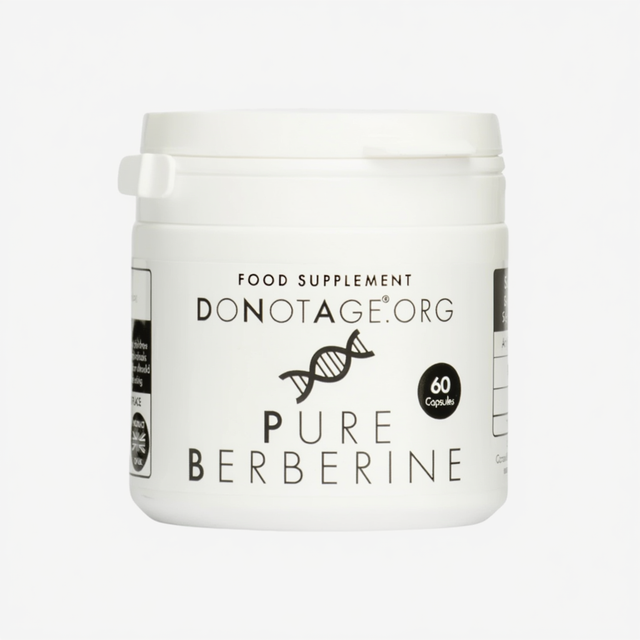
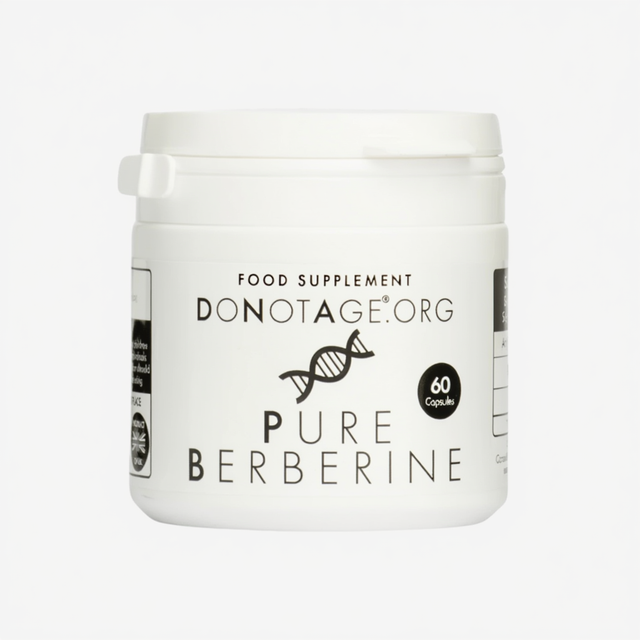
For a straightforward 500 mg HCl product, our DoNotAge Berberine review explains the current label, manufacturer-reported testing and purchasing details. Biohack Blueprint may earn commission from qualifying purchases. Product preference is separate from the strength of evidence for preventing cardiovascular events.
Berberine's lipid findings merit attention, especially when the outcome is stated precisely. The Data Center preserves the study designs, cohort links and limitations needed to judge those findings fairly.
Frequently asked questions
How much does berberine lower LDL cholesterol?
Does berberine lower triglycerides?
Does berberine lower apoB or Lp(a)?
Can berberine replace statins?
How do you know whether it is helping cholesterol?
Sources & article history
Sources (13)
-
Overall and Sex-Specific Effect of Berberine for the Treatment of Dyslipidemia in Adults: A Systematic Review and Meta-Analysis of Randomized Placebo-Controlled Trials Drugs. 2023;83(5):403-427.
-
Sex-Specific Lipid, Apolipoprotein B, and Lipoprotein(a) Responses to Berberine Based on 2 Randomized Placebo-Controlled Trials JACC. Asia. 2026;6(10 Pt 1):2204-2216.
-
Berberine is a novel cholesterol-lowering drug working through a unique mechanism distinct from statins Nature medicine. 2004;10(12):1344-1351.
-
Efficacy and safety of berberine for dyslipidaemias: A systematic review and meta-analysis of randomized clinical trials Phytomedicine : international journal of phytotherapy and phytopharmacology. 2018;50:25-34.
-
Berberine and Adiposity in Diabetes-Free Individuals With Obesity and MASLD: A Randomized Clinical Trial JAMA network open. 2026;9(1):e2554152.
-
Effect of Berberine on Cardiovascular Disease Risk Factors: A Mechanistic Randomized Controlled Trial Nutrients. 2021;13(8):2550.
-
Berberine and its more biologically available derivative, dihydroberberine, inhibit mitochondrial respiratory complex I: a mechanism for the action of berberine to activate AMP-activated protein kinase and improve insulin action Diabetes. 2008;57(5):1414-1418.
-
Combination of simvastatin with berberine improves the lipid-lowering efficacy Metabolism: clinical and experimental. 2008;57(8):1029-1037.
-
Effect of Berberine Plus Bezafibrate Administration on the Lipid Profile of Patients with Mixed Dyslipidemia: A Pilot Clinical Trial Journal of medicinal food. 2021;24(2):111-115.
-
Metabolic effect of berberine-silymarin association: A meta-analysis of randomized, double-blind, placebo-controlled clinical trials Phytotherapy research : PTR. 2019;33:862-870.
-
Effects of a New Nutraceutical Formulation (Berberine, Red Yeast Rice and Chitosan) on Non-HDL Cholesterol Levels in Individuals with Dyslipidemia: Results from a Randomized, Double Blind, Placebo-Controlled Study International journal of molecular sciences. 2017;18(7):E1498.
-
Treatment of type 2 diabetes and dyslipidemia with the natural plant alkaloid berberine The Journal of clinical endocrinology and metabolism. 2008;93(7):2559-2565.
-
Variability in Potency Among Commercial Preparations of Berberine Journal of dietary supplements. 2018;15(3):343-351.
Article history (1)
- Published with current study results, formulation distinctions, safety information and linked original sources.