Berberine for Weight Loss: Results, Before and After Claims and Evidence
Does berberine help weight loss? Compare pooled results, the 2026 BRAVO trial, belly-fat claims, before-and-after reviews, timelines and safety.
 By
Dr. Khaled Mahmoud, MBBCh
Critical Care Medicine, Longevity Science & Editorial Direction
 Reviewed by
Dr. Amr Yasser, PhD
Cardiometabolic, Musculoskeletal, Gut & Bioavailability
 Reviewed by
Dr. Abdulla Mostafa, PhD
Cellular Senescence, Neurological, Mitochondrial & Brain-Ageing Biology
- Published
- Last reviewed
- Reading time
- 9 min
- Sources cited
- 17

On this page
Berberine weight loss claims have a plausible metabolic rationale and a modest research signal behind them. It does not have evidence for the dramatic, predictable transformations often associated with its social-media reputation. An updated meta-analysis estimated an average weight difference of approximately 0.88 kg, or 1.9 lb, while a substantial 2026 trial failed to improve its primary visceral-fat and liver-fat outcomes. [1] [2]
That is still worth understanding. A small average effect can matter to a particular decision, but it should be compared with cost, tolerability, the person's metabolic health and treatments with stronger outcome evidence. This guide puts the numbers, “before and after” stories and expected timelines in the same place.
Does berberine actually help people lose weight?
Some randomized trials report lower body weight or waist measurements, and pooled reviews have found statistically significant effects. The difficulty is generalization: studies differ in baseline glucose, medications, diet advice, duration and formulation. Participants with diabetes or medication-associated weight gain are not interchangeable with otherwise healthy adults seeking cosmetic weight loss. [3] [4] [5]
A statistically significant average is also different from a substantial personal transformation. In the updated 23-article analysis, the estimated mean body-weight effect was -0.88 kg, with a confidence interval of about -1.36 to -0.39 kg. This summarizes uncertainty around a pooled mean. It does not mean every person loses an amount inside that interval. [1]
The indexed abstract has a unit-reporting problem for its waist estimate. We therefore do not reproduce that number as if it were a securely verified clinical measurement. The weight finding is enough to show why large-loss claims require more support.
What the 2026 BRAVO trial adds
BRAVO randomized 337 adults with obesity and MASLD who did not have diabetes. Participants received berberine HCl 500 mg twice daily or placebo for six months; both groups received lifestyle advice. The study assessed visceral adipose tissue and liver fat using CT rather than relying only on a tape measure or bathroom scale. [2]
Neither primary fat outcome significantly favored berberine. The reported between-group estimates were 1.4% for relative visceral-fat-area change and 0.9 percentage points for absolute liver-fat change, with confidence intervals crossing no effect. These figures should not be described as successful fat reductions.
Some secondary lipid and inflammation measures improved. That is scientifically interesting, but it does not rescue a belly-fat claim. BRAVO also used a run-in that selected for participants able to tolerate and adhere to the intervention, which limits how confidently its tolerability applies to a first-time buyer. [2]
| Evidence | Relevant finding | Practical interpretation |
|---|---|---|
| Updated obesity meta-analysis | Small pooled body-weight effect | A modest average, not a transformation forecast |
| BRAVO, 337 participants, six months | No significant primary fat-outcome benefit | Strong reason to question selective belly-fat promises |
| Antipsychotic-associated weight trials | Results in a specific medication context | Not automatically transferable to general weight management |
| Before-and-after photos | Individual changes without a controlled comparator | Cannot identify how much berberine caused |
How might berberine influence weight?
Laboratory studies connect berberine with AMPK signaling, mitochondrial energy metabolism, intestinal actions and glucose handling. These pathways may influence metabolism, but they do not establish an independent calorie deficit or a reliable reduction in appetite. [6] [7]
The distinction between glucose control and weight loss is particularly important. A person can have improved glucose measurements with little change in body weight. Similarly, a fall in a laboratory marker does not establish that fat, rather than fluid or lean tissue, has been lost.
Animal studies sometimes use exposures that cannot be reproduced safely or directly through a human capsule. Claims about brown fat, “switching off fat storage” or exercising through a pill should be checked against the actual human endpoints. A mechanism explains why scientists test a compound; the trial result tells us whether that hypothesis helped people in the tested setting.
How much weight can you realistically expect to lose?
There is no defensible universal promise such as five kilograms in a month. The pooled mean is modest, and the large diabetes-free trial offers an important null result. Neither finding rules out every individual response, but neither supports dramatic standard expectations. [1] [2]
For context, 0.88 kg is approximately 1.1% of an 80 kg starting weight. That is an illustrative conversion of the pooled mean, not a trial prediction for an 80 kg individual. It shows why kilograms and percentages should be named clearly when comparing interventions.
People often compare supplement studies lasting a few months with prescription-drug trials lasting more than a year. They may also compare a treatment group's total change with another study's placebo-adjusted change. Those mismatched comparisons can make either intervention appear stronger than the data justify. Our berberine vs Ozempic guide handles that distinction directly.
Before and after results: what a photo leaves out
A genuine photo can document genuine weight change without proving what caused it. Diet, training, other supplements, medication changes and time can all contribute. Lighting, posture and camera distance can further alter the visual impression.
Use a simple evidence checklist when reading a testimonial:
- What were the starting weight, actual change and time period?
- Did food intake, exercise or prescription treatment change?
- Was the product a plain capsule, a blend, a gummy or a patch?
- Was the claimed result typical, selectively chosen or financially incentivized?
- Was there a comparison group receiving the same background care?
Reddit experiences and customer reviews can reveal questions about swallowing, cost and digestive tolerance. They cannot supply a causal weight-loss average. This article therefore does not manufacture a “typical” before-and-after case or present a staged transformation.
How long does berberine take to work for weight loss?
Weight studies generally assess changes over weeks or months, not a few days. Earlier reviews included substantial variation in intervention duration, and BRAVO followed participants for six months. These study schedules are not guarantees that a particular person will respond after eight or twelve weeks. [3] [2]
An early change on the scale may reflect fluid balance, bowel contents or changes in eating rather than a berberine-specific fat effect. Conversely, a subjective feeling of “better metabolism” cannot substitute for a consistent measurement trend.
If a clinician supports a trial, agree on what would count as worthwhile: a relevant glucose or lipid change, a sustained weight trend, acceptable tolerability and a manageable cost. Lack of a response is a reason to reassess the plan, not automatically to increase the amount.
Dosage and timing: what belongs in the decision
Several metabolic trials used around 1,000–1,500 mg/day in divided doses. BRAVO used 1,000 mg/day; its null fat outcomes cannot be dismissed simply because some other studies used more. No dose is established as a guaranteed weight-loss prescription. [2] [8]
The dosage guide compares the study doses in detail. The timing guide explains meal-related instructions and why no precise clock time has been proven to maximize fat loss.
Do not transfer a milligram schedule from conventional HCl to dihydroberberine or a phospholipid formulation. Higher measured exposure in an absorption study is not a validated dose-conversion rule for weight reduction. [9] [10]
Who should be particularly cautious?
Pregnancy and breastfeeding are reasons to avoid self-directed berberine weight-loss use. People using glucose-lowering medicines, transplant medicines or other interacting drugs need a pharmacist or prescriber to assess the combination. Short-term trial tolerability does not prove indefinite daily safety. [11] [12] [13]
Nausea, diarrhea, constipation and abdominal discomfort may make a marginal weight effect poor value. They should not be celebrated as “detox” or proof that the product is working. Our side-effects guide explains the difference between common complaints and symptoms requiring assessment.
Choosing a supplement without buying a promise
A clear ingredient amount, identifiable formulation and useful testing information make product evaluation easier. They do not increase the strength of the weight-loss evidence. The words “clinical strength” cannot compensate for an unspecified extract, and a patch cannot inherit an oral capsule's study results. [14] [15]
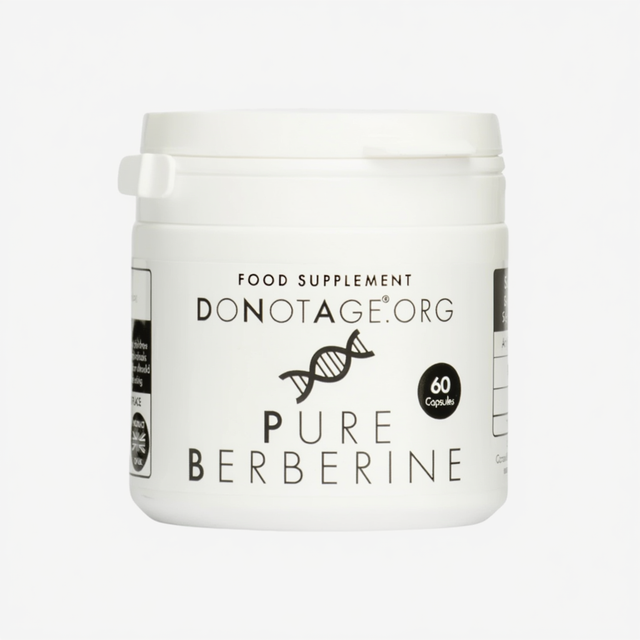
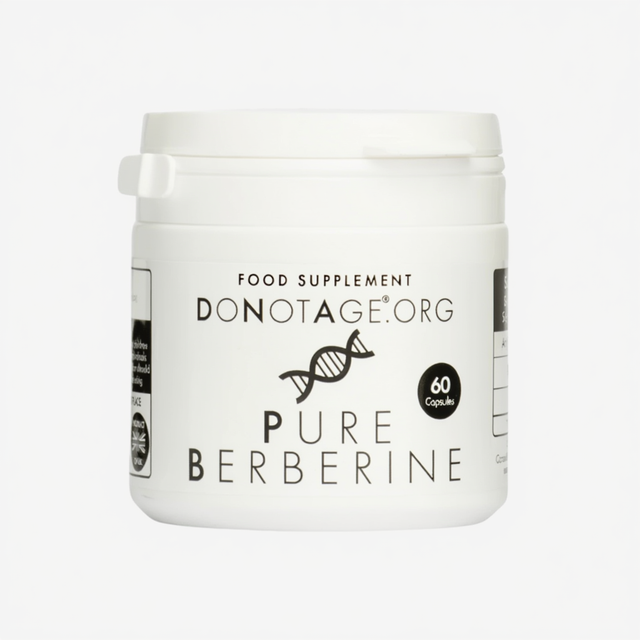
For a straightforward capsule option, our DoNotAge Berberine review separates product facts from expected outcomes. Biohack Blueprint has an affiliate relationship with DoNotAge and may earn commission from qualifying purchases. The recommendation does not imply that the current retail product was tested in the weight trials.
Reading weight statistics without being misled
Body weight, BMI, waist circumference and visceral fat describe related but different outcomes. A lower BMI is not independent confirmation of weight loss when both use the same weight measurement. A smaller waist does not prove a selective change in visceral fat, and a CT measurement answers a different question from a photograph.
Also check the unit and comparison. A 2 kg reduction within an active group is not a 2 kg treatment effect if the control group lost 1.5 kg. The difference between those group changes would be 0.5 kg in this simplified example. Likewise, a 2% change and a two-percentage-point change are not always the same calculation.
Confidence intervals describe uncertainty around an estimate, not the minimum and maximum weight every person will lose. A statistically significant pooled mean can coexist with people who lose little, people who lose more and people whose weight increases for other reasons.
The population can be as important as the ingredient
Some berberine trials involve metabolic effects associated with antipsychotic treatment. Others involve diabetes, fatty liver or impaired glucose regulation. The biology, background care and room for improvement differ. [5] [16] [17]
For someone with normal glucose, a diabetes trial cannot supply the same expected response. For someone taking a medicine associated with weight gain, the question may be whether a supervised intervention changes that specific treatment burden. Neither situation should be reduced to a general fat-burner claim.
This is one reason a pooled average is a starting point rather than a personal forecast. The study population should resemble the intended user closely enough for the result to inform the decision.
What “does not work” should mean
A lack of visible weight change does not mean the compound has no biological activity. It may affect a lipid or glucose endpoint without producing meaningful weight loss. Equally, biological activity does not mean continued use is worthwhile for a person whose only objective is weight reduction.
Separate the product from the goal. A correctly labeled, well-made capsule can be an unsuitable purchase for an unsupported claim. A modest result may be acceptable to one person and not worth the expense or symptoms to another.
Agree on the goal before starting, and do not move it every time the result disappoints. If weight was the reason for buying, a mechanism diagram should not become the replacement endpoint after the scale fails to change.
A sensible role for berberine
Berberine is more credible as a potential adjunct to an identified metabolic goal than as the centerpiece of a dramatic weight-loss promise. The current evidence warrants modest expectations, careful selection and reassessment. A specific health plan should continue to address nutrition, activity, sleep and treatments appropriate to the person's condition.
Read the source-level findings in the Berberine Data Center. The strongest purchasing decision is one that still makes sense after the transformation photos and catchy nickname have been removed.
Frequently asked questions
Does berberine burn belly fat?
How much weight can you lose with berberine in a month?
Are berberine weight-loss reviews reliable?
Is berberine better for weight loss than metformin?
Should you increase the dose if weight is not changing?
Sources & article history
Sources (17)
-
The effect of berberine on obesity indices: a systematic review and meta-analysis International journal of obesity (2005). 2026;50(1):53-73.
-
Berberine and Adiposity in Diabetes-Free Individuals With Obesity and MASLD: A Randomized Clinical Trial JAMA network open. 2026;9(1):e2554152.
-
The effect of berberine supplementation on obesity indices: A dose- response meta-analysis and systematic review of randomized controlled trials Complementary therapies in clinical practice. 2020;39:101113.
-
The effect of berberine supplementation on obesity parameters, inflammation and liver function enzymes: A systematic review and meta-analysis of randomized controlled trials Clinical nutrition ESPEN. 2020;38:43-49.
-
Adjunctive berberine reduces antipsychotic-associated weight gain and metabolic syndrome in patients with schizophrenia: a randomized controlled trial Psychiatry and clinical neurosciences. 2022;76(3):77-85.
-
Berberine and its more biologically available derivative, dihydroberberine, inhibit mitochondrial respiratory complex I: a mechanism for the action of berberine to activate AMP-activated protein kinase and improve insulin action Diabetes. 2008;57(5):1414-1418.
-
Gut microbiome-related effects of berberine and probiotics on type 2 diabetes (the PREMOTE study) Nature communications. 2020;11(1):5015.
-
Efficacy of berberine in patients with type 2 diabetes mellitus Metabolism: clinical and experimental. 2008;57(5):712-717.
-
Absorption Kinetics of Berberine and Dihydroberberine and Their Impact on Glycemia: A Randomized, Controlled, Crossover Pilot Trial Nutrients. 2021;14(1):124.
-
Development of an Innovative Berberine Food-Grade Formulation with an Ameliorated Absorption: In Vitro Evidence Confirmed by Healthy Human Volunteers Pharmacokinetic Study Evidence-based complementary and alternative medicine : eCAM. 2021;2021:7563889.
-
Displacement of bilirubin from albumin by berberine Biology of the neonate. 1993;63(4):201-208.
-
Repeated administration of berberine inhibits cytochromes P450 in humans European journal of clinical pharmacology. 2012;68(2):213-217.
-
Effects of berberine on the blood concentration of cyclosporin A in renal transplanted recipients: clinical and pharmacokinetic study European journal of clinical pharmacology. 2005;61(8):567-572.
-
Variability in Potency Among Commercial Preparations of Berberine Journal of dietary supplements. 2018;15(3):343-351.
-
Comparative pharmacokinetics and safety assessment of transdermal berberine and dihydroberberine PloS one. 2018;13:e0194979.
-
The effect of berberine adjunctive treatment on glycolipid metabolism in patients with schizophrenia: A randomized, double-blind, placebo-controlled clinical trial Psychiatry research. 2021;300:113899.
-
Efficacy of Berberine in Patients with Non-Alcoholic Fatty Liver Disease PloS one. 2015;10(8):e0134172.
Article history (1)
- Published with current study results, formulation distinctions, safety information and linked original sources.