Berberine and Milk Thistle: Silymarin Combination Evidence
Berberine and milk thistle explained: silymarin trials, pooled lipid results, absorption and synergy claims, fatty-liver questions, labels and safety.
 By
Dr. Khaled Mahmoud, MBBCh
Critical Care Medicine, Longevity Science & Editorial Direction
 Reviewed by
Dr. Amr Yasser, PhD
Cardiometabolic, Musculoskeletal, Gut & Bioavailability
 Reviewed by
Dr. Abdulla Mostafa, PhD
Cellular Senescence, Neurological, Mitochondrial & Brain-Ageing Biology
- Published
- Last reviewed
- Reading time
- 6 min
- Sources cited
- 5

On this page
Berberine and milk thistle are often combined to support glucose, cholesterol or liver-related goals. The most relevant evidence concerns specific berberine–silymarin preparations, not simply taking any two bottles together. A 2019 meta-analysis of five randomized trials reported favorable metabolic-marker changes, but it did not establish a universal synergy claim or prove that plain berberine produces the same pooled effect. [1]
The useful questions are what the milk-thistle extract contained, what was compared, which outcomes improved and whether the proposed product matches the studied formulation.
Milk thistle, silymarin and silybin are not identical labels
Milk thistle is a botanical source. Silymarin describes a mixture of flavonolignans, and silybin is a constituent within that broader area of chemistry. Whole plant powder, a standardized extract and a specialized delivery system can provide very different material amounts.
Therefore, 200 mg of an unspecified milk-thistle ingredient is not automatically equivalent to 200 mg silymarin or the extract used in a trial. Standardization, formulation and the amount actually supplied need to be clear.
The NCCIH milk-thistle overview provides useful background on the plant and limits of its clinical evidence. A traditional liver-health reputation does not establish a particular combination's efficacy.
What the 2019 meta-analysis included
The review pooled five randomized double-blind placebo-controlled trials, with 497 participants. Its table described regimens containing either 500 mg/day berberine plus 105 mg/day silymarin or 1,000 mg/day berberine plus 210 mg/day silymarin, with durations ranging from three months to fifty-two weeks. [1]
Those details matter. The evidence is not for arbitrary equal-weight combinations, and the studied durations are not interchangeable with an indefinite self-directed regimen.
The review reported mean differences favoring the combination for total cholesterol, LDL, triglycerides, HDL and fasting plasma glucose. The populations and background care varied, and heterogeneity limits how precisely the pooled estimate predicts an individual response.
| Marker | Pooled mean difference reported by the review | Important qualification |
|---|---|---|
| LDL cholesterol | Approximately -29.1 mg/dL | Combination effect, not isolated berberine |
| Total cholesterol | Approximately -25.3 mg/dL | Population and trial differences matter |
| Triglycerides | Approximately -28 mg/dL | Not proof of fewer clinical events |
| Fasting plasma glucose | Approximately -7.5 mg/dL | A marker change, not diabetes prevention |
The review's LDL confidence interval was approximately -39.7 to -18.6 mg/dL. It describes uncertainty around a pooled comparison, not a guaranteed range of individual benefit. [1]
Does this prove that milk thistle improves berberine absorption?
The proposed pharmacological rationale includes effects on intestinal transport and exposure. That is a hypothesis worth investigating, but it must be distinguished from a clinical trial measuring cholesterol or glucose.
A marker improvement from a combination does not itself reveal how much was caused by altered absorption, another pharmacological action, background treatment or the interaction between ingredients. A direct pharmacokinetic comparison and an appropriately designed clinical comparison answer different questions.
Similarly, higher exposure is not automatically a better long-term outcome. The delivery-system article explains that distinction across enhanced formulations.
Combination benefit is not proof of synergy
To establish synergy, a study must evaluate whether the combined effect exceeds an appropriate expectation from the individual components. A positive placebo comparison alone does not settle that question.
The meta-analysis supports the proposition that the studied combinations affected selected metabolic markers. It does not establish that any silymarin product improves every berberine regimen or that separate retail capsules reproduce a named preparation.
This is also why the pooled combination estimate should not be inserted into a plain-berberine review without qualification. The intervention identity is part of the result.
Cholesterol: a promising marker result, with limits
The lipid findings are relevant to a metabolic discussion, but they are not equivalent to a demonstrated reduction in heart attacks or strokes. Some studies also involved treatment contexts that differ from an untreated consumer population. [1]
If cholesterol is the main concern, use the cholesterol guide to compare conventional berberine, newer placebo-controlled results and combination evidence. Do not stop prescribed lipid treatment because a blend has an attractive pooled percentage or milligram result.
Fatty liver: do not substitute a reputation for an endpoint
“Liver support” can refer to several different outcomes. Lower enzymes, less liver fat and improved fibrosis are not interchangeable. A glucose or LDL change does not establish fibrosis reversal.
The newer BRAVO trial found no significant primary liver-fat benefit from conventional berberine in diabetes-free adults with obesity and MASLD. That trial did not test a berberine–silymarin combination, so it neither validates nor disproves a separate blend. It does make broad liver-cleansing claims harder to defend without exact-product evidence. [2]
Our fatty-liver article compares the relevant endpoints and trials. If a blend claims a liver benefit, ask whether it measured liver fat, fibrosis or merely a blood marker.
Weight loss: a different claim again
The combination meta-analysis focused on metabolic markers. Its favorable lipid and glucose findings cannot be converted into a predictable weight-loss result. [1]
The general berberine obesity literature estimates a small average effect and contains important null findings. A two-ingredient formula needs its own weight evidence rather than an assumption that more metabolic ingredients produce more fat loss. [3] [2]
The weight-loss guide puts the pooled results and before-and-after claims in context.
How to compare products
Check the exact berberine form and amount, silymarin specification, number of daily servings and other active ingredients. A product with milk-thistle powder rather than the relevant standardized extract may not match the research.
If the formula adds chromium, alpha-lipoic acid, cinnamon or red yeast rice, that creates another intervention. Identify which ingredient's trial is being cited and whether the complete retail formula was actually tested.
Calculate cost per full labeled serving rather than per capsule. Then ask whether the relevant clinical evidence justifies the price and complexity for the intended goal.
Safety and medicine interactions
Berberine has demonstrated effects on CYP enzymes and cyclosporine exposure in humans. A formula designed to alter absorption should not be assumed to reduce interaction concerns. [4] [5]
Milk-thistle preparations bring their own ingredient, allergy and tolerability questions. Review the complete formula with a pharmacist, particularly with multiple prescriptions, diabetes treatment or significant liver disease.
Pregnancy and breastfeeding use should not be inferred safe from trials in nonpregnant adults. The pregnancy guide addresses berberine-related concerns, and the interaction guide explains why spacing is not a universal solution.
When a simpler formula may be preferable
A clear single-ingredient product can make dose interpretation, cost comparison and symptom attribution easier. A combination can be worth considering when its exact evidence and formulation match a defined objective. Neither choice should depend on the assumption that more ingredients automatically make a better product.
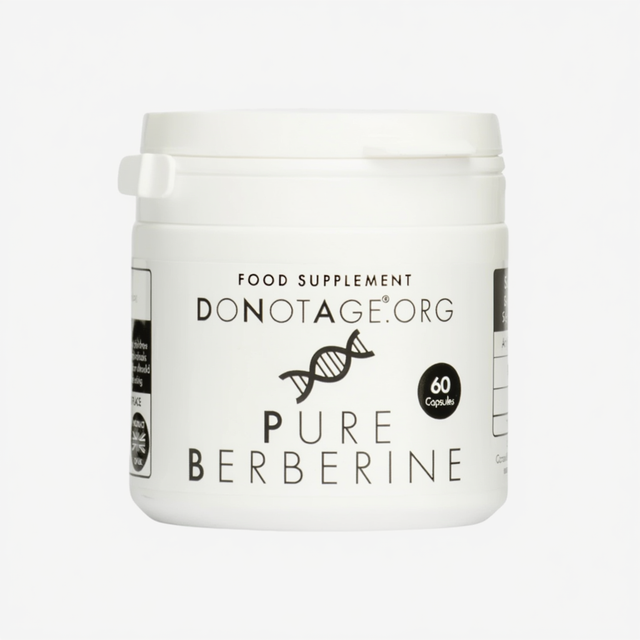
Our DoNotAge Berberine review covers a straightforward conventional capsule, while the buying guide compares product approaches. Biohack Blueprint may earn commission from qualifying DoNotAge purchases.
The Data Center includes the silymarin-combination review so its findings remain traceable and separate from plain-berberine evidence.
Frequently asked questions
Why combine berberine and milk thistle?
Does milk thistle make berberine work better?
Is the combination proven for fatty liver?
Does the combination help weight loss?
Can you add any milk-thistle capsule to berberine?
Sources & article history
Sources (5)
-
Metabolic effect of berberine-silymarin association: A meta-analysis of randomized, double-blind, placebo-controlled clinical trials Phytotherapy research : PTR. 2019;33:862-870.
-
Berberine and Adiposity in Diabetes-Free Individuals With Obesity and MASLD: A Randomized Clinical Trial JAMA network open. 2026;9(1):e2554152.
-
The effect of berberine on obesity indices: a systematic review and meta-analysis International journal of obesity (2005). 2026;50(1):53-73.
-
Repeated administration of berberine inhibits cytochromes P450 in humans European journal of clinical pharmacology. 2012;68(2):213-217.
-
Effects of berberine on the blood concentration of cyclosporin A in renal transplanted recipients: clinical and pharmacokinetic study European journal of clinical pharmacology. 2005;61(8):567-572.
Article history (1)
- Published with current study results, formulation distinctions, safety information and linked original sources.