Best Time to Take Berberine: Meals, Morning or Night?
When should you take berberine? Compare meal instructions, morning and bedtime use, divided doses, fasting questions and medicine-spacing limitations.
 By
Dr. Khaled Mahmoud, MBBCh
Critical Care Medicine, Longevity Science & Editorial Direction
 Reviewed by
Dr. Amr Yasser, PhD
Cardiometabolic, Musculoskeletal, Gut & Bioavailability
 Reviewed by
Dr. Abdulla Mostafa, PhD
Cellular Senescence, Neurological, Mitochondrial & Brain-Ageing Biology
- Published
- Last reviewed
- Reading time
- 7 min
- Sources cited
- 11

On this page
The best time to take berberine is usually determined by the specific product instructions, the planned daily schedule and digestive tolerance, rather than a proven ideal hour. Several clinical protocols placed conventional berberine around meals. Direct evidence that morning, bedtime or a particular number of minutes before eating produces superior weight loss is lacking in the trials reviewed here. [1] [2]
That distinction helps resolve conflicting online advice. “Before food,” “with food” and “never with food” cannot all be universal rules. A study protocol and a manufacturer's instructions describe particular preparations and circumstances.
What did the studies actually do?
In an early diabetes pilot, 500 mg berberine was taken three times daily at the beginning of each major meal. The comparator metformin was scheduled after meals. That provides a concrete example of how investigators administered treatment; it was not a randomized test of meal timing. [1]
The six-month BRAVO trial used 500 mg twice daily. It compared berberine with placebo, not breakfast with dinner or fasting with fed administration. Its negative primary fat outcomes cannot establish that changing the clock time would have made the treatment successful. [2]
Likewise, an acute pharmacokinetic study can show when blood concentrations rise after a particular formulation without establishing the best schedule for a long-term clinical goal. Food, carrier ingredients and metabolism may affect exposure, but exposure and meaningful benefit are separate questions. [3] [4]
| Question | What the available evidence can support |
|---|---|
| Was berberine taken around meals in some trials? | Yes, including the early diabetes pilot |
| Is exactly 15 or 30 minutes before meals proven best? | Not established by a direct timing comparison here |
| Is bedtime proven better for fat loss? | No reliable clinical basis identified |
| Does splitting the daily amount appear in study protocols? | Yes, for several conventional regimens |
| Can meal timing remove a drug interaction? | No; it is not a reliable solution for enzyme-mediated interactions |
Before meals or with meals?
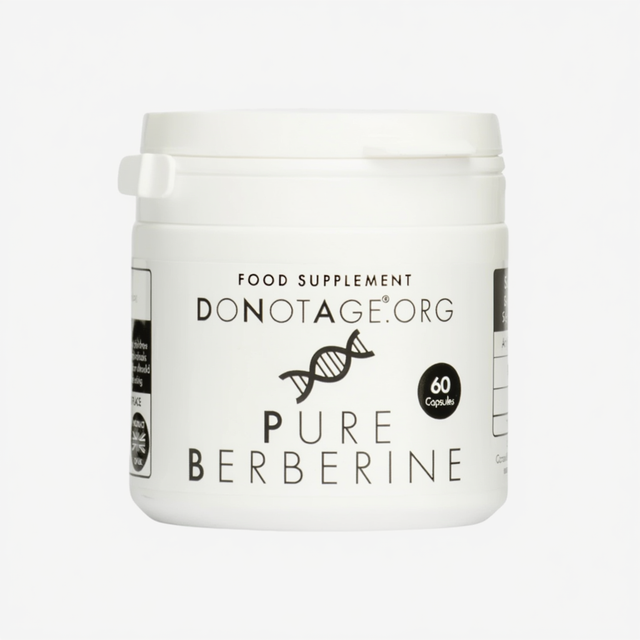
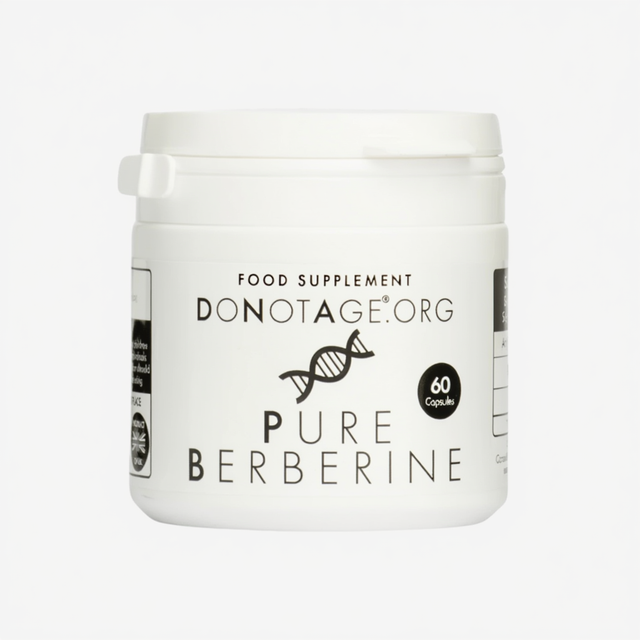
For the current DoNotAge product, the official product FAQ says to take it with a meal and water. That is a useful product-specific instruction. It should not be rewritten into an inflexible rule for all berberine formulations, nor should older instructions for another bottle override the label you actually have.
The practical reasons for linking intake to meals include remembering a divided schedule and considering digestive comfort. However, saying “take with food” does not prove that food universally multiplies absorption or that the same approach is optimal for every formulation.
If a prescriber has created a specific schedule because of diabetes treatment or another medical issue, that plan takes priority over an online supplement routine. Persistent symptoms deserve review rather than repeated experiments with timing.
Should berberine be taken on an empty stomach?
An empty stomach is not a requirement established for every indication. Some studies and products use meal-associated intake. Absorption studies also depend on their controlled test conditions; one cannot take a fasting pharmacokinetic experiment and infer a superior real-world weight-loss schedule. [1] [3]
If taking it without food causes nausea or discomfort, that does not demonstrate that the compound is “working harder.” Gastrointestinal effects were reported in early clinical studies and can limit adherence. The sensible response is to check the label and discuss tolerability, especially if symptoms persist. [1]
This is also why swallowing a larger daily total on an empty stomach to “maximize” it is not an evidence-based shortcut. The total amount, formulation and medical context still matter.
Morning or night?
There is no robust direct comparison in this evidence set demonstrating that morning dosing is superior to evening dosing for weight loss, glucose control or cholesterol. The choice usually follows the product's meal-linked instructions and the clinician-agreed schedule.
Bedtime deserves particular care if it means taking a dose without the food or monitoring expected in the person's treatment plan. For someone using insulin or another medicine that can lower glucose, overnight symptoms require clinical advice. Moving a supplement to bedtime does not make the combination safer. [5]
Berberine is not established as a sleep aid. Sedation, hunger, sweating, tremor or palpitations after a bedtime dose should not be interpreted as evidence of a beneficial nighttime metabolic process. Different symptoms can have different causes, and a clinician should assess concerning or repeated episodes.
Best time to take berberine for weight loss
No time of day has been shown to turn a small or absent weight effect into a substantial one. The important variables in weight research include population, duration, preparation, background care and the outcome measured. A precise alarm on your phone cannot compensate for weak applicability. [6] [2]
The weight-loss guide explains the estimated average effect and the BRAVO findings. The dosage guide explains the actual amounts studied. This page addresses timing so the three questions remain consistent.
For an adult already cleared to use a meal-associated product twice daily, breakfast and dinner may be an easy way to follow that product's directions. That is an adherence example, not a separately validated fat-loss protocol. Someone who skips breakfast, works nights or has irregular meals should use the instructions for the actual product and ask their supervising clinician when needed.
Should doses be split across the day?
Divided regimens are common in conventional metabolic trials. Their usefulness should be interpreted as part of the tested intervention, not proof that every schedule with the same daily milligrams is equivalent. [7] [1]
For example, two separate 500 mg doses and one 1,000 mg dose both sum to 1,000 mg, but they need not produce the same exposure pattern or digestive experience. Newer delivery systems can behave differently again. The five-man dihydroberberine pilot cannot establish a universal one-dose replacement for a conventional divided regimen. [4]
Do not double a dose after forgetting one or add an extra capsule because a meal was larger. Follow the label and obtain product-specific advice when the schedule is unclear.
How far apart should berberine and medicines be taken?
There is no universal safe spacing interval. Repeated use altered CYP2D6, CYP2C9 and CYP3A4 activity in a human study, while clinical and pharmacokinetic work documented increased cyclosporine exposure. These effects concern how the body handles a medicine and may persist beyond the moment the capsules are swallowed. [5] [8] [9]
Therefore, separating products by two hours is not a reliable solution. A pharmacist needs the exact medicine, dose, formulation and treatment goal. Some combinations may require monitoring, an adjustment or avoidance. Others may not have a demonstrated interaction at all; uncertainty should not be confused with proof that every medicine is affected.
See the interaction guide for the distinction between demonstrated interactions, plausible cautions and missing evidence.
Coffee, fasting and supplement stacks
The studies reviewed here do not define a special coffee interval or a berberine schedule proven to enhance intermittent fasting. If the label advises food, a prolonged fast is a reason to reassess the routine rather than invent an exception. Diabetes medicines make fasting-related decisions more consequential.
Taking berberine with several other metabolic supplements at once also makes side effects harder to interpret. Combination studies test particular formulas. They do not show that adding cinnamon, milk thistle, chromium, quercetin and resveratrol to one personal routine is better than a simpler plan. [10] [11]
A routine you can evaluate
Check the exact bottle's directions, confirm the intended total daily amount, connect doses to the appropriate meals and keep a consistent record of tolerability. Decide in advance which clinical measurement or symptom should improve and when it will be reassessed. Changing several variables every few days makes the result difficult to interpret.
Our DoNotAge Berberine review summarizes its current instructions separately from the broader clinical evidence. Biohack Blueprint may earn commission from qualifying purchases. The Data Center links the underlying research so you can check the actual protocol rather than relying on a universal timing claim.
Frequently asked questions
Should berberine be taken before or after meals?
Can you take berberine before bed?
How many minutes before eating should you take berberine?
Can berberine be taken while fasting?
Does taking berberine two hours away from medicines prevent interactions?
Sources & article history
Sources (11)
-
Efficacy of berberine in patients with type 2 diabetes mellitus Metabolism: clinical and experimental. 2008;57(5):712-717.
-
Berberine and Adiposity in Diabetes-Free Individuals With Obesity and MASLD: A Randomized Clinical Trial JAMA network open. 2026;9(1):e2554152.
-
Development of an Innovative Berberine Food-Grade Formulation with an Ameliorated Absorption: In Vitro Evidence Confirmed by Healthy Human Volunteers Pharmacokinetic Study Evidence-based complementary and alternative medicine : eCAM. 2021;2021:7563889.
-
Absorption Kinetics of Berberine and Dihydroberberine and Their Impact on Glycemia: A Randomized, Controlled, Crossover Pilot Trial Nutrients. 2021;14(1):124.
-
Repeated administration of berberine inhibits cytochromes P450 in humans European journal of clinical pharmacology. 2012;68(2):213-217.
-
The effect of berberine on obesity indices: a systematic review and meta-analysis International journal of obesity (2005). 2026;50(1):53-73.
-
Treatment of type 2 diabetes and dyslipidemia with the natural plant alkaloid berberine The Journal of clinical endocrinology and metabolism. 2008;93(7):2559-2565.
-
Effects of berberine on the blood concentration of cyclosporin A in renal transplanted recipients: clinical and pharmacokinetic study European journal of clinical pharmacology. 2005;61(8):567-572.
-
The effects of berberine on the pharmacokinetics of cyclosporin A in healthy volunteers Methods and findings in experimental and clinical pharmacology. 2006;28(1):25-29.
-
The efficacy and safety of berberine in combination with cinnamon supplementation in patients with type 2 diabetes: a randomized clinical trial European journal of nutrition. 2025;64(2):102.
-
Metabolic effect of berberine-silymarin association: A meta-analysis of randomized, double-blind, placebo-controlled clinical trials Phytotherapy research : PTR. 2019;33:862-870.
Article history (1)
- Published with current study results, formulation distinctions, safety information and linked original sources.