Berberine vs Ozempic: Is It Really Nature’s Ozempic?
Berberine vs Ozempic explained: mechanisms, STEP 1 weight-loss context, blood sugar, safety, combination questions and the “nature’s Ozempic” claim.
 By
Dr. Khaled Mahmoud, MBBCh
Critical Care Medicine, Longevity Science & Editorial Direction
 Reviewed by
Dr. Amr Yasser, PhD
Cardiometabolic, Musculoskeletal, Gut & Bioavailability
 Reviewed by
Dr. Abdulla Mostafa, PhD
Cellular Senescence, Neurological, Mitochondrial & Brain-Ageing Biology
- Published
- Last reviewed
- Reading time
- 6 min
- Sources cited
- 10

On this page
The berberine vs Ozempic comparison begins with a clear distinction: berberine is not a natural version of the medicine. Ozempic contains semaglutide, a prescription GLP-1 receptor agonist. Berberine is an alkaloid with different pharmacology and a much less certain weight-loss effect. Calling both “metabolic” does not establish comparable outcomes.
The comparison becomes clearer when you name the actual product, dose, study duration and endpoint. It also helps to distinguish Ozempic from obesity-dose semaglutide, because the most widely quoted weight-loss trial did not test a berberine capsule against Ozempic.
What is Ozempic—and how does Wegovy differ?
Ozempic and Wegovy are brand names associated with semaglutide formulations and prescribing indications. Their dosing and licensed uses should not be treated as identical. The official Ozempic prescribing information identifies it as a GLP-1 receptor agonist and sets out specific diabetes and risk-reduction indications.
When comparing weight-loss numbers, identify the trial rather than assuming every semaglutide statistic describes every branded regimen. The STEP 1 trial used 2.4 mg once weekly in adults with overweight or obesity without diabetes, alongside lifestyle intervention. That is important context for the familiar approximately 15% result.
How do the mechanisms differ?
Semaglutide acts at the GLP-1 receptor. Berberine's experimental and clinical literature involves energy signaling, mitochondrial effects, intestinal metabolism and other mechanisms. An observation that berberine influences endogenous gut-hormone pathways is not the same as delivering a long-acting receptor agonist. [1] [2]
This distinction is not merely chemical trivia. Different exposure and target activity lead to different dose-response patterns, evidence requirements, adverse effects and clinical outcomes.
Claims that AMPK activation automatically recreates the appetite effects of semaglutide skip the part that matters: what happened in controlled human trials.
Weight-loss evidence side by side
| Evidence | Population and duration | Result | What it does not establish |
|---|---|---|---|
| Updated berberine meta-analysis | Mixed adult trial populations and durations | Small pooled mean weight difference, about 0.88 kg | A large predictable response for an individual |
| BRAVO berberine trial | 337 diabetes-free adults with obesity and MASLD; six months | No significant primary visceral-fat or liver-fat benefit | Selective belly-fat loss |
| STEP 1 semaglutide trial | 1,961 adults with overweight or obesity without diabetes; 68 weeks | Mean body-weight change about -14.9% vs -2.4% with placebo | A direct comparison against berberine or every Ozempic regimen |
The berberine findings are documented in the linked research records. STEP 1 is available in the original trial report. These are separate studies, not a head-to-head trial. [3] [4]
Why you should not calculate a fake superiority ratio
The studies differ in population, duration, background care and outcome definition. The berberine pooled estimate is expressed in kilograms; the STEP 1 result above is percentage change from baseline. One is a pooled between-group estimate, while the two STEP figures are group changes.
Dividing those numbers to claim that one treatment is a precise multiple stronger would be invalid. The evidence supports a qualitative conclusion that semaglutide's obesity-treatment program has demonstrated substantially greater average weight reductions than the modest, heterogeneous berberine literature. It does not supply a personalized ratio.
Likewise, a striking supplement testimonial cannot be used to cancel a trial average. Both unusually good and unusually poor individual experiences can occur without defining the usual treatment effect.
Blood sugar is a separate comparison
Berberine has improved glucose-related markers in several type 2 diabetes trials. That makes it biologically active, but not equivalent to a GLP-1 medicine. [5] [2]
Ozempic's evidence and labeled indications extend beyond a general “blood sugar support” claim. A person choosing treatment may need to consider established cardiovascular or kidney outcomes, the exact diagnosis, other medicines and contraindications.
For berberine's actual glucose results, use the blood-sugar article. Do not infer that an ingredient with a favorable HbA1c signal offers every benefit established for a different medicine.
Side effects: neither choice is risk-free
Both can cause digestive symptoms, but their safety profiles are not interchangeable. Semaglutide has defined prescribing warnings, contraindications and dose-escalation instructions. Its label should guide clinical use.
Berberine has its own GI tolerability issues, effects on drug-metabolizing enzymes and important cyclosporine interaction evidence. Rare rhythm case reports also warrant appropriate attention without being converted into a population incidence estimate. [6] [7] [8] [9]
The absence of a long prescription leaflet for a supplement does not mean fewer risks. It can also reflect a smaller and less standardized evidence base. Reproductive safety requires particular caution; our pregnancy guide covers that issue.
Can you take berberine with Ozempic?
An unsupervised combination is not justified simply because the mechanisms differ. The clinician needs to review the complete diabetes or weight-management plan, glucose readings where relevant, digestive tolerance and every other medicine.
There is no established berberine dose proven to add a particular amount of weight loss to semaglutide. An add-on claim needs an appropriate trial of that combination. It cannot be inferred by adding the average effects from unrelated studies.
If symptoms develop, adding more products to manage them can make the situation harder to interpret. Discuss the issue with the prescribing team before changing the regimen.
What about switching after stopping a GLP-1 medicine?
The evidence reviewed here does not establish berberine as a proven replacement for maintaining weight after semaglutide withdrawal. Different long-term strategies require their own outcome data.
Cost, access or adverse effects may make a change necessary, but those practical problems deserve a treatment discussion rather than an unsupported promise that a supplement will preserve the same result. Do not stop a prescribed medicine solely because an advertisement calls berberine “nature's Ozempic.”
Patches and GLP-1 branding
Consumer patches may use both “GLP-1” and “berberine” in marketing. Those words do not demonstrate that a patch contains semaglutide, activates the receptor like a prescription medicine or delivers an effective berberine dose through human skin.
The transdermal berberine paper often invoked in this area tested engineered formulations in rats. It does not validate the human weight-loss performance of a retail adhesive patch. [10]
Our patch evidence article explains delivered dose, formulation identity and the difference between animal absorption research and a consumer product.
When a berberine product may still be worth evaluating
Rejecting the nickname does not make berberine irrelevant. Someone with a defined metabolic goal may reasonably discuss its specific evidence, cost, formulation and risks with a clinician. That discussion is stronger when it does not depend on pretending the supplement is a different treatment.
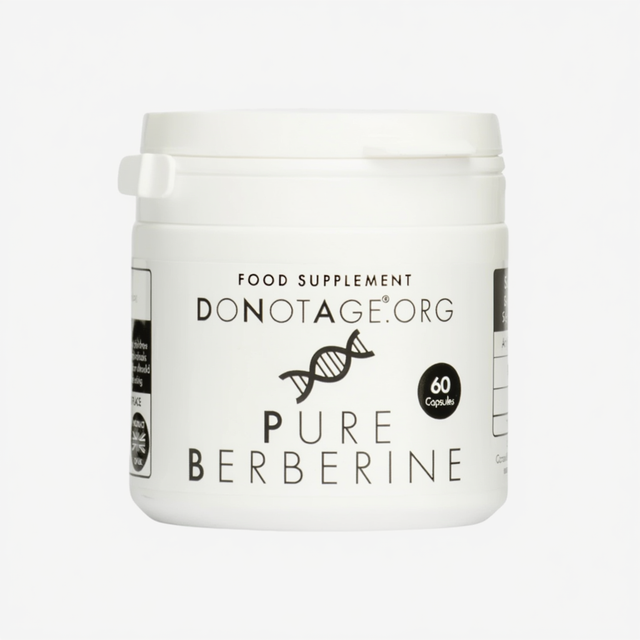
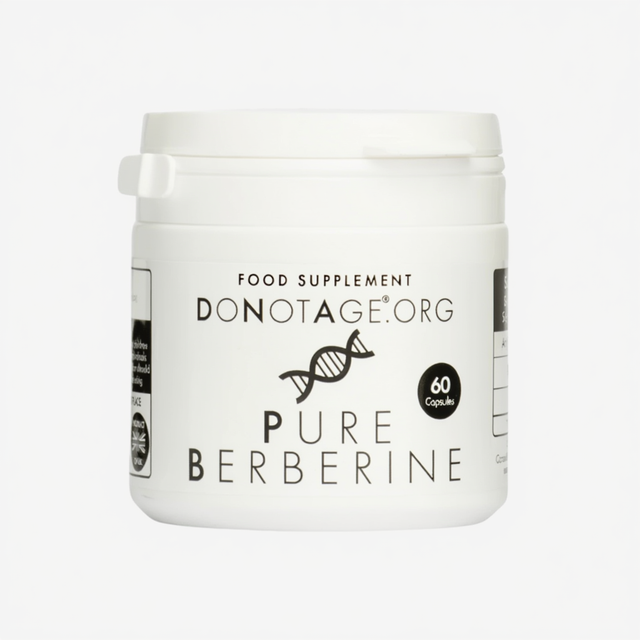
For product details, our DoNotAge Berberine review covers a conventional 500 mg capsule. Biohack Blueprint may earn commission from qualifying purchases. The recommendation concerns the product proposition, not equivalence to semaglutide.
Read the underlying berberine research in the Data Center. A useful comparison respects the evidence for both interventions and keeps each claim attached to the preparation actually tested.
Frequently asked questions
Is berberine nature’s Ozempic?
Does berberine increase GLP-1?
Can you compare the weight-loss percentages directly?
Can you combine berberine with Ozempic?
Can berberine maintain weight after stopping semaglutide?
Sources & article history
Sources (10)
-
Berberine and its more biologically available derivative, dihydroberberine, inhibit mitochondrial respiratory complex I: a mechanism for the action of berberine to activate AMP-activated protein kinase and improve insulin action Diabetes. 2008;57(5):1414-1418.
-
Gut microbiome-related effects of berberine and probiotics on type 2 diabetes (the PREMOTE study) Nature communications. 2020;11(1):5015.
-
The effect of berberine on obesity indices: a systematic review and meta-analysis International journal of obesity (2005). 2026;50(1):53-73.
-
Berberine and Adiposity in Diabetes-Free Individuals With Obesity and MASLD: A Randomized Clinical Trial JAMA network open. 2026;9(1):e2554152.
-
Treatment of type 2 diabetes and dyslipidemia with the natural plant alkaloid berberine The Journal of clinical endocrinology and metabolism. 2008;93(7):2559-2565.
-
Efficacy of berberine in patients with type 2 diabetes mellitus Metabolism: clinical and experimental. 2008;57(5):712-717.
-
Repeated administration of berberine inhibits cytochromes P450 in humans European journal of clinical pharmacology. 2012;68(2):213-217.
-
Effects of berberine on the blood concentration of cyclosporin A in renal transplanted recipients: clinical and pharmacokinetic study European journal of clinical pharmacology. 2005;61(8):567-572.
-
Natural Is Not Always Safe: A Case of Torsades De Pointes Induced by Berberine Supplementation Cureus. 2026;18(6):e111276.
-
Comparative pharmacokinetics and safety assessment of transdermal berberine and dihydroberberine PloS one. 2018;13:e0194979.
Article history (1)
- Published with current study results, formulation distinctions, safety information and linked original sources.