Berberine Phytosome vs Liposomal Berberine: Absorption Explained
Compare berberine Phytosome, liposomal and micellar delivery. Understand active doses, absorption studies, clinical outcomes, tolerability and value.
 By
Dr. Khaled Mahmoud, MBBCh
Critical Care Medicine, Longevity Science & Editorial Direction
 Reviewed by
Dr. Amr Yasser, PhD
Cardiometabolic, Musculoskeletal, Gut & Bioavailability
 Reviewed by
Dr. Abdulla Mostafa, PhD
Cellular Senescence, Neurological, Mitochondrial & Brain-Ageing Biology
- Published
- Last reviewed
- Reading time
- 6 min
- Sources cited
- 11

On this page
Berberine Phytosome and liposomal berberine both aim to change delivery, but they are not interchangeable technologies or interchangeable products. Some named formulations have produced higher measured exposure than conventional comparators. That does not establish that every “enhanced” capsule produces better glucose control, more weight loss or fewer adverse effects. [1] [2]
The most useful comparison separates the chemical ingredient, the carrier system, the active amount and the outcome measured. Without those details, an impressive absorption multiplier can be more confusing than informative.
Phytosome, liposome and micelle: what differs?
A phospholipid complex associates the active ingredient with carrier components. A liposomal approach generally uses lipid vesicles, while micellar systems use another form of dispersion. Commercial formulations can differ substantially even within these broad categories.
“Liposomal” is therefore not a guarantee that two products have the same composition, particle characteristics, stability or human evidence. A named ingredient's study cannot automatically validate every product using similar marketing language.
| Label or technology | The question to ask |
|---|---|
| Berberine HCl | What salt preparation and active amount are supplied? |
| Phytosome or phospholipid complex | What portion of the total complex is active berberine? |
| Liposomal | Is there human evidence for this exact finished formulation? |
| Micellar | What was compared, at what active dose and over what sampling window? |
| Enhanced bioavailability | Was the endpoint concentration, clinical benefit or both? |
The 2021 Phytosome pharmacokinetic study
A healthy-volunteer study involving twelve people compared conventional berberine chloride with a specific food-grade phospholipid formulation. The comparator's 500 mg supplied 452 mg berberine, while 550 or 1,100 mg of the studied complex supplied 188 or 376 mg, respectively. [1]
The phospholipid preparation produced higher measured exposure. This is evidence about the tested delivery system under the study conditions. It is not a demonstration that 550 mg of complex equals 550 mg isolated berberine, nor that any clinical benefit increases in direct proportion to the exposure.
Industry-employed authors were involved, which is relevant context rather than a reason to discard the result automatically. Replication, transparent methods and clinically meaningful endpoints still matter.
Other enhanced-formulation studies
Research has also examined a newer enhanced-absorption formulation, micellar delivery and emulsifying agents such as vitamin E TPGS or Quillaja extract. These studies add to the pharmacokinetic literature but test different interventions. [2] [3] [4]
A thirty-day tolerability study provides more exposure information than an acute experiment, yet remains different from a long-duration efficacy and safety program. A product should be credited for what its own study measured rather than inheriting every result from the formulation category.
Why absorption multipliers are difficult to compare
Two advertisements may claim fivefold and tenfold absorption without measuring the same thing. Differences may arise from active dose, fed or fasting conditions, analyte, dose normalization, peak concentration or area under the curve, sampling duration and participant characteristics.
Choosing the larger multiplier from separate trials is not a valid clinical ranking. Even a dose-normalized exposure advantage does not prove the same advantage for HbA1c, LDL, appetite or weight.
A useful study should make clear whether it measured parent berberine, metabolites or a combined quantity. The measure must remain attached to the claim rather than being shortened to a universal “works ten times better.”
Does higher systemic exposure guarantee better results?
No. Conventional berberine has shown activity in human metabolic trials despite low circulating exposure, and intestinal or microbial actions may contribute. [5] [6]
Higher exposure may be useful for some purposes, but the hypothesis still needs testing. It might not preserve the same balance of intestinal activity, metabolites, tolerability and interactions.
The five-man dihydroberberine pilot illustrates the broader principle: exposure differed, but acute glucose and insulin responses did not significantly differ. It is a separate technology, yet a helpful reminder that pharmacokinetics and efficacy are not synonyms. [7]
Are there clinical outcome studies of phospholipid formulations?
Yes. A placebo-controlled study in overweight people with impaired fasting glucose and studies in PCOS have examined specific phospholipid preparations. Those findings are more directly relevant to clinical outcomes than absorption alone, but their design and populations still constrain interpretation. [8] [9]
PCOS evidence also needs to be read alongside the 2026 integrity appraisal rather than relying on an older positive summary. The appraisal's scope should be respected; it is not a declaration that every formulation paper is false. [10]
The key distinction is between “there is a clinical study of this named preparation” and “every enhanced product has proven superior outcomes.” Only an appropriate direct comparison can support the latter kind of claim.
Capsule weight and cost comparisons
Carrier mass can make a label look stronger than it is. A 550 mg complex is not necessarily 550 mg active berberine. Equally, a smaller active amount can produce higher exposure under particular conditions. Both facts need to be considered together.
For cost comparisons, calculate the amount and number of servings on a consistent basis. Then ask whether the clinical evidence justifies the price for your intended goal. Cost per gram of complex and cost per gram of active ingredient answer different questions.
Avoid inventing an “effective equivalent dose” using an absorption multiplier. That calculation assumes a validated relationship between systemic exposure and clinical effect that may not exist.
Are enhanced formulations safer or easier on the stomach?
Tolerability can differ, but it needs product-specific evidence. A small acute or thirty-day study cannot establish the absence of uncommon events, interactions or risks in pregnancy, organ disease or complex medication regimens. [3]
Ingredients added to change absorption may have their own allergy, formulation or interaction implications. More absorbed is not automatically more suitable. Conventional berberine's human CYP findings are a reason for medication review, not a precise prediction for every novel formulation. [11]
Ask what was tested, for how long, in whom and how adverse events were collected. “No major adverse effects observed” in a small selected sample is not a universal safety guarantee.
How to read an enhanced-berberine label
- Identify the exact named formulation and active amount, if disclosed.
- Separate per-capsule amounts from a multi-capsule serving.
- Check carrier ingredients, allergens and any additional active compounds.
- Read the human study rather than relying on an absorption badge.
- Look for clinical endpoints relevant to your objective.
- Review medicines before changing from a conventional product.
The HCl guide explains salt and extract terminology. The dihydroberberine comparison addresses the related reduced compound separately.
Choosing the simpler or enhanced option
A conventional HCl capsule may offer a straightforward label, flexible capsule arithmetic and a closer match to several larger metabolic trials. An enhanced formulation may offer a studied delivery advantage or a clinical trial in a relevant setting. The better decision depends on the exact evidence, cost and individual context.
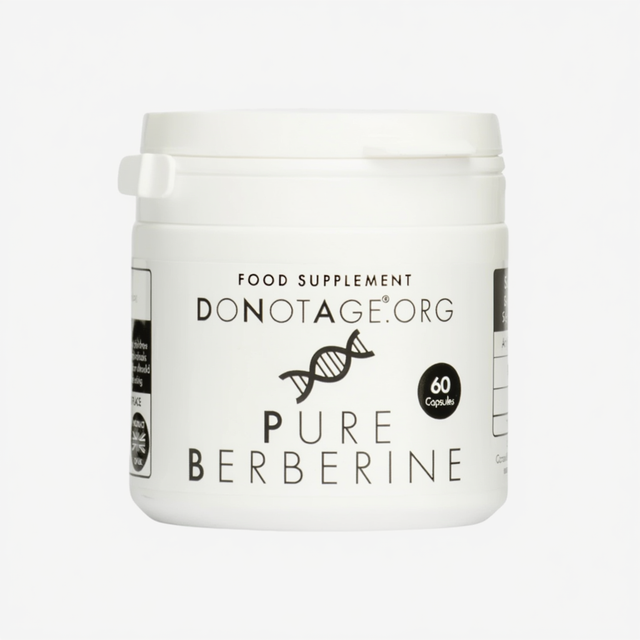
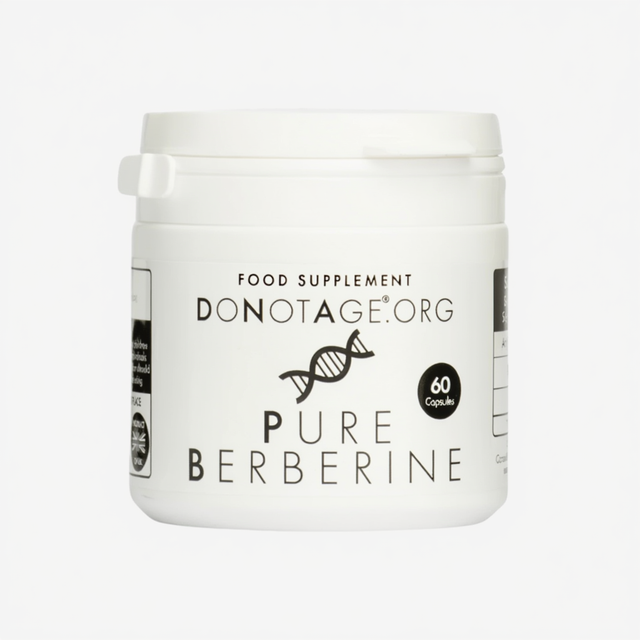
Our buying guide compares product propositions, and the DoNotAge review covers our preferred straightforward HCl option. Biohack Blueprint may earn commission from qualifying purchases. That preference does not mean conventional HCl wins every formulation comparison.
The Berberine Data Center links pharmacokinetic and clinical studies separately. A useful formulation claim should survive that separation.
Frequently asked questions
Is berberine Phytosome the same as liposomal berberine?
Does tenfold absorption mean tenfold benefit?
Is 550 mg Phytosome equal to 550 mg berberine?
Are enhanced formulations better tolerated?
Should everyone choose the most absorbed form?
Sources & article history
Sources (11)
-
Development of an Innovative Berberine Food-Grade Formulation with an Ameliorated Absorption: In Vitro Evidence Confirmed by Healthy Human Volunteers Pharmacokinetic Study Evidence-based complementary and alternative medicine : eCAM. 2021;2021:7563889.
-
Characterization and Pharmacokinetic Assessment of a New Berberine Formulation with Enhanced Absorption In Vitro and in Human Volunteers Pharmaceutics. 2023;15(11):2567.
-
A 30-Day Randomized Crossover Human Study on the Safety and Tolerability of a New Micellar Berberine Formulation with Improved Bioavailability Metabolites. 2025;15(4):240.
-
Emulsification by vitamin E TPGS or Quillaja extract enhanced absorption of berberine without affecting its metabolism in humans Food & function. 2022;13(23):12135-12143.
-
Treatment of type 2 diabetes and dyslipidemia with the natural plant alkaloid berberine The Journal of clinical endocrinology and metabolism. 2008;93(7):2559-2565.
-
Gut microbiome-related effects of berberine and probiotics on type 2 diabetes (the PREMOTE study) Nature communications. 2020;11(1):5015.
-
Absorption Kinetics of Berberine and Dihydroberberine and Their Impact on Glycemia: A Randomized, Controlled, Crossover Pilot Trial Nutrients. 2021;14(1):124.
-
Berberine phospholipid exerts a positive effect on the glycemic profile of overweight subjects with impaired fasting blood glucose (IFG): a randomized double-blind placebo-controlled clinical trial European review for medical and pharmacological sciences. 2023;27(14):6718-6727.
-
Effect of Berberine Phytosome on reproductive, dermatologic, and metabolic characteristics in women with polycystic ovary syndrome: a controlled, randomized, multi-centric, open-label clinical trial Frontiers in pharmacology. 2023;14:1269605.
-
Questionable Evidence for Berberine in Polyendocrine Metabolic Ovarian Syndrome: An Integrity-Based Reappraisal Advances in therapy. 2026.
-
Repeated administration of berberine inhibits cytochromes P450 in humans European journal of clinical pharmacology. 2012;68(2):213-217.
Article history (1)
- Published with current study results, formulation distinctions, safety information and linked original sources.