Berberine vs Metformin: Differences and Taking Them Together
Berberine vs metformin: examine the pilot trial, blood-sugar evidence, weight and PCOS questions, safety differences and supervised combination use.
 By
Dr. Khaled Mahmoud, MBBCh
Critical Care Medicine, Longevity Science & Editorial Direction
 Reviewed by
Dr. Amr Yasser, PhD
Cardiometabolic, Musculoskeletal, Gut & Bioavailability
 Reviewed by
Dr. Abdulla Mostafa, PhD
Cellular Senescence, Neurological, Mitochondrial & Brain-Ageing Biology
- Published
- Last reviewed
- Reading time
- 6 min
- Sources cited
- 10

On this page
Berberine vs metformin is not a comparison between two interchangeable versions of the same treatment. Berberine is a plant-derived compound sold in differing supplement formulations. Metformin is a prescription medicine with standardized dosing, a much larger clinical evidence base and established monitoring considerations.
Both have been investigated for glucose-related effects, and both can cause digestive symptoms. Shared mechanisms and a small comparative trial do not establish equal efficacy, equal safety or permission to substitute one for the other. [1] [2]
The differences at a glance
| Question | Berberine | Metformin |
|---|---|---|
| What is being purchased? | Supplement formulations with varying ingredients and delivery systems | A standardized prescription medicine |
| Human glucose evidence | Several trials, with heterogeneous quality and settings | Extensive clinical use and a larger treatment evidence base |
| Long-term certainty | Limited for many supplement regimens | Better characterized, with defined clinical precautions |
| Typical practical concern | GI effects, product identity and interactions | GI effects and medicine-specific suitability and monitoring |
| Can it be substituted without review? | No | Changes belong with the prescriber |
For the prescription medicine's indications and precautions, consult its current official labeling through DailyMed. The table is a framework for comparison, not individualized prescribing advice.
The 2008 pilot: the result behind the equivalence claim
The early investigation included a randomized comparison in 36 people with newly diagnosed type 2 diabetes and a separate add-on study in 48 people with less well-controlled diabetes. The randomized component used berberine 500 mg three times daily or metformin at the same nominal milligram schedule for thirteen weeks. [1]
The berberine arm improved substantially from a high baseline HbA1c, and the authors described a hypoglycemic effect similar to metformin. That is an encouraging pilot observation. It is not a large, adequately powered equivalence or non-inferiority program establishing that the treatments have the same effect within a clinically accepted margin.
The separate add-on component must also stay separate. It was not another randomized head-to-head comparison, and its participants cannot simply be added to the randomized denominator to make the comparison look larger.
Why “no significant difference” does not mean equal
A small study may fail to detect a difference because the treatments are similar, because the sample is too small, because measurements are variable or because follow-up is short. Demonstrating equivalence requires an appropriate design and an acceptable margin specified in advance.
The same logic applies to safety. If a study reports no severe organ toxicity over a few months, it does not prove that the products have identical long-term risks. Rare events require much larger exposure data, and participant exclusions can restrict applicability.
How their mechanisms overlap—and differ
Berberine has been linked experimentally to mitochondrial complex-I inhibition and changes in AMPK signaling. Its clinical research also involves intestinal microbial metabolism and other pathways. These findings do not reduce its activity to one “metabolic switch.” [2] [3]
Metformin's actions are also more complex than a single pathway. Two compounds influencing glucose physiology through partially overlapping mechanisms can differ substantially in exposure, dose-response, tissue effects, safety and demonstrated outcomes.
This is why “natural metformin” is an incomplete description. It may communicate a broad area of interest, but it should not be used as a substitution rule.
Blood sugar: what the wider berberine literature shows
A 116-person placebo-controlled trial and PREMOTE provide evidence that berberine can improve selected glucose-related outcomes in type 2 diabetes. PREMOTE's active-arm HbA1c change was about -0.99 percentage points versus -0.59 with placebo, illustrating why the actual comparator matters. [4] [3]
These studies strengthen the case that berberine has biological activity. They still do not establish that it provides the same benefits as metformin for every stage of diabetes or that it prevents complications to the same degree.
Reviews pooling add-on and single-agent studies need careful reading. Different background medicines and starting glucose levels can affect the apparent result. A pooled favorable effect is not a reason to discard a prescribed regimen. [5]
Weight loss: no universal winner
The berberine obesity literature suggests a modest average effect, and the large BRAVO trial did not improve its primary fat outcomes in diabetes-free adults with obesity and MASLD. This makes strong claims that berberine is a superior weight-loss alternative difficult to defend. [6] [7]
Metformin's role in a person's care is also not defined solely by weight change. The relevant decision may involve diabetes, metabolic risk, treatment tolerance or another clinical indication. Comparing a testimonial from one product with an average from a different population does not resolve that decision.
Our weight-loss guide covers the broader evidence, expected timelines and limitations.
PCOS comparisons require an additional qualification
Historical studies have compared berberine and metformin in PCOS, sometimes alongside other treatment. More recent integrity concerns reduce confidence in parts of that evidence base. A favorable metabolic endpoint should not be promoted as proof of better fertility or more live births. [8] [9]
The PCOS article explains the relevant trials and the later reappraisal. Clinical guidance and the person's actual goal should drive treatment decisions rather than a “natural versus pharmaceutical” framing.
Can you take berberine and metformin together?
Co-administration has been studied, including add-on settings, but it should be assessed individually. Potential benefit, gastrointestinal tolerance, the rest of the diabetes regimen and monitoring all matter. [1] [5]
Metformin alone does not have the same hypoglycemia risk as insulin or an insulin secretagogue. However, a person may be using several medicines, fasting, drinking alcohol or living with organ disease. Review the full situation rather than assuming one pair of names tells the whole story.
Berberine also affected CYP activity in a human probe study. Metformin should not be casually described as simply another CYP-metabolized drug; its pharmacology differs. The enzyme finding is relevant to the person's other medicines and overall interaction review, not a reason to invent a quantified metformin interaction. [10]
Which is safer?
There is no useful universal answer without the person and intended use. Metformin has defined precautions, including kidney-function considerations and monitoring for issues such as vitamin B12 deficiency in appropriate circumstances. Berberine brings product variability, a smaller long-term evidence base and demonstrated interaction potential.
Both can cause digestive symptoms. A “natural” origin does not automatically mean fewer adverse effects, and a prescription status does not mean the medicine is unsuitable. If metformin is poorly tolerated, discuss adjustments or alternatives with the prescriber rather than silently substituting a supplement.
Pregnancy and breastfeeding questions also require their own assessment. Berberine pretreatment research does not establish reproductive safety. See the pregnancy guide.
How to make the comparison useful
Define the goal, establish the current measurements and list the full treatment regimen. Ask which option has relevant evidence, what benefit would justify its use and how safety will be monitored. If a supplement is being considered, identify the exact form and amount rather than treating every bottle as the same intervention.
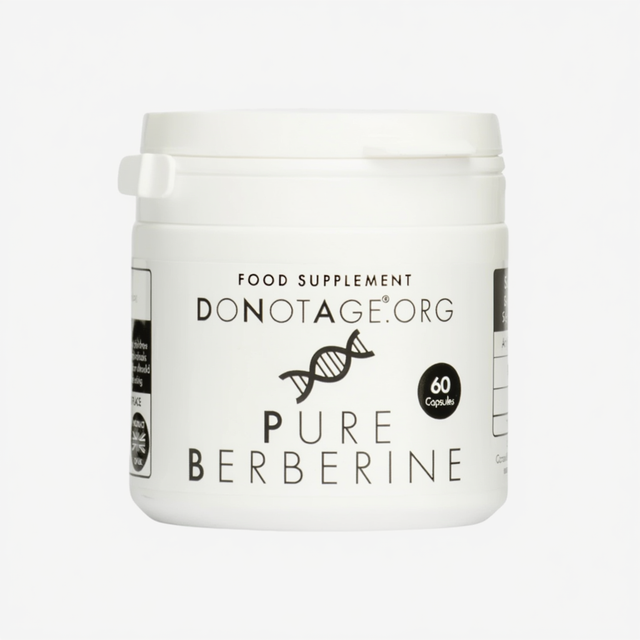
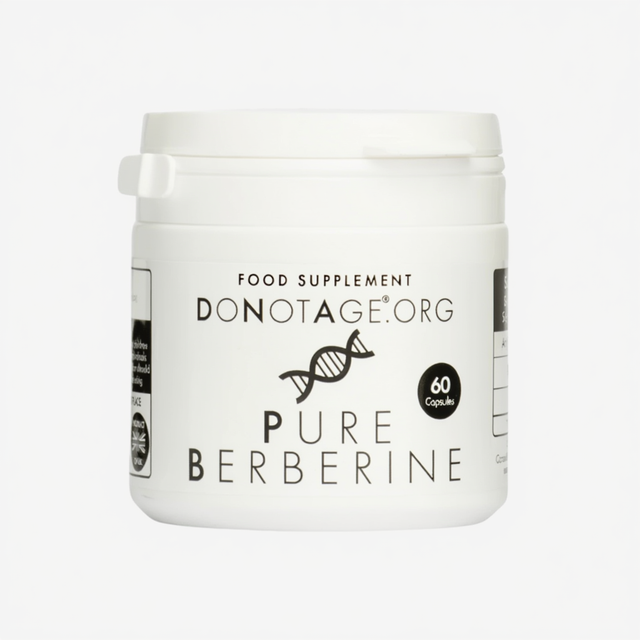
Our DoNotAge Berberine review covers a specific capsule for readers whose clinical review supports supplementation. Biohack Blueprint may earn commission from qualifying purchases. Product preference does not establish equivalence to metformin.
The Berberine Data Center links the original comparative and placebo-controlled studies. Read them as evidence for particular decisions, not as a contest decided by a catchy nickname.
Frequently asked questions
Is berberine as effective as metformin?
Can berberine replace metformin?
Can you take metformin and berberine together?
Is berberine safer because it is natural?
Which is better for weight loss?
Sources & article history
Sources (10)
-
Efficacy of berberine in patients with type 2 diabetes mellitus Metabolism: clinical and experimental. 2008;57(5):712-717.
-
Berberine and its more biologically available derivative, dihydroberberine, inhibit mitochondrial respiratory complex I: a mechanism for the action of berberine to activate AMP-activated protein kinase and improve insulin action Diabetes. 2008;57(5):1414-1418.
-
Gut microbiome-related effects of berberine and probiotics on type 2 diabetes (the PREMOTE study) Nature communications. 2020;11(1):5015.
-
Treatment of type 2 diabetes and dyslipidemia with the natural plant alkaloid berberine The Journal of clinical endocrinology and metabolism. 2008;93(7):2559-2565.
-
Effects of administering berberine alone or in combination on type 2 diabetes mellitus: a systematic review and meta-analysis Frontiers in pharmacology. 2024;15:1455534.
-
The effect of berberine on obesity indices: a systematic review and meta-analysis International journal of obesity (2005). 2026;50(1):53-73.
-
Berberine and Adiposity in Diabetes-Free Individuals With Obesity and MASLD: A Randomized Clinical Trial JAMA network open. 2026;9(1):e2554152.
-
A clinical study on the short-term effect of berberine in comparison to metformin on the metabolic characteristics of women with polycystic ovary syndrome European journal of endocrinology. 2012;166(1):99-105.
-
Questionable Evidence for Berberine in Polyendocrine Metabolic Ovarian Syndrome: An Integrity-Based Reappraisal Advances in therapy. 2026.
-
Repeated administration of berberine inhibits cytochromes P450 in humans European journal of clinical pharmacology. 2012;68(2):213-217.
Article history (1)
- Published with current study results, formulation distinctions, safety information and linked original sources.