Berberine HCl: Hydrochloride, Plant Extracts and Label Differences
What is berberine HCl? Understand hydrochloride, salt and extract amounts, 500 mg labels, enhanced formulations, human evidence and product quality.
 By
Dr. Khaled Mahmoud, MBBCh
Critical Care Medicine, Longevity Science & Editorial Direction
 Reviewed by
Dr. Amr Yasser, PhD
Cardiometabolic, Musculoskeletal, Gut & Bioavailability
 Reviewed by
Dr. Abdulla Mostafa, PhD
Cellular Senescence, Neurological, Mitochondrial & Brain-Ageing Biology
- Published
- Last reviewed
- Reading time
- 6 min
- Sources cited
- 12

On this page
Berberine HCl means berberine hydrochloride, a commonly used salt form. It is not a separate vitamin or an entirely different plant ingredient. The label still needs interpretation because salt mass, standardized extract mass and active berberine content are not always the same quantity.
That distinction affects comparisons between plain capsules, botanical complexes and enhanced-delivery products. A large milligram number is useful only when you know exactly what it describes. [1] [2]
What does hydrochloride mean?
Berberine is a naturally occurring alkaloid. It is commonly supplied as a chloride or hydrochloride preparation for formulation and use. Product labels may write HCl, HCL or hydrochloride, but the typography does not itself establish a different clinical benefit.
The relevant scientific and commercial details include ingredient identity, purity, water or salt form where specified, stability, amount and testing. A product using the familiar HCl name is not automatically better made than another product, and an unfamiliar delivery term is not automatically clinically superior.
Why supplement labels can look inconsistent
Consider these hypothetical descriptions:
- A capsule labeled “berberine HCl 500 mg.”
- A capsule labeled “barberry extract 500 mg, standardized to 10% berberine.”
- A capsule labeled “berberine phospholipid complex 550 mg.”
These labels describe different material quantities. The standardized-extract example would imply 50 mg of the constituent if the label defines the standardization that way. The delivery complex may include carriers as well as the active ingredient. None can simply be assumed equivalent because each uses a similar front-label number.
| Label term | What to identify |
|---|---|
| Berberine HCl | Amount of the specified salt preparation |
| Standardized botanical extract | Extract amount and percentage or amount of berberine |
| Whole herb or root powder | Species, tissue and whether constituent content is quantified |
| Phytosome or liposomal complex | Total complex mass, active amount and exact formulation |
| Proprietary blend | Whether the individual berberine amount is disclosed |
A real pharmacokinetic example
In one healthy-volunteer study, 500 mg of the comparator berberine chloride preparation supplied 452 mg berberine, while 550 mg of the studied Phytosome supplied 188 mg. Both the active amount and the delivery system mattered to the comparison. [1]
This is not a universal conversion formula for every label. It illustrates why a study should state the actual preparation and why consumers should not add complex weights as if every milligram were isolated berberine.
It also does not mean that the formulation with less active mass is ineffective. The trial measured exposure, and the delivery system changed it. The clinical question still requires relevant outcome data rather than a mass-only ranking.
Is HCl the form used in human studies?
Conventional berberine preparations feature in several important metabolic studies. The 2008 diabetes/dyslipidemia trial used 1 g/day, and BRAVO explicitly used berberine HCl 500 mg twice daily. [3] [4]
These trials provide useful evidence for particular populations and endpoints. They do not show that every HCl product produces the same effect or that the HCl name guarantees a correct amount in the capsule.
A historical product assay found substantial variability in measured potency across commercial preparations. Product verification therefore matters alongside formulation identity. [5]
Does HCl have better absorption than every other form?
No blanket claim is justified. Some specialized formulations have produced higher measured exposure than conventional comparators. The result depends on the exact formulation, active dose, study participants, sampling period and analyte. [1] [6] [7]
Conversely, saying conventional berberine is poorly absorbed does not establish that it has no biological effect. Human metabolic trials and intestinal research provide evidence of activity despite low measured circulating concentrations. [3] [8]
The practical issue is evidence fit: does the product resemble an intervention with relevant clinical findings, and does an enhanced formulation justify its additional cost for the intended goal?
HCl vs dihydroberberine
Dihydroberberine is a related reduced form, not merely another spelling of HCl. A five-man crossover pilot found greater measured berberine exposure after dihydroberberine conditions but no significant glucose or insulin differences in that acute setting. [9]
The finding supports further pharmacokinetic interest. It does not establish a universal dose equivalence, better long-term safety or superior weight loss. See the dihydroberberine comparison.
HCl vs Phytosome and liposomal berberine
Phospholipid complexes, liposomes and micelles are delivery approaches, not interchangeable labels for the same finished product. Evidence for a named complex does not automatically apply to every capsule or gummy marketed as “liposomal.” [1] [10]
The delivery-system guide explains active amounts, exposure measures and the difference between better absorption and better clinical outcomes.
An absorption multiplier is not a clinical benefit multiplier. It may also change how confidently safety or interaction data from a conventional formulation can be applied.
Plant extracts are not automatically equivalent to isolated berberine
Berberine content varies across species, tissues and extraction methods. Roots or bark used medicinally are not the same exposure as culinary barberry fruit. Other plant constituents can also contribute to a botanical product's effects and risks. [2]
The food-sources article explains why a list of berberine-containing plants is not a reliable dietary-dose table. Do not convert root weight or a tea recipe into a supplement dose without validated composition data.
Is berberine HCl safe?
The salt name does not remove adverse effects or interactions. Digestive symptoms have occurred in clinical research, and repeated berberine exposure affected CYP enzyme activity in a human study. [11] [12]
Pregnancy and breastfeeding require caution regardless of whether the bottle says HCl, natural or high purity. A clean ingredient can still have pharmacological effects. Consult the safety guide and interaction article.
What the DoNotAge label currently says
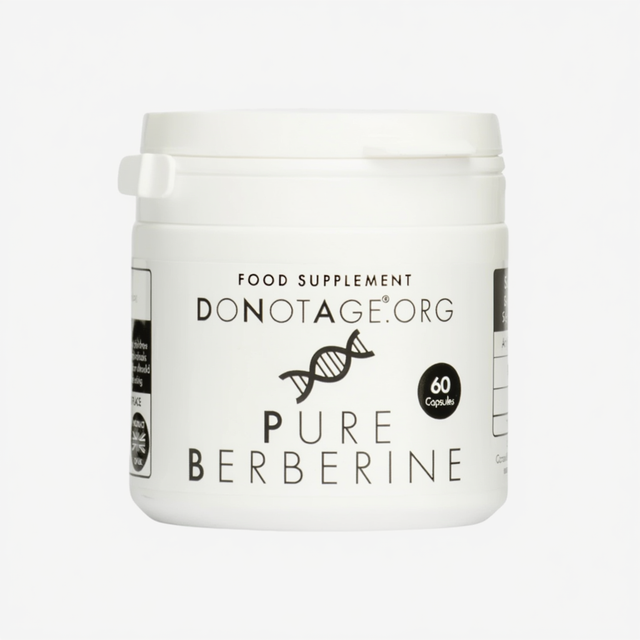
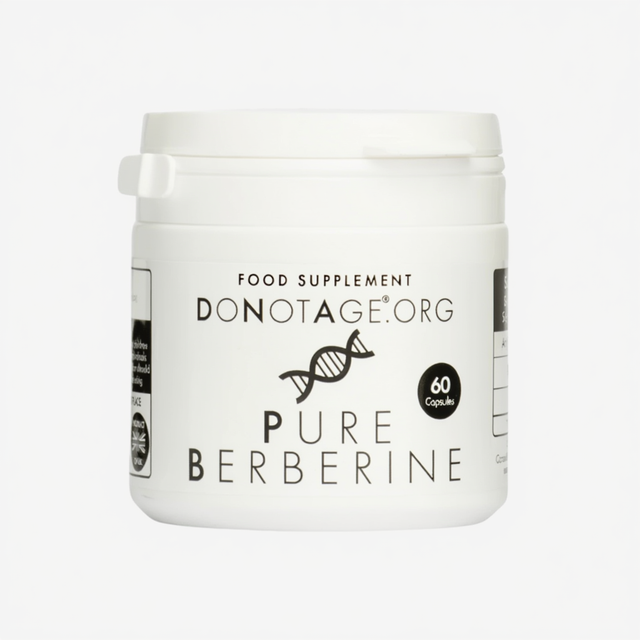
The official DoNotAge page identifies a 500 mg capsule and describes a 98%-purity berberine HCl ingredient. It also states that the powder is enclosed in an HPMC capsule without added fillers. These are manufacturer statements, not a laboratory result produced by Biohack Blueprint.
Our native review explains how those facts fit the broader evidence and what documentation a buyer can request. Biohack Blueprint may earn commission from qualifying purchases.
Read HCl as one useful piece of identity information. Combine it with the active amount, exact formulation, relevant trial evidence, quality documentation and a medication review before deciding whether a product makes sense.
Frequently asked questions
Is berberine HCl the same as berberine hydrochloride?
Is 500 mg barberry extract equal to 500 mg berberine?
Is HCl better than phytosome berberine?
Does poor absorption mean conventional berberine does not work?
Does high purity make HCl interaction-free?
Sources & article history
Sources (12)
-
Development of an Innovative Berberine Food-Grade Formulation with an Ameliorated Absorption: In Vitro Evidence Confirmed by Healthy Human Volunteers Pharmacokinetic Study Evidence-based complementary and alternative medicine : eCAM. 2021;2021:7563889.
-
Berberine: Botanical Occurrence, Traditional Uses, Extraction Methods, and Relevance in Cardiovascular, Metabolic, Hepatic, and Renal Disorders Frontiers in pharmacology. 2018;9:557.
-
Treatment of type 2 diabetes and dyslipidemia with the natural plant alkaloid berberine The Journal of clinical endocrinology and metabolism. 2008;93(7):2559-2565.
-
Berberine and Adiposity in Diabetes-Free Individuals With Obesity and MASLD: A Randomized Clinical Trial JAMA network open. 2026;9(1):e2554152.
-
Variability in Potency Among Commercial Preparations of Berberine Journal of dietary supplements. 2018;15(3):343-351.
-
Characterization and Pharmacokinetic Assessment of a New Berberine Formulation with Enhanced Absorption In Vitro and in Human Volunteers Pharmaceutics. 2023;15(11):2567.
-
Emulsification by vitamin E TPGS or Quillaja extract enhanced absorption of berberine without affecting its metabolism in humans Food & function. 2022;13(23):12135-12143.
-
Gut microbiome-related effects of berberine and probiotics on type 2 diabetes (the PREMOTE study) Nature communications. 2020;11(1):5015.
-
Absorption Kinetics of Berberine and Dihydroberberine and Their Impact on Glycemia: A Randomized, Controlled, Crossover Pilot Trial Nutrients. 2021;14(1):124.
-
A 30-Day Randomized Crossover Human Study on the Safety and Tolerability of a New Micellar Berberine Formulation with Improved Bioavailability Metabolites. 2025;15(4):240.
-
Efficacy of berberine in patients with type 2 diabetes mellitus Metabolism: clinical and experimental. 2008;57(5):712-717.
-
Repeated administration of berberine inhibits cytochromes P450 in humans European journal of clinical pharmacology. 2012;68(2):213-217.
Article history (1)
- Published with current study results, formulation distinctions, safety information and linked original sources.