Berberine for Menopause Weight Gain: What Evidence Applies?
Berberine for menopause weight gain: distinguish mixed-adult evidence, female lipid trials, blend claims, metabolic goals, dosing limits and safety.
 By
Dr. Khaled Mahmoud, MBBCh
Critical Care Medicine, Longevity Science & Editorial Direction
 Reviewed by
Dr. Amr Yasser, PhD
Cardiometabolic, Musculoskeletal, Gut & Bioavailability
 Reviewed by
Dr. Abdulla Mostafa, PhD
Cellular Senescence, Neurological, Mitochondrial & Brain-Ageing Biology
- Published
- Last reviewed
- Reading time
- 6 min
- Sources cited
- 9

On this page
Berberine menopause claims often focus on weight gain and metabolic health during a difficult transition. The biological rationale is plausible, but the evidence for plain berberine producing a specific menopause-related weight-loss benefit is much less direct than the marketing often implies.
Most of the berberine weight literature involves mixed adult metabolic populations. A study enrolling women is not automatically a menopause trial, and a multi-ingredient product cannot establish the independent effect of berberine. [1] [2]
Start with the outcome you want to change
Midlife concerns may involve body composition, waist size, glucose, cholesterol, sleep or vasomotor symptoms. These are different outcomes. A supplement studied for LDL cannot be credited with treating hot flushes, and a waist change does not prove that hormonal physiology has been “balanced.”
Age, menopausal stage, medicines, activity, food intake, sleep and other conditions can all affect the decision. The first useful step is identifying the actual problem rather than assuming one compound addresses every part of the transition.
What the general weight-loss evidence says
An updated meta-analysis of 23 berberine articles estimated a small average body-weight effect, about 0.88 kg relative to comparison groups. It did not establish a menopause-specific effect or a universal result for an individual woman. [1]
BRAVO randomized 337 diabetes-free adults with obesity and MASLD to 1 g/day or placebo for six months. Its primary visceral-fat and liver-fat outcomes were not significantly improved. That is relevant to broad belly-fat promises, even though it was not designed as a menopause-specific trial. [3]
These findings do not mean that no woman can have a useful metabolic response. They mean the evidence cannot support a predictable menopause transformation or targeted removal of midlife abdominal fat.
Female participants are not the same as a menopausal subgroup
A 2026 lipid report studied 100 women aged 20–65 and compared results with stored samples from a prior male trial. Selected lipid responses were larger in women. That finding is interesting for sex-specific metabolic research, but it does not establish that menopausal status caused the difference. [2]
Age range alone cannot reliably classify menopause. A proper menopause-specific claim needs clear reproductive-stage definitions, an appropriate sample, relevant endpoints and an analysis that was designed to answer the question.
Hormone findings also need care. A change in a measured androgen is not proof that a supplement restores a healthy “balance” for every woman, treats symptoms or replaces hormone therapy.
| Evidence category | What it can tell you | What it cannot automatically tell you |
|---|---|---|
| Mixed-adult obesity trials | Average effects in the enrolled population | A menopause-specific weight benefit |
| A trial enrolling women across ages | Female-cohort results | Which reproductive stage benefits most |
| A multi-ingredient menopause product | The effect of that complete intervention | Berberine's independent contribution |
| Experimental AMPK findings | A possible mechanism | Relief of hot flushes or meaningful human fat loss |
What about menopause-specific blends?
Commercial products may combine berberine with cinnamon, inositol, chromium, probiotics or other ingredients. That can be a distinct product worth evaluating, but its evidence must match its exact formula.
For example, a berberine–cinnamon trial in type 2 diabetes improved selected glucose and LDL outcomes without establishing a menopause-specific weight-loss benefit. Its results should not be reassigned to a different formula simply because the ingredient names overlap. [4]
Similarly, a berberine–silymarin review concerns combination evidence and metabolic markers. It does not establish that adding an arbitrary milk-thistle capsule produces a menopause treatment. [5]
Does AMPK activation solve menopause weight gain?
Experimental research connects berberine with mitochondrial energy handling and AMPK signaling. These pathways are part of the scientific rationale, not evidence that a capsule recreates exercise, reverses the transition or guarantees a calorie deficit. [6]
The relevant human endpoint still has to improve. A mechanistic diagram is not a substitute for a controlled trial measuring body composition, symptoms or clinically important metabolic outcomes.
This is particularly important when a product combines longevity language with women's-health claims. A plausible pathway does not establish that the same intervention improves lifespan, cognition, sleep and waist size at once.
Blood sugar and cholesterol may be more measurable goals
Berberine has a stronger human research base for selected glucose and lipid measures than for a menopause-specific weight-loss effect. That can make an identified metabolic abnormality a more useful topic to discuss with a clinician. [7] [8]
The blood-sugar guide and cholesterol article examine those results. They do not imply every midlife woman needs lower glucose or that a supplement should replace established treatment.
If there is no defined abnormality or outcome, it becomes difficult to know whether the product is useful. “Feeling metabolically supported” is not a substitute for an agreed clinical goal.
Dose, timing and interaction questions
There is no established berberine dose specifically proven to resolve menopause weight gain. General metabolic-study amounts cannot simply be relabeled a menopause protocol. The dosage guide keeps those distinctions visible.
Medication review matters, including hormone therapy, diabetes treatment, blood-pressure medicines and other prescriptions. Direct interaction data are not available for every individual pair, so neither a universal prohibition nor a universal spacing rule is appropriate. Berberine's demonstrated CYP effects justify a medication-specific review. [9]
Pregnancy may still be possible during perimenopause. If that is relevant, the reproductive-safety question should be discussed explicitly rather than inferred from age. See the pregnancy guide.
A practical way to evaluate a trial of use
Define the intended outcome and establish a baseline. Keep the exact formulation and daily amount recorded. Review medicines and tolerability. Reassess at an agreed time using the measurement relevant to the goal, while documenting other changes in the same period.
A lack of weight change should not automatically trigger a larger amount or an expanding stack. Nor should digestive symptoms be presented as a necessary metabolic reset.
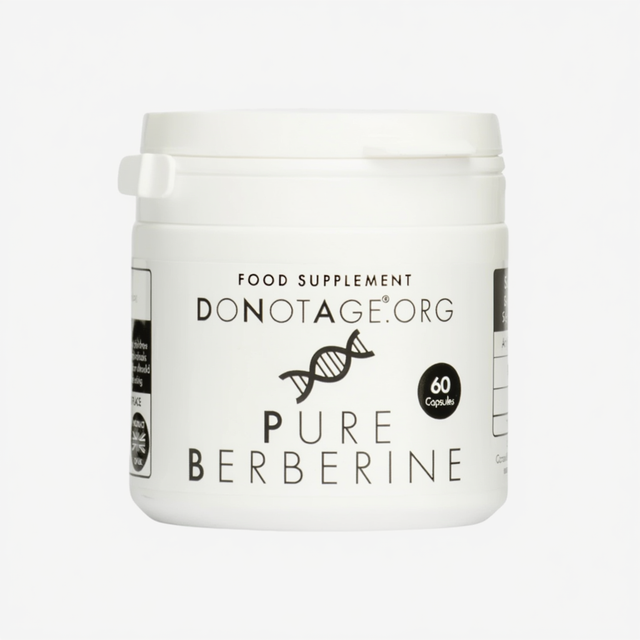
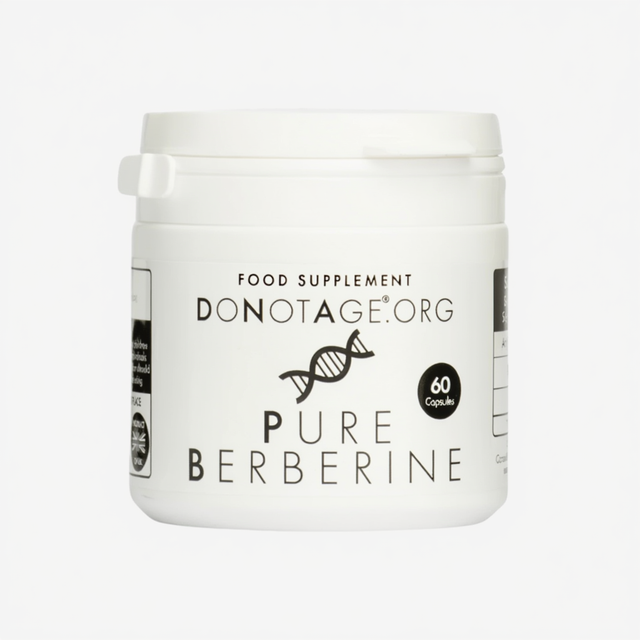
For a straightforward capsule option, our DoNotAge Berberine review covers current label and quality information. Biohack Blueprint may earn commission from qualifying purchases. The product recommendation does not turn mixed-adult research into menopause-specific proof.
Berberine may remain a reasonable subject for a focused metabolic discussion. The strongest current position is specific and measurable, with clear limits on what has been shown. The Data Center links the studies behind that assessment.
Frequently asked questions
Does berberine help menopause belly fat?
Is berberine good for perimenopause?
Does berberine balance menopause hormones?
Can berberine be taken with hormone therapy?
What dose should be used for menopause weight gain?
Sources & article history
Sources (9)
-
The effect of berberine on obesity indices: a systematic review and meta-analysis International journal of obesity (2005). 2026;50(1):53-73.
-
Sex-Specific Lipid, Apolipoprotein B, and Lipoprotein(a) Responses to Berberine Based on 2 Randomized Placebo-Controlled Trials JACC. Asia. 2026;6(10 Pt 1):2204-2216.
-
Berberine and Adiposity in Diabetes-Free Individuals With Obesity and MASLD: A Randomized Clinical Trial JAMA network open. 2026;9(1):e2554152.
-
The efficacy and safety of berberine in combination with cinnamon supplementation in patients with type 2 diabetes: a randomized clinical trial European journal of nutrition. 2025;64(2):102.
-
Metabolic effect of berberine-silymarin association: A meta-analysis of randomized, double-blind, placebo-controlled clinical trials Phytotherapy research : PTR. 2019;33:862-870.
-
Berberine and its more biologically available derivative, dihydroberberine, inhibit mitochondrial respiratory complex I: a mechanism for the action of berberine to activate AMP-activated protein kinase and improve insulin action Diabetes. 2008;57(5):1414-1418.
-
Treatment of type 2 diabetes and dyslipidemia with the natural plant alkaloid berberine The Journal of clinical endocrinology and metabolism. 2008;93(7):2559-2565.
-
Overall and Sex-Specific Effect of Berberine for the Treatment of Dyslipidemia in Adults: A Systematic Review and Meta-Analysis of Randomized Placebo-Controlled Trials Drugs. 2023;83(5):403-427.
-
Repeated administration of berberine inhibits cytochromes P450 in humans European journal of clinical pharmacology. 2012;68(2):213-217.
Article history (1)
- Published with current study results, formulation distinctions, safety information and linked original sources.