Berberine and Cinnamon: Combination Benefits and Study Limits
Berberine and cinnamon evidence: examine the 2025 trial, Ceylon claims, chromium blends, glucose and LDL findings, weight results and safety.
 By
Dr. Khaled Mahmoud, MBBCh
Critical Care Medicine, Longevity Science & Editorial Direction
 Reviewed by
Dr. Amr Yasser, PhD
Cardiometabolic, Musculoskeletal, Gut & Bioavailability
 Reviewed by
Dr. Abdulla Mostafa, PhD
Cellular Senescence, Neurological, Mitochondrial & Brain-Ageing Biology
- Published
- Last reviewed
- Reading time
- 6 min
- Sources cited
- 8

On this page
Berberine and cinnamon have been tested together in a randomized trial in type 2 diabetes. The combination improved selected glucose and LDL measures over twelve weeks, but the study did not include separate berberine-only and cinnamon-only arms. It therefore cannot establish that the ingredients were synergistic or that adding cinnamon outperforms berberine alone. [1]
That distinction is the key to evaluating the many Ceylon-cinnamon, chromium and berberine blends now marketed for metabolic health.
The 2025 combination trial
Participants received a divided daily total of 1,200 mg berberine and 600 mg cinnamon or placebo for twelve weeks. The study reported significant between-group differences in fasting blood sugar, HbA1c and LDL cholesterol. [1]
Total cholesterol, HDL and triglycerides did not significantly differ between groups, and other measured metabolic and anthropometric outcomes were not significantly improved. The result should therefore not be summarized as broad success across every cardiometabolic measure.
The indexed abstract does not provide every methodological detail or a participant denominator. We do not invent those missing details or assign a cinnamon species simply because a commercial product uses one.
| Question | What this trial answers |
|---|---|
| Can this specific combination affect selected markers? | It reported favorable glucose and LDL findings versus placebo |
| Is cinnamon better than berberine alone? | Not tested by separate single-ingredient arms |
| Are the ingredients synergistic? | Not established by this design |
| Did the intervention reliably reduce body measurements? | The abstract did not report a significant anthropometric advantage |
| Does every commercial blend match the intervention? | No; ingredient identity and amounts must be checked |
Why “synergy” requires more than a positive combination result
If two ingredients are given together and the group improves, several explanations remain possible. One ingredient may drive most of the effect, both may contribute independently, or an interaction may matter. A placebo comparison alone cannot separate those possibilities.
A factorial or appropriately designed multi-arm study can address additional questions. Without that design, the correct claim is that the tested combination showed a result, not that each component amplified the other.
This principle applies equally to favorable and null results. A blend that does not improve weight does not prove neither ingredient can influence any metabolic endpoint in another context.
Ceylon cinnamon vs other cinnamon preparations
Species, extraction method and constituent specification matter. The term “cinnamon” does not identify a universal standardized intervention. Ceylon and cassia preparations differ, including in typical coumarin content, while commercial extracts may be characterized differently from culinary powder.
The NCCIH cinnamon overview discusses the evidence and safety considerations. A Ceylon label should not be used to assume the product exactly matches a trial that did not clearly identify that preparation in the accessible report.
Nor does a preferred species establish that a combination is clinically superior. Identity is a necessary part of comparison, not proof of the final outcome.
What about added chromium?
Adding chromium changes the intervention. A berberine–cinnamon trial does not automatically validate a three-ingredient formula, particularly when the amounts and chemical forms differ.
A 2026 study in the Data Center evaluated berberine with white mulberry leaf extract and chromium picolinate. That is another distinct combination, not additional evidence for every cinnamon product. [2]
Check chromium units carefully: micrograms and milligrams differ by a factor of one thousand. The amount of a mineral compound and its elemental content can also differ. More ingredients do not make a formula more transparent if their quantities are unclear.
Blood sugar and cholesterol: what can reasonably be said?
The combination trial adds a specific positive signal to a broader berberine literature involving glucose and lipids. Conventional berberine itself has placebo-controlled evidence in these areas, but cross-trial comparisons cannot quantify the added contribution of cinnamon. [3] [4] [1]
An HbA1c improvement is not proof that a blend prevents diabetes complications or replaces prescribed treatment. A lower LDL is not the same as demonstrated fewer cardiovascular events. Each claim requires its own outcome evidence.
Use the blood-sugar guide and cholesterol article for the broader evidence without assigning a blend-specific result to plain berberine.
Weight loss: the ingredient list is not a guarantee
The 2025 combination abstract did not report a significant advantage for the other measured anthropometric outcomes. It should not be promoted as proof of a dependable weight-loss formula. [1]
General berberine weight findings are also modest and inconsistent. A small pooled average and a substantial null fat-outcome trial are better context than a claim that combining two metabolic ingredients necessarily produces greater fat loss. [5] [6]
The weight-loss article covers that question in one place. A product review should not manufacture a second, more optimistic evidence standard for a blend.
Dose and label matching
The study used 1,200 mg berberine plus 600 mg cinnamon daily. A product containing a smaller cinnamon amount, an unspecified extract or a different daily serving does not automatically reproduce the intervention. That does not prove it is ineffective; it means the study is not an exact match.
Distinguish per-capsule and per-serving amounts. Also check whether “berberine complex” refers to isolated HCl, standardized plant material or a delivery carrier. The dosage guide explains why equal printed milligrams can describe unequal quantities.
Do not attempt to recreate a trial with arbitrary spoonfuls of spice and a larger supplement amount. Standardization, other ingredients and safety matter.
Safety and medicine interactions
Berberine can cause digestive effects and has demonstrated CYP interaction potential. A person using glucose-lowering medicines should review the entire regimen before adding another active combination. [7] [8]
Cinnamon preparations have their own considerations, including species-related constituents and tolerability. A blend does not dilute those questions away. People with liver disease or multiple medicines should discuss the actual formula with their clinician or pharmacist.
Pregnancy and breastfeeding safety cannot be inferred from a trial in nonpregnant adults with diabetes. See the pregnancy guide.
Plain berberine or a combination?
A plain product makes it easier to identify the active amount, compare with single-ingredient studies and interpret tolerability. A combination may be reasonable when its exact formula and evidence match a defined goal. Neither option should be selected by ingredient count alone.
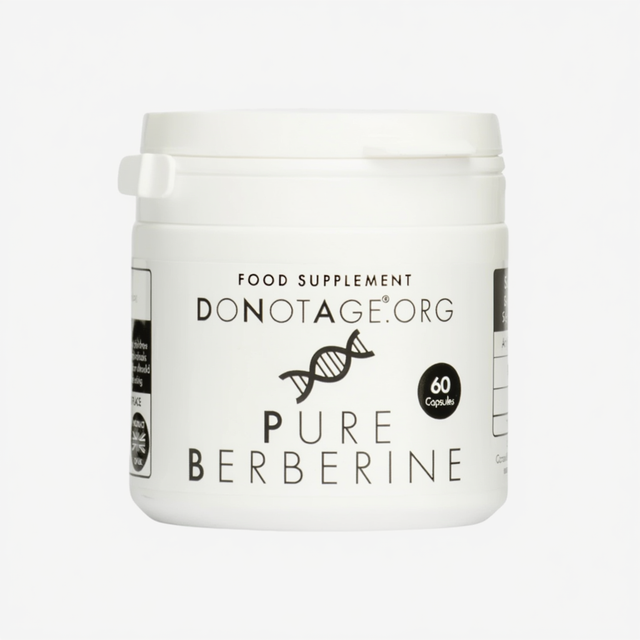
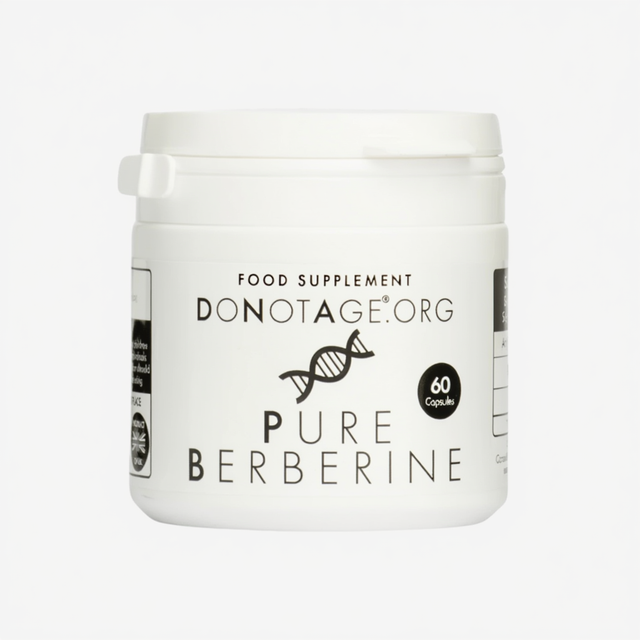
Our buying guide explains the product comparison. The DoNotAge review covers our preferred straightforward 500 mg option; Biohack Blueprint may earn commission from qualifying purchases.
The combination research is worth reading precisely because it tests a specific proposition. Keep that specificity intact. The Data Center links the trial and its limitations.
Frequently asked questions
Is berberine with cinnamon better than berberine alone?
Does berberine and Ceylon cinnamon help weight loss?
Was Ceylon cinnamon definitely used in the trial?
Does adding chromium improve the combination?
Can you recreate the trial with kitchen cinnamon?
Sources & article history
Sources (8)
-
The efficacy and safety of berberine in combination with cinnamon supplementation in patients with type 2 diabetes: a randomized clinical trial European journal of nutrition. 2025;64(2):102.
-
Effects of Berberine, White Mulberry Leaf Extract and Chromium Picolinate on Body Composition and Insulin Resistance in Adults with Obesity: A Randomized Controlled Trial Nutrients. 2026;18(17):2801.
-
Treatment of type 2 diabetes and dyslipidemia with the natural plant alkaloid berberine The Journal of clinical endocrinology and metabolism. 2008;93(7):2559-2565.
-
Gut microbiome-related effects of berberine and probiotics on type 2 diabetes (the PREMOTE study) Nature communications. 2020;11(1):5015.
-
The effect of berberine on obesity indices: a systematic review and meta-analysis International journal of obesity (2005). 2026;50(1):53-73.
-
Berberine and Adiposity in Diabetes-Free Individuals With Obesity and MASLD: A Randomized Clinical Trial JAMA network open. 2026;9(1):e2554152.
-
Efficacy of berberine in patients with type 2 diabetes mellitus Metabolism: clinical and experimental. 2008;57(5):712-717.
-
Repeated administration of berberine inhibits cytochromes P450 in humans European journal of clinical pharmacology. 2012;68(2):213-217.
Article history (1)
- Published with current study results, formulation distinctions, safety information and linked original sources.