Berberine Gummies vs Capsules: Dose, Ingredients and Evidence
Berberine gummies vs capsules and liquids: compare active doses, servings, ingredients, absorption claims, testing, cost and human evidence.
 By
Dr. Khaled Mahmoud, MBBCh
Critical Care Medicine, Longevity Science & Editorial Direction
 Reviewed by
Dr. Amr Yasser, PhD
Cardiometabolic, Musculoskeletal, Gut & Bioavailability
 Reviewed by
Dr. Abdulla Mostafa, PhD
Cellular Senescence, Neurological, Mitochondrial & Brain-Ageing Biology
- Published
- Last reviewed
- Reading time
- 6 min
- Sources cited
- 9

On this page
Berberine gummies may be easier to take than capsules, but convenience does not establish equal delivery or clinical benefit. The useful comparison is the actual ingredient amount per daily serving, exact formulation, additional ingredients and relevant human evidence.
Many familiar berberine trials used conventional oral capsules or tablets. Their results should not automatically be assigned to a gummy, liquid or blended chew simply because the same ingredient name appears on the package. [1] [2]
Compare the daily serving, not the largest number
A product can advertise a large number while requiring several gummies to reach it. Another may disclose a complex or botanical-extract weight rather than active berberine. The number of pieces in the bottle is not the number of full daily servings.
Use this hypothetical comparison to see the arithmetic:
| Example | Amount per unit | Units in the stated daily serving | Daily total |
|---|---|---|---|
| Conventional capsule | 500 mg HCl | 2 | 1,000 mg HCl |
| Gummy | 100 mg of the specified ingredient | 4 | 400 mg |
| Complex capsule | 550 mg total delivery complex | 1 | 550 mg complex, not necessarily active berberine |
These are label-reading examples, not descriptions of named gummy products or a dosing recommendation. The complex example matters because one studied 550 mg Phytosome preparation supplied 188 mg active berberine. [3]
Do gummies work as well as capsules?
A confident answer requires a suitable head-to-head study or sufficiently relevant product-specific evidence. The studies reviewed here do not establish that the entire gummy category is equivalent to conventional capsules for glucose, lipids or weight.
That is not the same as proving every gummy is ineffective. It means the evidence needs to match the intervention. Differences in amount, matrix, stability and co-ingredients should not be ignored.
When a seller cites a conventional capsule trial, ask whether the gummy supplies the same active preparation at a relevant exposure and whether that bridge has actually been tested. A similar flavor, plant source or total blend weight does not answer the question.
Sugar, sugar alcohols and other ingredients
Read the complete serving information. Added sugar may matter to the person's dietary goals, while sugar alcohols or other ingredients may contribute to digestive symptoms. The significance depends on the actual amount and individual tolerance, not the word “gummy” alone.
Berberine itself can cause gastrointestinal adverse effects. A gummy containing several additional ingredients can make it harder to identify the cause of nausea, diarrhea or bloating. [4]
Capsules also contain shell and formulation ingredients. “Filler-free” should be interpreted carefully: a necessary capsule shell is not the same thing as an undeclared active ingredient. The appropriate comparison is transparency and suitability, not an assumption that every nonactive component is harmful.
What about liposomal gummies?
“Liposomal” does not establish that the finished gummy reproduces a clinical formulation's particle properties, stability or human absorption. A named phospholipid or micellar ingredient's study should not automatically be transferred to a different dosage form. [3] [5]
The delivery-system guide explains why absorption multipliers require an exact comparator and why higher exposure is not a clinical-outcome multiplier.
Likewise, adding dihydroberberine creates a separate formulation question. The small acute DHB pilot cannot establish long-term superiority for every gummy containing the ingredient. [6]
Are gummies better for weight loss?
There is no dependable category-wide superiority demonstrated here. General berberine weight effects are modest and heterogeneous, and BRAVO did not improve its primary fat outcomes with conventional HCl. Changing the dosage form does not, by itself, solve that evidence limitation. [7] [2]
Testimonials may reflect changes in diet, activity or other treatments. A sweet, convenient product can improve adherence, but adherence only helps if the underlying intervention is useful and appropriate.
The weight-loss article covers results and before-and-after claims. It should not be used as proof of a gummy-specific effect.
Liquids and drops: another unit to check
Liquid labels may describe milligrams per milliliter, per dropper or per serving. A dropper is not necessarily a standardized volume unless the product defines it. The concentration and actual measured volume determine the amount.
Check whether the number describes berberine, an extract or a blend. Alcohol, flavorings and other ingredients may also matter. Shaking instructions, storage and the supplied measuring device are part of using the actual product correctly.
Do not convert a capsule regimen into an approximate number of drops without a verified concentration. A liquid is not inherently faster, stronger or safer simply because it avoids swallowing a capsule.
Testing, stability and label accuracy
A historical commercial-product study found meaningful differences between claimed and measured berberine potency. It cannot rank today's gummies or capsules, but it supports asking for useful documentation. [8]
Look for identity, potency, contaminants, lot identification and a meaningful shelf-life specification. A generic supplier certificate or an unrelated ingredient study is not the same as a test of the finished product you intend to buy.
For dosage forms with several ingredients, check that documentation addresses the full formula rather than only one component. A positive assay for the presence of berberine does not establish clinical efficacy.
Cost per usable serving
Compare the purchase price with the number of full labeled servings, not the number of gummies or capsules. If a bottle contains sixty gummies and the serving is four, it contains fifteen servings. That arithmetic is independent of whether the product is clinically useful.
Then compare the active formulation and amount on a consistent basis. A cheap low-amount product is not automatically good value, and an expensive enhanced product is not automatically worth the premium.
Avoid calculating an “equivalent clinical dose” by multiplying a gummy amount by an advertised absorption factor. The relationship to meaningful outcomes may not have been validated.
Safety does not depend on looking like medicine
A pleasant flavor or chewable format does not remove berberine's interaction potential or reproductive-safety concerns. Repeated berberine exposure affected CYP enzymes in a human study, and glucose-related medicines require review. [9]
Keep supplement gummies away from children, and do not treat them as sweets. Adult trial evidence does not define a safe pediatric regimen. Pregnancy and breastfeeding questions belong with the clinical team, regardless of dosage form.
See the safety guide and interaction article before choosing a format.
Which format makes sense?
A clear conventional capsule can be easier to compare with the clinical literature and to evaluate per unit. A gummy or liquid may offer practical advantages for someone who cannot swallow capsules, provided its amount, composition and evidence are adequately understood.
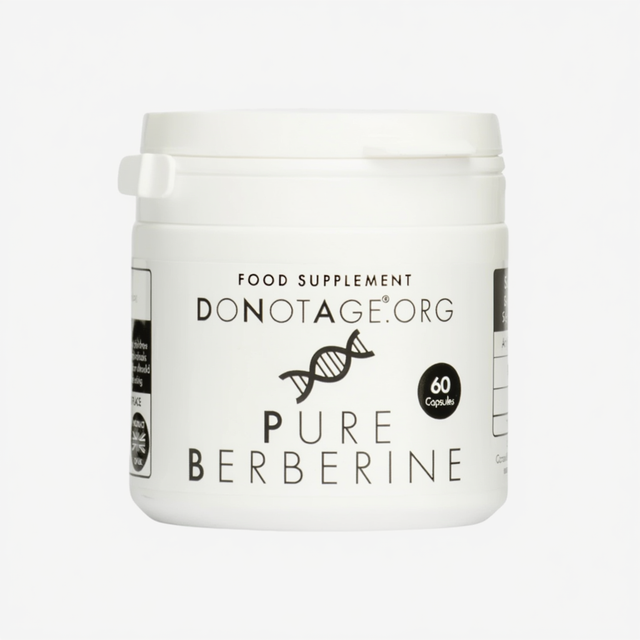
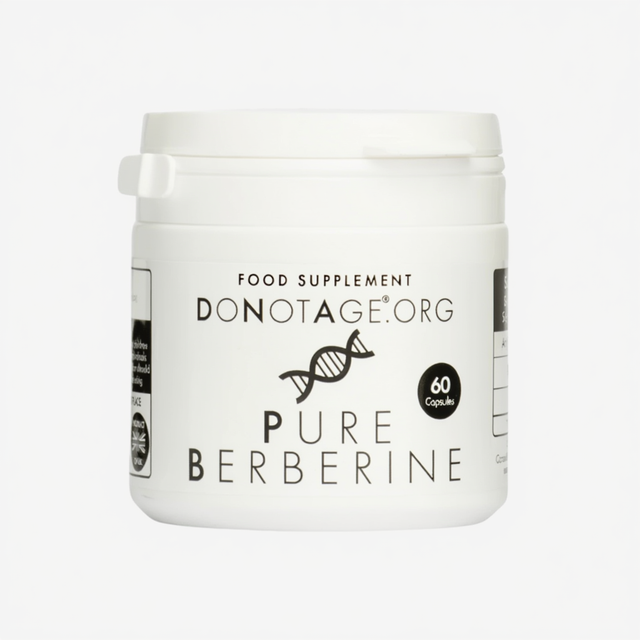
Our buying guide compares product choices. Our DoNotAge review covers a straightforward 500 mg capsule, with an affiliate relationship disclosed; Biohack Blueprint may earn commission from qualifying purchases.
Choose the dosage form that can be evaluated clearly and used appropriately. Convenience is valuable, but it should accompany an identifiable intervention rather than replace one. The Data Center provides the original research context.
Frequently asked questions
Are berberine gummies as effective as capsules?
Are berberine gummies good for weight loss?
How do you compare bottle value?
Are liposomal gummies automatically better absorbed?
Is liquid berberine stronger than capsules?
Sources & article history
Sources (9)
-
Treatment of type 2 diabetes and dyslipidemia with the natural plant alkaloid berberine The Journal of clinical endocrinology and metabolism. 2008;93(7):2559-2565.
-
Berberine and Adiposity in Diabetes-Free Individuals With Obesity and MASLD: A Randomized Clinical Trial JAMA network open. 2026;9(1):e2554152.
-
Development of an Innovative Berberine Food-Grade Formulation with an Ameliorated Absorption: In Vitro Evidence Confirmed by Healthy Human Volunteers Pharmacokinetic Study Evidence-based complementary and alternative medicine : eCAM. 2021;2021:7563889.
-
Efficacy of berberine in patients with type 2 diabetes mellitus Metabolism: clinical and experimental. 2008;57(5):712-717.
-
A 30-Day Randomized Crossover Human Study on the Safety and Tolerability of a New Micellar Berberine Formulation with Improved Bioavailability Metabolites. 2025;15(4):240.
-
Absorption Kinetics of Berberine and Dihydroberberine and Their Impact on Glycemia: A Randomized, Controlled, Crossover Pilot Trial Nutrients. 2021;14(1):124.
-
The effect of berberine on obesity indices: a systematic review and meta-analysis International journal of obesity (2005). 2026;50(1):53-73.
-
Variability in Potency Among Commercial Preparations of Berberine Journal of dietary supplements. 2018;15(3):343-351.
-
Repeated administration of berberine inhibits cytochromes P450 in humans European journal of clinical pharmacology. 2012;68(2):213-217.
Article history (1)
- Published with current study results, formulation distinctions, safety information and linked original sources.