NMN Supplement: What It Is, How It Works & What Human Research Shows
NMN is a direct NAD+ precursor with a growing human evidence base. This guide separates proven NAD+ effects from unproven anti-aging claims and covers dose, forms, safety, quality and clinical research.
 By
Dr. Khaled Mahmoud, MBBCh
Critical Care Medicine, Longevity Science & Editorial Direction
By
Dr. Khaled Mahmoud, MBBCh
Critical Care Medicine, Longevity Science & Editorial Direction
 Reviewed by
Dr. Amr Yasser, PhD
Cardiometabolic, Musculoskeletal, Gut & Bioavailability
Reviewed by
Dr. Amr Yasser, PhD
Cardiometabolic, Musculoskeletal, Gut & Bioavailability
 Reviewed by
Dr. Abdulla Mostafa, PhD
Cellular Senescence, Neurological, Mitochondrial & Brain-Ageing Biology
Reviewed by
Dr. Abdulla Mostafa, PhD
Cellular Senescence, Neurological, Mitochondrial & Brain-Ageing Biology
- Published
- Last reviewed
- Reading time
- 12 min
- Sources cited
- 13
On this page
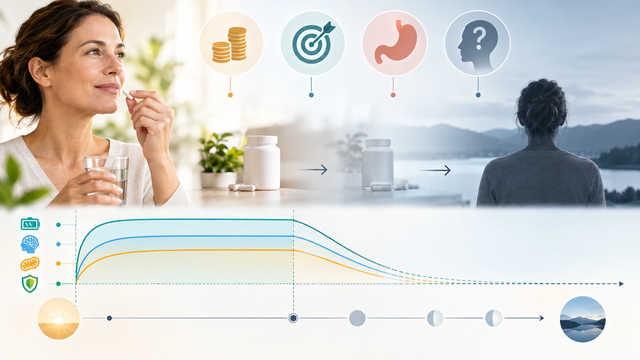
NMN, or nicotinamide mononucleotide, is a naturally occurring intermediate your cells can use to make NAD+. Oral NMN reliably raises blood NAD-related metabolites in human trials, but that biochemical effect is much better established than the broad “reverse aging” claims often attached to NMN supplements.
As of September 2026, the human evidence base is no longer just a handful of pilot studies. It includes randomized dose-ranging trials, direct NMN-versus-NR data, trials in older adults and people with metabolic disease, multiple systematic reviews and meta-analyses, and a 2026 European safety assessment. The overall picture is useful precisely because it is mixed: NMN raises NAD+, appears reasonably well tolerated in short-term studies, and has produced several population-specific signals, but it has not been shown to extend human lifespan or broadly reverse aging.
Think of NMN as a well-studied NAD+ precursor with emerging clinical evidence—not as a proven anti-aging drug.
NMN at a glance
| Question | Best current answer |
|---|---|
| What is NMN? | A nucleotide intermediate in the NAD+ salvage pathway. |
| Does oral NMN raise NAD+? | Yes. Multiple human trials show increases in whole-blood NAD+ or NAD-related metabolites. |
| Does NMN reverse aging? | No human trial has demonstrated reversal of biological aging or lifespan extension. |
| Does NMN improve metabolism? | Some individual trials show signals, but pooled effects on fasting glucose, HbA1c and lipids are mostly null. |
| Does NMN improve physical function? | Some trials report gait, walking, aerobic-capacity or fatigue signals; systematic evidence remains inconsistent. |
| Is NMN safe? | Short-term human data are broadly reassuring, but multi-year safety data and evidence in several special populations are limited. |
| Typical trial dose | Roughly 250–1,200 mg/day in many supplement-style trials, with some studies up to 2,000 mg/day. |
| Best-supported effect | Increasing circulating NAD+ biology, not a specific anti-aging clinical outcome. |
Understanding NMN and NAD+
What does NMN stand for?
NMN stands for nicotinamide mononucleotide. Chemically, it contains nicotinamide, ribose and a phosphate group. In human metabolism it sits close to nicotinamide adenine dinucleotide, or NAD+, a coenzyme required for energy transfer, redox reactions, DNA-repair signaling and enzymes such as sirtuins and PARPs.
NMN is not NAD+ itself. It is one of the molecules cells can use to replenish NAD+. That distinction is why searches for “NMN vs NAD” often mix together two different questions: what the molecules are, and which oral product is more likely to affect intracellular NAD metabolism. See our NMN vs NAD+ guide for that comparison.
How NMN becomes NAD+
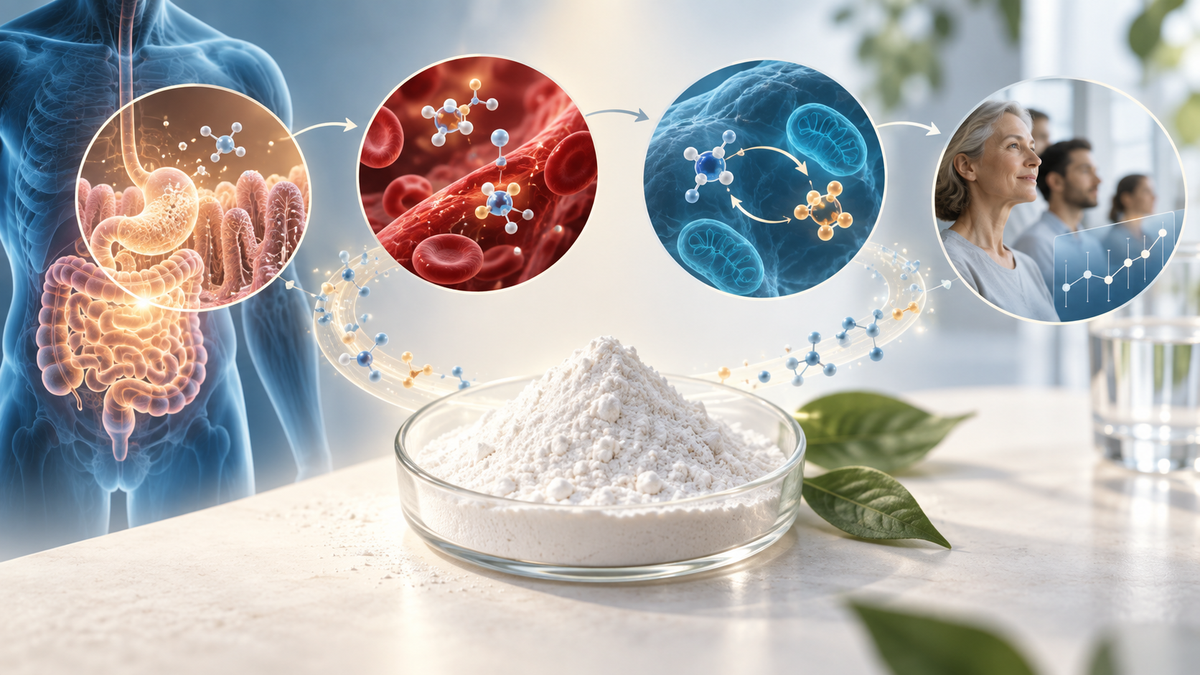
The traditional pathway is straightforward: nicotinamide is salvaged through NAMPT to NMN, and NMNAT enzymes convert NMN into NAD+. But human pharmacology is more complicated than the simple arrow diagram suggests.
A 2026 head-to-head trial randomized 65 healthy adults to NMN, nicotinamide riboside (NR), nicotinamide or placebo. After 14 days, 1,000 mg/day NMN and 1,000 mg/day NR each roughly doubled baseline whole-blood NAD+, with similar primary-endpoint effects. The same study added ex-vivo microbiome experiments suggesting that intestinal microbes can transform NMN and NR into nicotinic-acid-related metabolites before host tissues use them. [1]
Other human pharmacokinetic work with pharmaceutical-grade MIB-626 showed dose-dependent rises in circulating NAD and its metabolome at 1,000 and 2,000 mg/day over 14 days. [2]
The practical point: oral NMN clearly engages human NAD metabolism, but the route from capsule to tissue NAD+ is not simply “NMN is absorbed intact and goes straight into every cell.” For the mechanistic detail, see how NMN works.
Why is NMN associated with aging?
NAD+ is essential in cellular metabolism and is influenced by age, tissue type, inflammation, enzyme activity, nutrient state and disease. The scientific case for NAD restoration became popular after animal experiments showed that raising NAD-related metabolism could modify several age-associated phenotypes.
A major 2026 correction to the popular aging narrative is that whole-blood NAD+ does not appear to decline uniformly with age. Across seven independent human cohorts, rigorously measured whole-blood NAD+ remained stable across age groups. [3] That does not rule out age-associated NAD changes in muscle or other tissues; it means “NMN replaces NAD lost from aging” is too broad as a consumer claim.
A landmark 12-month mouse study reported improvements in energy expenditure, insulin sensitivity, physical activity and several other age-related measures with chronic NMN treatment. [4] That paper is important, but it is also a good example of how the NMN story became overstated: the dramatic “anti-aging” findings were in mice.
Human trials now let us ask a stricter question: what changes in people?
What human NMN trials actually show
| Evidence area | What has been observed in humans | Confidence |
|---|---|---|
| Blood NAD+ | Consistent increases across several randomized trials and dose-ranging studies. | Relatively strong |
| Insulin sensitivity | A notable positive trial in postmenopausal women with prediabetes; pooled routine glucose markers are mostly null. | Mixed / population-specific |
| Blood pressure | 2026 meta-analysis found a small DBP reduction; overall SBP effect was not significant. | Preliminary |
| Physical function | Signals for gait, walking speed, aerobic capacity and selected strength outcomes; not consistently replicated. | Preliminary / mixed |
| Sleep and fatigue | Several Japanese trials report secondary sleep or fatigue signals. | Preliminary |
| Body weight / fat | No convincing pooled weight-loss effect. | Weak |
| Lipids / fasting glucose | Meta-analyses are largely null. | Weak |
| Human longevity | No lifespan trial and no evidence of lifespan extension. | Unproven |
The 2026 systematic review and meta-analysis included 15 randomized trials and found no significant pooled improvement in body weight, BMI, fasting glucose, HbA1c, lipid profile or systolic blood pressure. It did find a small diastolic blood-pressure signal and generally reassuring short-term safety. [5]
That is why our NMN benefits review separates NAD elevation from actual clinical outcomes instead of treating them as the same thing.
Choosing and using an NMN supplement
NMN dosage used in human studies
There is no universally established “anti-aging dose.” Human studies have used materially different products, populations and endpoints. Common studied intakes include 250 mg/day, 300 mg/day, 600 mg/day, 900 mg/day, 1,000 mg/day, 1,200 mg/day and, in specialized pharmacokinetic work, 2,000 mg/day.
The multicenter dose-ranging trial by Yi and colleagues compared placebo with 300, 600 and 900 mg/day. [6] Other RCTs used 250 mg/day, while the MIB-626 program used 1,000–2,000 mg/day. These doses should not be collapsed into one recommended consumer dose because formulation, duration and population differ.
Our NMN dosage guide maps every major human dose and explains what each dose actually demonstrated.
What forms of NMN are available?
- Standard capsules or tablets: the closest format to most randomized supplement trials.
- Powder: chemically the same ingredient when authentic; dose accuracy depends on measurement and product quality.
- Sublingual NMN: now has human pharmacokinetic data showing a different early metabolite profile, but no proof of superior health outcomes.
- Liposomal NMN: marketed for absorption, but direct human outcome evidence demonstrating superiority over standard NMN remains absent.
- Proprietary crystalline or pharmaceutical-grade forms: may have their own pharmacokinetic data and should not automatically validate ordinary retail products.
The 2026 oral-versus-sublingual crossover study is especially important because it shows that route can alter early metabolism while still leaving the clinically important question unanswered: does the route improve health outcomes? [7] See liposomal and sublingual NMN.
NMN supplement quality matters more than the label design
NMN has an unusually strong reason to demand batch-level quality documentation. An independent analysis of marketed NMN and urolithin A products found large deviations from label claims, including products with little or no detectable labeled active ingredient. [8]
A separate 2026 analytical study developed an isomer-specific LC-MS/MS method and found substantial variation among eight commercial NMN supplements, including undeclared or inaccurately labeled ingredients. [9]
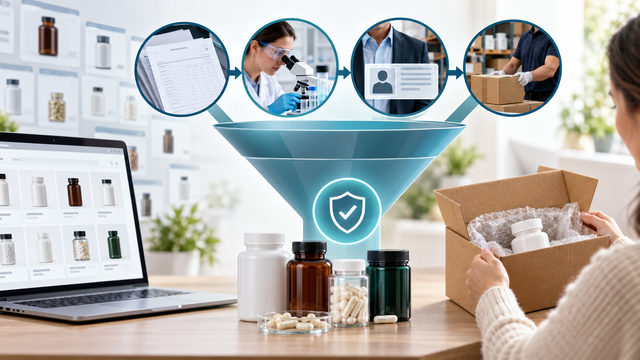
For a buyer, this changes the checklist. “99% purity” on a marketing page is not enough. Look for identity testing, quantitative assay, lot matching, date, laboratory information and contaminant panels. See how to verify NMN purity and COAs.
Is NMN safe?
Across short human trials, NMN has generally been well tolerated. The 2026 meta-analysis did not identify a clear increase in overall adverse events, serious adverse events, withdrawals or liver-enzyme abnormalities. [10]
That does not equal “proven safe for everyone indefinitely.” The gaps include long-term multi-year use, pregnancy and breastfeeding, many pediatric populations, severe organ disease and active cancer treatment. EFSA’s 2026 assessment concluded that a specific evaluated β-NMN material was safe under its proposed conditions up to 300 mg/day in adults excluding pregnant and lactating women. [11] That conclusion should not be generalized to every product and dose.
See our full NMN side effects and safety review and NMN drug-interactions guide.
Is NMN anti-aging?
- NMN can raise NAD+: supported in humans.
- NMN can change some age-related physiological endpoints: possible, with several early human signals.
- NMN reverses aging or extends human lifespan: not demonstrated.
Some studies use walking tests, sleep scales, metabolic markers or NAD concentrations. Those can be scientifically useful without being validated measures of “age reversal.”
NMN vs NR vs NAD+
NMN and NR are both NAD+ precursors. NAD+ is the final coenzyme. The 2026 direct human trial found similar 14-day whole-blood NAD+ increases from 1,000 mg/day NMN and 1,000 mg/day NR. [12]
Read NMN vs NR and NMN vs NAD+.
Who should be especially cautious?
People with active cancer or receiving chemotherapy deserve particular caution because 2026 preclinical pancreatic-cancer work found that NMN could protect tumor cells and reduce chemotherapy effectiveness in those models. [13] A different 2026 preclinical cancer model found antitumor immune effects, underscoring that this biology is context-dependent. [14]
Anyone undergoing oncology treatment should discuss NAD-boosting supplements with the treating oncology team rather than extrapolating from healthy-adult trials.
Important NMN questions and limitations
Where NMN comes from
NMN is synthesized inside the body and occurs in small amounts in foods. The 2016 Mills paper measured NMN in edamame, broccoli, avocado and other foods, generally at fractions to low single-digit milligrams per 100 grams. [15]
Those dietary amounts are far below the hundreds of milligrams used in human supplement trials. See NMN foods for the exact measurements.
Does more blood NAD+ mean more NAD+ everywhere?
No. Blood is accessible and convenient; brain, muscle, liver and other tissues regulate NAD differently. The Berven crossover found blood total-NAD increases from both precursors while cerebral total NAD did not significantly change over the same short eight-day comparison. [16]
This is why a blood biomarker should not be advertised as proof of whole-body rejuvenation.
What changed in 2026?
Several developments materially upgraded the evidence landscape:
- An NMN-specific systematic review/meta-analysis synthesized 15 randomized trials.
- A dedicated blood-pressure meta-analysis quantified the small pooled DBP signal.
- A larger randomized study directly compared NMN and NR and found comparable 14-day whole-blood NAD+ increases.
- A second tiny randomized crossover found a larger short-term blood total-NAD response to NR than NMN, showing that assay and timing matter.
- EFSA issued a favorable safety opinion for a specified chemically synthesized β-NMN material under proposed conditions.
- New cancer-model studies produced opposing signals, sharpening the need for treatment-specific caution.
See our complete NMN human-trials map for the publication-by-publication timeline.
Is NMN a drug or a supplement?
In the United States, FDA reversed its prior NMN drug-preclusion position in September 2025. That does not make NMN “FDA approved” for anti-aging. It means the ingredient is no longer excluded from the dietary-supplement definition on that particular basis.
See our continuously dated FDA-status page for the regulatory timeline.
What is β-NMN and why does the isomer matter?
Most clinical research and branded supplement materials concern β-NMN. A 2026 analytical study showed why identity testing matters: commercial products can vary in α-/β-NMN composition and labeling accuracy. [17]
“Contains NMN” is therefore a weaker statement than “lot-tested finished product contains the labeled amount of β-NMN.”
How to evaluate an NMN product
The evidence for the molecule cannot rescue a poor-quality bottle. Independent testing has found severe label-claim failures, and isomer-specific testing shows commercial products can differ chemically. [18] [19]
- Verify β-NMN identity.
- Look for lot-specific finished-product potency.
- Check contaminant testing appropriate to the dosage form.
- Match the serving size to the dose in relevant human evidence.
- Do not assume liposomal or sublingual marketing proves superiority.
- Separate ingredient clinical evidence from brand-specific evidence.
Our purity/COA guide explains the audit process, while the buyer guide applies it to current products.
What NMN cannot currently claim
- Human lifespan extension.
- General reversal of biological aging.
- Prevention or treatment of cancer.
- Reliable weight loss.
- Replacement of diabetes or hypertension medication.
- Proven fertility improvement in women or men.
- Guaranteed cognitive enhancement.
- Clinically proven superiority of liposomal NMN.
Where the science is heading
The field is moving from “does NMN raise NAD?” to much harder questions: who responds, which tissues change, whether biomarkers translate to function, how long benefits persist, and whether long-term augmentation improves healthspan without creating new risks. That transition is healthy. It is also where many marketing claims will either earn stronger evidence or disappear.
Related NMN guides
- NMN benefits
- NMN human trials
- NMN dosage
- NMN safety and side effects
- NMN purity and COAs
- best NMN supplements
- where to buy NMN safely
- NMN for men
- what happens when you stop NMN
Bottom line
NMN is one of the best-studied consumer NAD+ precursors. It is not an evidence-free fad, but it is not a proven human longevity therapy either. Randomized trials repeatedly show biological activity and NAD+ elevation; pooled evidence does not show broad metabolic transformation, and no trial has demonstrated lifespan extension or generalized age reversal.
Frequently asked questions
What is NMN?
What does NMN do in the body?
Does NMN really work?
Is NMN an anti-aging supplement?
What is beta-NMN?
How much NMN is usually studied?
Is NMN safe?
How do I choose an NMN supplement?
Is NMN a peptide?
Is NMN a vitamin?
Is NMN related to nicotine?
Is NMN worth taking?
Who should take NMN?
Sources & article history
Sources (13)
-
The differential impact of three different NAD+ boosters on circulatory NAD and microbial metabolism in humans Nature Metabolism. 2026;Volume 8, issue 1, pages 62–73.
-
MIB-626, an oral formulation of a microcrystalline unique polymorph of β-nicotinamide mononucleotide, increases circulating nicotinamide adenine dinucleotide and its metabolome in middle-aged and older adults The Journals of Gerontology, Series A: Biological Sciences and Medical Sciences. 2023;Volume 78, issue 1, pages 90–96.
-
Long-Term Administration of Nicotinamide Mononucleotide Mitigates Age-Associated Physiological Decline in Mice Cell Metabolism. 2016;24(6):795-806.
-
Safety and Metabolism-Related Outcomes of Oral Nicotinamide Mononucleotide Supplementation in Adults: A Systematic Review and Meta-Analysis Nutrients. 2026;18, 2251.
-
The efficacy and safety of β-nicotinamide mononucleotide (NMN) supplementation in healthy middle-aged adults: a randomized, multicenter, double-blind, placebo-controlled, parallel-group, dose-dependent clinical trial GeroScience. 2023;45(1):29-43.
-
Sublingual NMN administration increases early circulating terminal catabolites 2PY and 4PY compared with oral administration in healthy adult men Scientific Reports. 2026;16(1):27464.
-
Testing the amount of nicotinamide mononucleotide and urolithin A as compared to the label claim GeroScience. 2024;Volume 46, pages 5075–5083.
-
Aqueous LC-MS/MS quantification of α-/β-nicotinamide mononucleotide in dietary supplements using a pentabromophenyl column Analytica Chimica Acta. 2026;1386:345027.
-
Safety of beta-nicotinamide mononucleotide (β-NMN) pursuant the regulation (EU) 2015/2283 and the bioavailability of nicotinamide from this source in the context of Directive 2002/46/EC EFSA Journal. 2026;24(5):e10007.
-
Vitamin B3 derivatives support pancreatic cancer cell survival and chemotherapy resistance Cancer Letters. 2026;645:218334.
-
Nicotinamide mononucleotide enhances anti-tumor effect by resetting macrophages toward the inflammatory M1-like phenotype Molecular Therapy Oncology. 2026;34(2):201221.
-
The NAD-brain pharmacokinetic study of NAD augmentation in blood and brain using oral precursor supplementation iScience. 2026;29(3):114764.
-
Human whole-blood NAD+ levels do not vary with age or lifestyle interventions Nature Metabolism. 2026;8(6):1282–1290.