NMN for Men: Testosterone, Muscle, Energy, Fertility & Safety
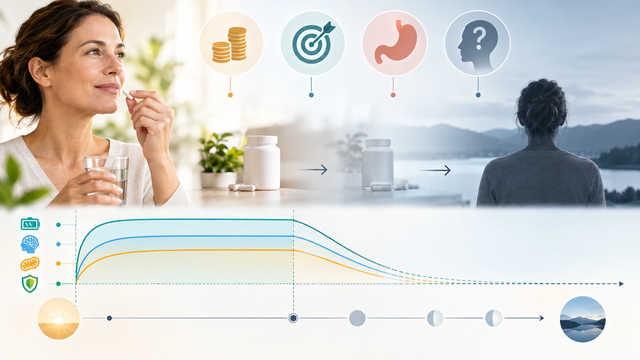
Men are heavily represented in NMN trials, but testosterone, sperm, erectile-function and muscle-building claims remain unproven. This page separates male-specific data from marketing.
 By
Dr. Khaled Mahmoud, MBBCh
Critical Care Medicine, Longevity Science & Editorial Direction
By
Dr. Khaled Mahmoud, MBBCh
Critical Care Medicine, Longevity Science & Editorial Direction
 Reviewed by
Dr. Amr Yasser, PhD
Cardiometabolic, Musculoskeletal, Gut & Bioavailability
Reviewed by
Dr. Amr Yasser, PhD
Cardiometabolic, Musculoskeletal, Gut & Bioavailability
 Reviewed by
Dr. Abdulla Mostafa, PhD
Cellular Senescence, Neurological, Mitochondrial & Brain-Ageing Biology
Reviewed by
Dr. Abdulla Mostafa, PhD
Cellular Senescence, Neurological, Mitochondrial & Brain-Ageing Biology
- Published
- Last reviewed
- Reading time
- 6 min
- Sources cited
- 6
On this page
Men are heavily represented in the NMN evidence base. Several safety, pharmacokinetic, older-adult muscle, long-term and exercise studies enrolled only men, which gives us useful male-specific data but also reveals a broader problem: some NMN conclusions are based on sex-skewed research.
NMN for men: what has actually been studied
| Area | Male-specific evidence | Takeaway |
|---|---|---|
| Single-dose safety | Healthy Japanese men | Generally tolerated in early human study |
| Older-adult muscle function | Healthy older men | NAD+ rise with selected gait/grip signals |
| Longer-term supplementation | Middle-aged Japanese men | Safety, metabolism and sleep explored |
| Sublingual vs oral | Healthy adult men | Different early metabolite kinetics |
| BFR exercise | Young men | NMN dampened acute inflammatory/remodeling signals |
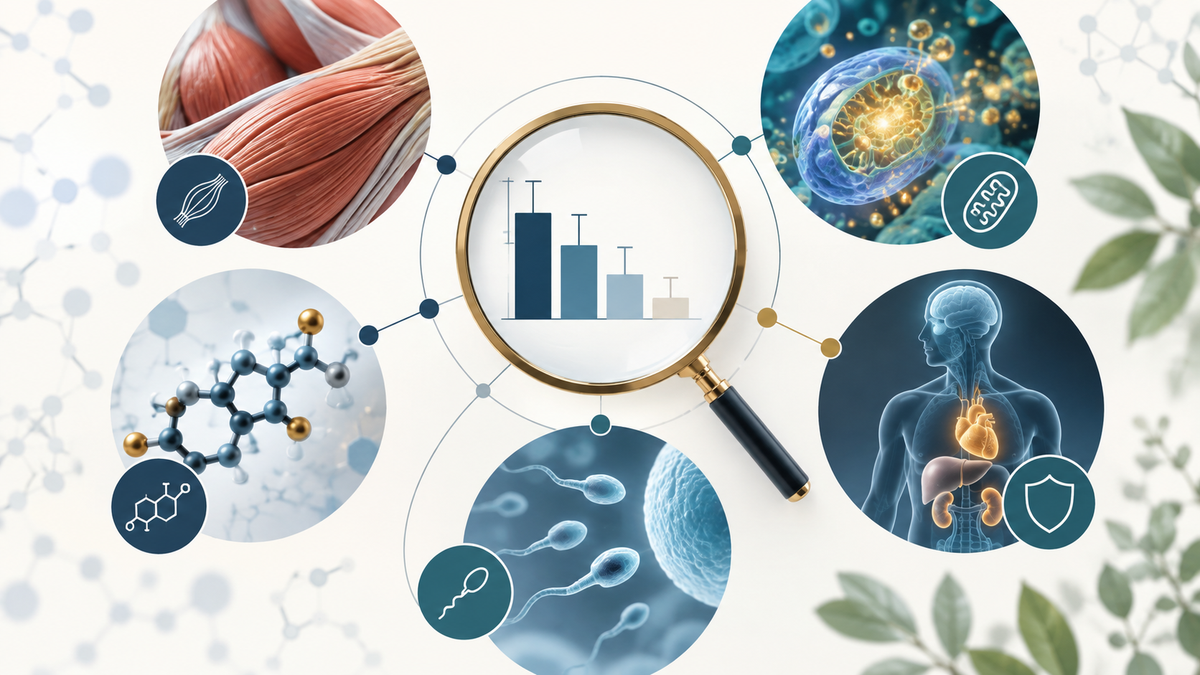
| Testosterone | No strong NMN RCT endpoint | Not proven to boost testosterone |
| Fertility / sperm | No robust human NMN fertility trial | Unproven |
| Muscle gain | No hypertrophy RCT showing greater gains | Unproven as anabolic supplement |
Why the male evidence base is unusually important
Several early NMN studies enrolled only men. That gives us cleaner male-specific data for safety, metabolism and physical function, but it also means some broad NMN claims were originally built on populations that did not include women.
The 2026 umbrella review of NAD+ supplementation highlights sex as a biological variable that future trials should analyze prospectively rather than assuming one response fits everyone. [1]
Healthy middle-aged men: early safety and pharmacology
Irie and colleagues studied oral NMN in healthy Japanese men aged roughly 40–60 years. The work established early human tolerability and measured nicotinamide metabolites rather than claiming a clinical anti-aging effect. [2]
That distinction still matters: the first human NMN evidence was fundamentally a safety/pharmacology step.
Older men: what happened to NAD+, gait and grip?
Igarashi and colleagues randomized healthy older men to 250 mg/day NMN or placebo. Blood NAD+ and related metabolites increased, and nominal improvements were reported for gait speed and left-hand grip. [3]
However, a supplement-supply error affected many participants after week six, forcing exclusion of affected week-12 data. The later efficacy sample was therefore smaller than the original randomized cohort. This does not erase the study; it lowers confidence in the apparent functional effects.
Middle-aged men and longer exposure
Yamaguchi and colleagues followed healthy middle-aged Japanese men during longer-term NMN supplementation and evaluated safety, NAD biosynthesis, metabolism and sleep. [4]
The study was single-arm, so changes over time cannot be attributed to NMN as confidently as in a placebo-controlled design. It is useful for feasibility and hypothesis generation rather than definitive male efficacy.
NMN, testosterone and the “male vitality” marketing gap
Testosterone is easy to market because it connects aging, energy, libido, muscle and body composition in one familiar biomarker. But the mainstream NMN human literature does not show a replicated testosterone-raising effect.
There is no evidence-based NMN dose for hypogonadism, and NMN should not be positioned as an alternative to evaluating symptoms, morning testosterone, pituitary function, sleep apnea, obesity or medication effects when clinically relevant.
What about sperm and fertility?
There is no robust human evidence that NMN improves sperm count, motility, fertility, or live-birth outcomes. Male fertility depends on sperm production, endocrine signaling, testicular function, oxidative stress, genetics and reproductive-tract health. Although NAD metabolism is biologically relevant to cells, no controlled human NMN trial has established improved sperm concentration, motility, morphology, DNA fragmentation, pregnancy rate or live birth.
The famous reproductive-aging NMN study was performed in aged female mice and cannot be transferred to male human fertility. [5]
Young men, resistance exercise and inflammation
The 2026 blood-flow-restriction study is especially relevant to men using NMN for training. Eleven young men completed exercise after seven days of 1,200 mg/day NMN and after placebo in a crossover design. NMN suppressed several acute inflammatory signals, delayed aspects of resolution and blocked the acute mitochondrial-content increase observed with placebo. [6]
The study did not measure hypertrophy over months, so it does not prove NMN reduces gains. But it challenges the simplistic idea that lower exercise inflammation is automatically better.
Does NMN improve erectile function through blood vessels?
No human randomized trial has shown that NMN treats erectile dysfunction. Endothelial function matters for erection, and NAD biology is relevant to vascular signaling. The current clinical bridge is missing: no erectile-function trial has shown improved IIEF scores or comparable validated outcomes from NMN.
For cardiovascular evidence, see NMN and blood pressure. Mechanistic vascular relevance should not be promoted as an erectile-dysfunction treatment.
Men over 50: what outcomes are most defensible?
| Claim | Evidence in men | Status |
|---|---|---|
| Raises NAD-related biomarkers | Multiple male/mixed trials | Supported |
| Improves gait or grip | Older-men RCT with limitations | Preliminary |
| Improves sleep/energy | Male and mixed studies | Preliminary/mixed |
| Raises testosterone | No robust RCT | Unproven |
| Improves sperm/fertility | No robust human trial | Unproven |
| Builds muscle | No hypertrophy evidence | Unproven |
| Extends lifespan | No human lifespan trial | Unproven |
How should men choose a dose?
There is no male-specific formula. Human research ranges from 250 mg/day to high-dose pharmacokinetic protocols. The right interpretation is endpoint-specific; see our dose-by-dose human trial guide.
Male NMN trials at a glance
| Study context | What was measured | Signal |
|---|---|---|
| Healthy men | Single-dose safety and metabolites | Early tolerability/pharmacology data |
| Older men | Blood NAD+, gait, grip and muscle-related outcomes | NAD+ increased; selected physical-function signals |
| Young men doing BFR exercise | Inflammatory/remodeling response | NMN altered acute exercise biology rather than simply “boosting recovery” |
| Healthy men in route studies | Oral vs sublingual metabolites | Different early pharmacokinetics; no superiority in health outcomes |
The early Irie study helped establish short-term human safety in men. [7] Igarashi later studied older men and added muscle/physical-function context. [8]
What about prostate health?
There is no convincing human evidence that NMN prevents benign prostatic hyperplasia, lowers PSA or protects against prostate cancer. Those claims should not be inferred from general NAD+ biology.
Does NMN belong in a “testosterone booster” category?
No. Human NMN trials have not established a reproducible rise in testosterone or clinically meaningful androgenic effect. If low testosterone symptoms are present, endocrine evaluation is more informative than assuming NAD+ precursor use will correct the cause.
Men over 50: the most defensible reason to be interested
The most relevant rationale in older men is not testosterone. It is whether NAD-target engagement translates into functional outcomes such as walking, fatigue, vascular health or metabolic resilience. Those endpoints have human data; male fertility and androgen claims largely do not.
Related NMN guides
Bottom line
Men have more direct NMN study coverage than many other populations, but the strongest conclusions remain NAD+ augmentation and short-term tolerability. Testosterone, fertility, erectile-function and muscle-building claims are not established.
Frequently asked questions
What are the benefits of NMN for men?
Does NMN increase testosterone?
Does NMN improve male fertility or sperm quality?
Is NMN good for men over 50?
Does NMN help erectile dysfunction?
Does NMN help build muscle?
Can men take NMN every day?
Sources & article history
Sources (6)
-
NAD+ supplementation for anti-aging and wellness: A PRISMA-guided systematic review of preclinical and clinical evidence Ageing Research Reviews. 2026;116:103057.
-
Effect of oral administration of nicotinamide mononucleotide on clinical parameters and nicotinamide metabolite levels in healthy Japanese men Endocrine Journal. 2020;67(2), 153-160.
-
Chronic nicotinamide mononucleotide supplementation elevates blood nicotinamide adenine dinucleotide levels and alters muscle function in healthy older men npj Aging. 2022;8:5.
-
Safety and efficacy of long-term nicotinamide mononucleotide supplementation on metabolism, sleep, and nicotinamide adenine dinucleotide biosynthesis in healthy, middle-aged Japanese men Endocrine Journal. 2024;71(2):153-169.
-
NAD+ Repletion Rescues Female Fertility during Reproductive Aging Cell Reports. 2020;30(6):1670-1681.e7.
-
Anti-inflammatory effects of nicotinamide mononucleotide (NMN) in human skeletal muscle after BFR-exercise Journal of the International Society of Sports Nutrition. 2026;Volume 23, issue 1, article 2632284.