How NMN Works: NAD+, the Salvage Pathway, Gut Microbiome & Human Pharmacology
NMN feeds human NAD+ metabolism, but not through one simple arrow. This deep mechanism guide covers the salvage pathway, gut microbiome, sirtuins, PARPs, CD38, tissue differences and 2026 human pharmacokinetics.
 By
Dr. Khaled Mahmoud, MBBCh
Critical Care Medicine, Longevity Science & Editorial Direction
By
Dr. Khaled Mahmoud, MBBCh
Critical Care Medicine, Longevity Science & Editorial Direction
 Reviewed by
Dr. Amr Yasser, PhD
Cardiometabolic, Musculoskeletal, Gut & Bioavailability
Reviewed by
Dr. Amr Yasser, PhD
Cardiometabolic, Musculoskeletal, Gut & Bioavailability
 Reviewed by
Dr. Abdulla Mostafa, PhD
Cellular Senescence, Neurological, Mitochondrial & Brain-Ageing Biology
Reviewed by
Dr. Abdulla Mostafa, PhD
Cellular Senescence, Neurological, Mitochondrial & Brain-Ageing Biology
- Published
- Last reviewed
- Reading time
- 8 min
- Sources cited
- 8
On this page
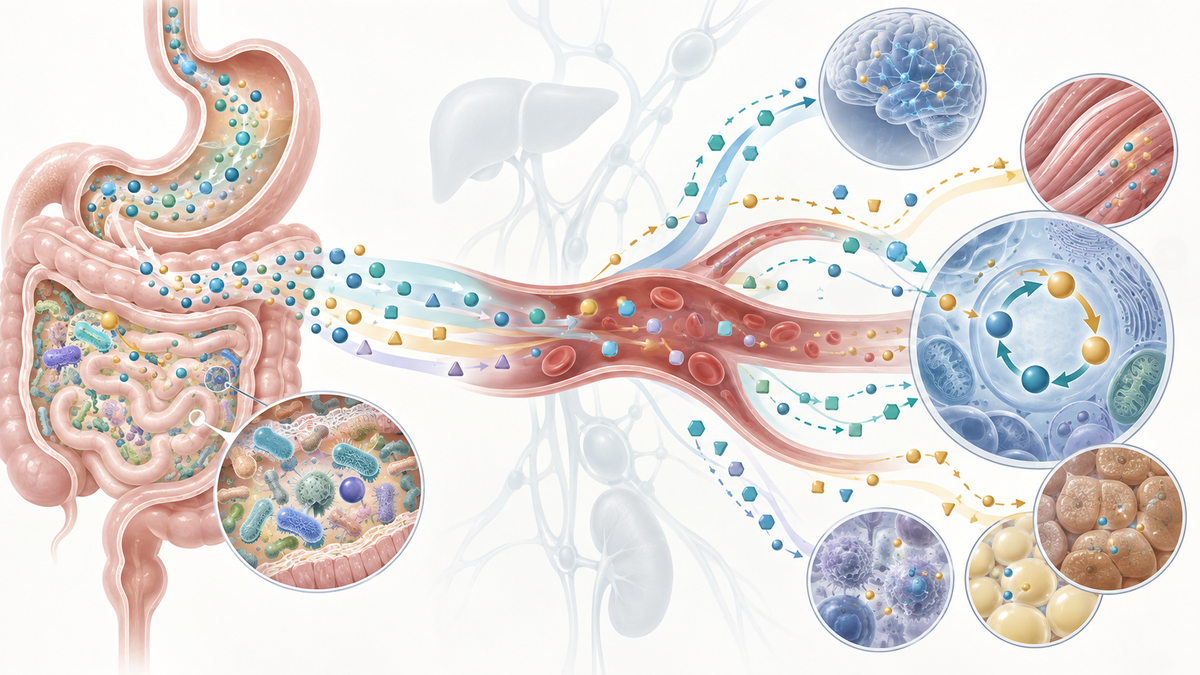
How NMN works is more complicated than the popular “NMN goes straight into cells and becomes NAD+” diagram. Human research shows clear NAD+ target engagement, while gut microbes, extracellular metabolism, tissue differences and individual response shape what happens after oral NMN.
The strongest mechanistic claim is not “NMN enters every cell intact.” It is that oral NMN reliably perturbs human NAD metabolism and can increase circulating NAD-related pools.
NMN mechanism at a glance
| Step | What happens | What is established |
|---|---|---|
| 1. Intake | NMN is swallowed as β-NMN in most trials | Well established |
| 2. Gut processing | Some NMN can be dephosphorylated or transformed by microbes | Increasing human/mechanistic evidence |
| 3. Precursor entry | NMN-derived material enters host NAD pathways through several routes | Supported; exact contribution varies |
| 4. NMNAT reaction | NMN is adenylated to NAD+ inside cells | Core biochemistry |
| 5. NAD use | NAD+ supports redox metabolism and is consumed by sirtuins, PARPs, CD38 and other enzymes | Core biochemistry |
| 6. Clinical outcome | A higher NAD-related pool may or may not improve a health endpoint | Outcome-specific and uncertain |
What is NAD+?
Nicotinamide adenine dinucleotide is a coenzyme present in every living cell. In redox reactions, NAD+ accepts electrons and becomes NADH; NADH can then donate reducing equivalents in pathways tied to ATP production. NAD+ is also consumed as a substrate by signaling enzymes rather than merely recycled as an electron carrier.
That dual role explains why NAD biology touches energy metabolism, DNA-damage responses, inflammation, circadian signaling and cellular stress resistance without implying that one supplement improves all of those outcomes clinically.
Where NMN sits in the NAD salvage pathway
The salvage pathway recycles nicotinamide. NAMPT converts nicotinamide to NMN, and NMNAT enzymes convert NMN to NAD+. Supplementing NMN bypasses the NAMPT step at the level of the simplified biochemical pathway.
This is the origin of the phrase “direct NAD precursor.” It is chemically accurate but pharmacologically incomplete because an oral molecule still has to survive and interact with the gastrointestinal and extracellular environment before a tissue can use it.
Does NMN get absorbed intact?
The answer is not a clean yes/no for every molecule of a dose. Older models emphasized direct uptake, including interest in the SLC12A8 transporter. Newer human work makes clear that substantial precursor processing occurs before systemic utilization.
In the 2026 Nature Metabolism study, researchers combined a four-arm human trial with ex-vivo human microbiome experiments. NMN and NR were rapidly transformed by gut microbial communities, including conversion into nicotinic-acid-related metabolites that can feed NAD synthesis through the Preiss–Handler pathway. [1]
This does not mean intact NMN uptake never occurs. It means the fraction and route cannot be represented honestly as one simple transporter arrow.
What happens after NAD+ rises?
| NAD-dependent process | Why researchers care | What NMN trials prove |
|---|---|---|
| Redox/energy metabolism | NAD+/NADH transfers electrons in metabolism | NMN changes NAD pools; not automatic subjective energy |
| Sirtuins | NAD-dependent deacylases involved in stress/metabolic signaling | Mechanistic relevance; no proof of human age reversal |
| PARPs | Consume NAD during DNA-damage signaling | Biological rationale; no generalized DNA-repair clinical endpoint |
| CD38/CD157 | NAD-consuming ectoenzymes linked with immune/aging biology | Mechanistic/vascular evidence |
| NAD-capped RNA | Emerging epitranscriptomic biology | Human biomarker research exists, clinical meaning uncertain |
Sirtuins: fuel, not a longevity guarantee
Sirtuins require NAD+ for enzymatic activity. This is why NMN is often described as “fuel for sirtuins.” Increasing substrate availability can influence the system, but enzyme activity also depends on expression, tissue state, competing NAD consumers, substrates and cellular stress.
A human supplement increasing blood NAD+ does not demonstrate that every sirtuin in every tissue is activated enough to improve lifespan.
PARPs and DNA repair
PARP enzymes use NAD+ during responses to DNA damage. Severe damage or excessive PARP activation can deplete cellular NAD pools, while inadequate substrate can constrain metabolism. This relationship gives NAD restoration a plausible role in cellular resilience.
Yet “supports a pathway involved in DNA repair” should not be translated into “repairs your DNA” as a clinical claim. Human NMN trials have not demonstrated generalized prevention of mutation or cancer through DNA repair.
CD38 and age-related NAD consumption
CD38 is an NAD-consuming enzyme whose activity can increase with inflammatory and aging-related states. Qiu and colleagues connected CD38 upregulation, NAD depletion and vascular damage in hypertension-related mechanistic research. [2]
This is one route by which aging-related NAD decline may reflect increased consumption rather than simply reduced synthesis.
Does NAD+ actually decline with age?
Not in one universal way. The familiar claim that “NAD+ falls with age” is supported by some tissue studies and animal models, including human skeletal-muscle work, but it should not be rewritten as a proven systemic decline in every compartment.
A 2026 Nature Metabolism study used a rigorously validated assay across seven independent human cohorts and found that whole-blood NAD+ remained remarkably stable with age and across the lifestyle interventions examined. [3] The authors concluded that whole-blood NAD+ is not a simple biomarker of aging.
This does not contradict every tissue-level aging study; it shows that compartment and assay matter. Muscle NAD, plasma metabolites, whole-blood NAD and subcellular NAD pools are different measurements. Baseline status and individual response also vary substantially: post-hoc human research found marked person-to-person differences in the NAD response to NMN. [4]
Blood NAD+ versus tissue NAD+
Blood is convenient to sample; brain and muscle are not. A higher whole-blood value therefore becomes a common trial endpoint, but it cannot be assumed to reflect an equal increase in every organ.
The Berven 2026 direct precursor study found large blood total-NAD changes over eight days while neither NMN nor NR significantly increased measured cerebral total NAD during that short crossover. [5]
Tissue, duration and assay matter.
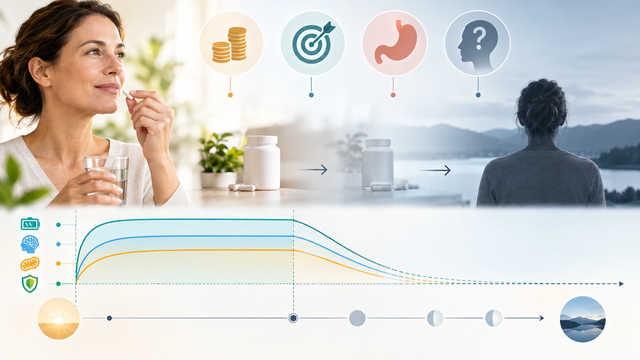
How quickly does NMN change NAD metabolism?
Pharmacokinetic studies detect changes within hours, while steady-state NAD-pool changes can evolve over days. MIB-626 work demonstrated clear dose-dependent changes in circulating NAD and downstream metabolites over 14 days. [6]
Berven observed gradual accumulation and slow washout, with blood NAD remaining elevated for days after precursor discontinuation. [7]
This kinetics profile is very different from an acute stimulant that rises and falls within a few hours.
NMN, the gut microbiome and the Preiss–Handler pathway
The 2026 microbiome work is important because it changes the old competition between NMN and NR. Both can undergo microbial processing before host utilization. [8]
It also means individual microbiome composition may eventually help explain variable precursor response, although there is not yet a validated clinical test that tells a person which precursor to take based on stool microbiome data.
NMN and NAD-capped RNA
A 2025 human biomarker study examined NAD-capped RNAs after NMN supplementation, adding an epitranscriptomic layer to the mechanism. [9]
NAD can function beyond classic metabolism, including as a noncanonical RNA cap in certain contexts. These findings are scientifically interesting and far too early to support a consumer health claim.
Why NMN can raise NAD+ without improving every outcome
Biological systems are constrained by more than one molecule. If poor physical function is driven by arthritis, sarcopenia, neurologic disease or inactivity, raising NAD+ may not overcome the limiting factor. If glucose is already normal, increasing a precursor may have little room to improve it.
This helps explain the 2026 systematic-review conclusion: target engagement is consistent, while clinical effects are heterogeneous and often null. [10]
NMN versus NR at the mechanism level
NR lacks NMN's phosphate group and can be phosphorylated by NR kinases to enter the NMN pool. In a pathway diagram, NMN is one step closer to NAD+. Oral human pharmacology is not determined by pathway distance alone.
Two 2026 head-to-head studies now show why: one tiny crossover found a larger short-term blood total-NAD response to NR, while a larger trial found comparable whole-blood NAD+ increases after 14 days. [11] [12]
Does NMN activate AMPK or mTOR?
NMN can influence broader metabolic signaling indirectly through changes in energy state, insulin signaling and NAD-dependent enzymes. It should not be marketed as a clean pharmacologic AMPK activator or mTOR inhibitor based on human evidence. Those pathways are context-sensitive and tissue-specific.
Mechanism versus benefit: the evidence rule
- A pathway can be real while a health claim remains unproven.
- A blood biomarker can improve without a tissue endpoint changing.
- An animal lifespan effect cannot establish human lifespan extension.
- A molecular mechanism can justify a clinical trial but not replace it.
- Human randomized outcomes outrank pathway diagrams when evaluating benefit.
What mechanism research should answer next
The most useful next questions are not simply whether NAD rises. Researchers need to map intact-versus-transformed precursor flux, tissue-specific exposure, responder phenotypes, microbiome contribution and which NAD changes actually mediate clinical outcomes.
Related NMN guides
Bottom line
NMN works as a NAD-system intervention, not as a magical molecule that moves intact from a capsule into every cell. Oral NMN is processed through a network involving the gut, circulating metabolites and tissue-specific NAD synthesis. That network clearly responds in humans. Whether the response becomes a meaningful benefit depends on the tissue, population and endpoint.
Frequently asked questions
How does NMN work?
Does NMN turn directly into NAD+?
What is the NAD+ salvage pathway?
Does NMN activate sirtuins?
Does NMN cross the blood-brain barrier?
Does the gut microbiome affect NMN?
How quickly does NMN raise NAD+?
Why can NMN raise NAD+ without improving health?
Sources & article history
Sources (8)
-
The differential impact of three different NAD+ boosters on circulatory NAD and microbial metabolism in humans Nature Metabolism. 2026;Volume 8, issue 1, pages 62–73.
-
NAD+ exhaustion by CD38 upregulation contributes to blood pressure elevation and vascular damage in hypertension Signal Transduction and Targeted Therapy. 2023;8:353.
-
Towards personalized nicotinamide mononucleotide (NMN) supplementation: Nicotinamide adenine dinucleotide (NAD) concentration Mechanisms of Ageing and Development. 2024;218:111917.
-
The NAD-brain pharmacokinetic study of NAD augmentation in blood and brain using oral precursor supplementation iScience. 2026;29(3):114764.
-
MIB-626, an oral formulation of a microcrystalline unique polymorph of β-nicotinamide mononucleotide, increases circulating nicotinamide adenine dinucleotide and its metabolome in middle-aged and older adults The Journals of Gerontology, Series A: Biological Sciences and Medical Sciences. 2023;Volume 78, issue 1, pages 90–96.
-
Epitranscriptomic analysis reveals features of NAD-capped RNAs upon supplementation of nicotinamide mononucleotide in human Experimental Cell Research. 2025;453(1):114780.
-
NAD+ supplementation for anti-aging and wellness: A PRISMA-guided systematic review of preclinical and clinical evidence Ageing Research Reviews. 2026;116:103057.
-
Human whole-blood NAD+ levels do not vary with age or lifestyle interventions Nature Metabolism. 2026;8(6):1282–1290.