How and When to Take NMN: Morning, Night, Food, Fasting & Sublingual
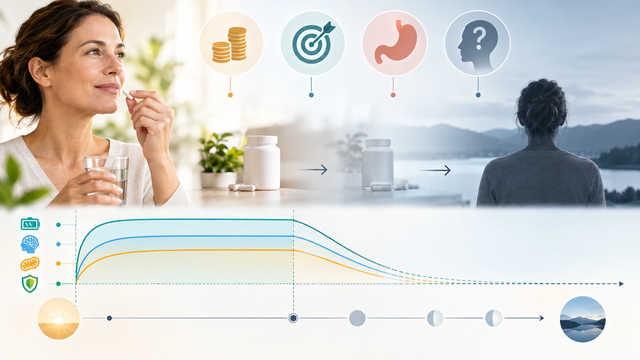
Human trials do not support one mandatory NMN timing ritual. This guide explains morning vs afternoon, food, fasting, split dosing, sublingual use, cycling, storage and common stacking questions.
 By
Dr. Khaled Mahmoud, MBBCh
Critical Care Medicine, Longevity Science & Editorial Direction
By
Dr. Khaled Mahmoud, MBBCh
Critical Care Medicine, Longevity Science & Editorial Direction
 Reviewed by
Dr. Amr Yasser, PhD
Cardiometabolic, Musculoskeletal, Gut & Bioavailability
Reviewed by
Dr. Amr Yasser, PhD
Cardiometabolic, Musculoskeletal, Gut & Bioavailability
 Reviewed by
Dr. Abdulla Mostafa, PhD
Cellular Senescence, Neurological, Mitochondrial & Brain-Ageing Biology
Reviewed by
Dr. Abdulla Mostafa, PhD
Cellular Senescence, Neurological, Mitochondrial & Brain-Ageing Biology
- Published
- Last reviewed
- Reading time
- 7 min
- Sources cited
- 10
On this page
Most human NMN trials use once-daily oral dosing, usually in the morning or with a standardized meal, but there is no proven universal rule that NMN must be taken fasted, at night, or at one exact clock time. The best evidence-based routine is simpler: use the dose and route supported by the study relevant to your goal, take it consistently, and do not confuse timing theories with proven clinical advantages.
How to take NMN: quick answer
| Question | Current evidence |
|---|---|
| Morning or night? | No universal winner; one RCT found some afternoon advantages in older adults. |
| With food? | No clinical evidence that food makes NMN ineffective; some trials deliberately dose with standardized meals. |
| Empty stomach? | Not required by the human evidence. |
| Once or twice daily? | Both have been studied; superiority is not established. |
| Sublingual or swallow? | Sublingual changes early metabolite kinetics, but better health outcomes are unproven. |
| Cycle NMN? | No validated human cycling protocol. |
| Refrigerate? | Follow product-specific stability instructions; cool, dry storage is generally prudent. |
| Take with resveratrol? | Human synergy is unproven; the supportive combination study is in mice. |
What do clinical trials actually do?
Trial protocols vary. Many supplement-style studies use one oral dose per day for 8–12 weeks. The 250 mg/day studies in older adults and postmenopausal women generally used straightforward daily administration. [1] [2]
Pharmacokinetic programs sometimes standardize breakfast or divide a high total dose to characterize exposure rather than to create a consumer routine. MIB-626 has been studied at 1,000 mg once daily and 1,000 mg twice daily. [3]
Morning vs afternoon vs night
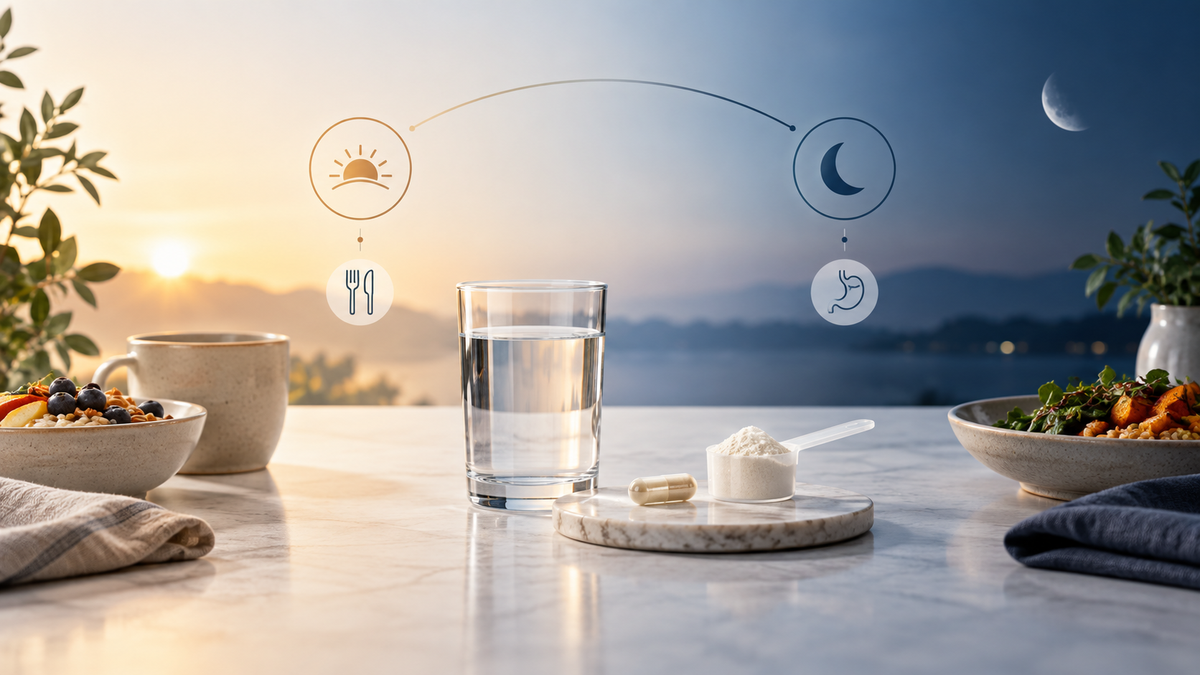
The strongest human timing experiment is the 2022 randomized study in 108 older Japanese adults. Participants received 250 mg NMN in the morning or afternoon for 12 weeks. Selected drowsiness and lower-body performance outcomes favored afternoon dosing, but the pattern was not broad enough to establish “afternoon NMN” as a universal rule. [4]
No large head-to-head trial has shown that taking NMN immediately after waking, before bed, or at a specific circadian phase produces superior long-term health outcomes.
Should you take NMN with food?
The common claim that NMN “must be taken on an empty stomach” is not established by clinical trials. In the 2026 direct NMN/NR comparison, participants took study product after a standardized liquid breakfast on intensive sampling days and around breakfast on other days; NMN still substantially raised whole-blood NAD+. [5]
That same study suggests gut microbes contribute to precursor metabolism, making simplistic claims that food or digestion merely “destroy” NMN even less defensible.
Does NMN break a fast?
NMN is a small nucleotide rather than a meaningful source of calories or macronutrients, but “breaking a fast” depends on the purpose of the fast. A religious fast, preoperative fast, metabolic fast and strict research protocol use different definitions. There is no clinical trial validating NMN as neutral to every fasting protocol.
If fasting is required for a procedure, laboratory test or medical reason, follow the clinician's instructions rather than supplement-marketing definitions.
Once daily vs split dosing
Most practical NMN studies use once-daily dosing. Divided dosing has been used in high-dose pharmaceutical research, where the goal was to characterize pharmacokinetics. [6]
No human outcomes trial has established that splitting 500 mg into 250 mg twice daily is clinically superior to taking 500 mg once daily.
Should NMN be taken sublingually?
A 2026 randomized crossover study directly compared oral and sublingual NMN in healthy men. Sublingual delivery increased early circulating terminal catabolites 2PY and 4PY relative to oral dosing. [7]
That is useful pharmacokinetic information, but it does not show better sleep, exercise performance, insulin sensitivity, cognition or longevity. For the full comparison, see liposomal, sublingual and standard NMN.
Should NMN be cycled?
There is no randomized human evidence supporting a routine such as “five days on, two days off,” “three months on, one month off,” or other cycling schedules. Most human efficacy studies use continuous daily exposure during the study period.
Breaks may be chosen for practical reasons, adverse effects or clinician-directed monitoring, but they are not a scientifically validated method for preventing tolerance or “resetting NAD pathways.”
Can you take NMN with coffee?
No clinical interaction trial establishes that coffee meaningfully blocks NMN. If caffeine and NMN are both taken in the morning, any perceived change in energy is especially difficult to attribute to NMN alone.
Can you take NMN with resveratrol?
They are commonly stacked, but the main combination paper is preclinical. In mice, NMN plus resveratrol produced higher NAD+ levels in heart and skeletal muscle than NMN alone under the study conditions. [8]
There is no randomized human trial showing that adding resveratrol makes NMN more effective. See NMN and resveratrol.
How should NMN be stored?
Finished-product stability depends on formulation, moisture control, packaging and manufacturing. A blanket rule that every NMN product must be refrigerated is too broad. Follow the manufacturer’s stability-backed instructions, keep the product tightly closed, and avoid heat and moisture.
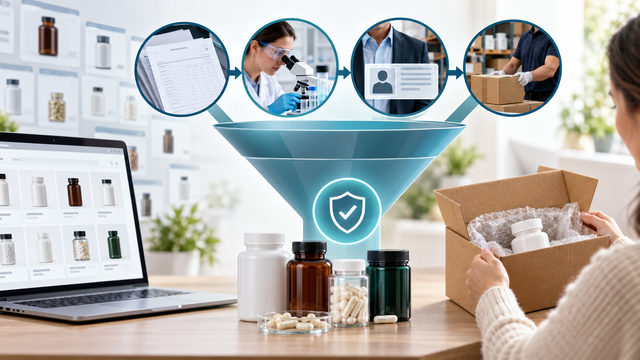
More important than fridge marketing is whether the product has batch-specific identity and quantitative testing. Independent analyses have found major label-claim problems among commercial NMN products. [9]
How long should you take NMN?
Human studies generally last weeks to months, not years. The 2026 meta-analysis included randomized trials lasting approximately 14 days to 24 weeks. [10]
There is therefore no evidence-based statement that a healthy person “should” take NMN indefinitely. Long-term use goes beyond the duration of most randomized evidence.
Why the microbiome makes fasting claims less straightforward
The same 2026 study showed that human gut microbiota can transform NMN and NR into nicotinic-acid-related metabolites. [11]
Oral precursor pharmacology therefore involves digestion, microbial metabolism and host pathways. The idea that NMN must avoid the gut to work is not supported by the current human evidence.
Does NMN build up over several days?
The Berven 2026 pharmacokinetic study is relevant here. Blood NAD rose gradually during sustained precursor use and washed out slowly after supplementation stopped, with marked individual variation. [12]
That is inconsistent with treating NMN purely like an acute pre-workout that must be timed to the minute. Some NAD-pool effects unfold over days.
NMN and TMG
NMN metabolism eventually produces nicotinamide and methylated metabolites, creating a theoretical concern about methyl-group demand. TMG supplies methyl groups through one-carbon metabolism. The pathway rationale is legitimate; the routine prescription is not.
NMN RCTs have not shown that every participant develops a clinically important methylation problem without TMG, and no randomized trial demonstrates superior outcomes from the combination.
When to stop or reassess
If the intended endpoint has not changed after a reasonable evidence-based period, continuing indefinitely because “it may work eventually” is difficult to justify. Likewise, new symptoms, medication changes, pregnancy, surgery or cancer treatment are reasons to reassess the regimen.
Related NMN guides
- NMN dosage
- liposomal vs sublingual NMN
- NMN with resveratrol
- NMN interactions
- NMN products compared
- NMN cycling and stopping
Bottom line
Consistency and product quality matter more than unsupported timing rituals. The human literature does not require fasting, cycling, sublingual dosing or a precise clock time. Use the simplest routine supported by the product and evidence relevant to your goal.
Frequently asked questions
What is the best time to take NMN?
Should NMN be taken on an empty stomach?
Can I take NMN with food?
Does NMN break a fast?
Should NMN be taken every day or cycled?
Should NMN be refrigerated?
Do I need TMG with NMN?
Is sublingual NMN better than swallowing it?
Sources & article history
Sources (10)
-
Nicotinamide mononucleotide increases muscle insulin sensitivity in prediabetic women Science. 2021;372(6547), 1224-1229.
-
Ingestion of β-nicotinamide mononucleotide increased blood NAD levels, maintained walking speed, and improved sleep quality in older adults in a double-blind randomized, placebo-controlled study GeroScience. 2024;46(5):4671-4688.
-
MIB-626, an oral formulation of a microcrystalline unique polymorph of β-nicotinamide mononucleotide, increases circulating nicotinamide adenine dinucleotide and its metabolome in middle-aged and older adults The Journals of Gerontology, Series A: Biological Sciences and Medical Sciences. 2023;Volume 78, issue 1, pages 90–96.
-
Effect of 12-Week Intake of Nicotinamide Mononucleotide on Sleep Quality, Fatigue, and Physical Performance in Older Japanese Adults: A Randomized, Double-Blind Placebo-Controlled Study Nutrients. 2022;14, 755.
-
The differential impact of three different NAD+ boosters on circulatory NAD and microbial metabolism in humans Nature Metabolism. 2026;Volume 8, issue 1, pages 62–73.
-
Sublingual NMN administration increases early circulating terminal catabolites 2PY and 4PY compared with oral administration in healthy adult men Scientific Reports. 2026;16(1):27464.
-
Improvement of tissue-specific distribution and biotransformation potential of nicotinamide mononucleotide in combination with ginsenosides or resveratrol Pharmacology Research & Perspectives. 2022;10(4):e00986.
-
Testing the amount of nicotinamide mononucleotide and urolithin A as compared to the label claim GeroScience. 2024;Volume 46, pages 5075–5083.
-
Safety and Metabolism-Related Outcomes of Oral Nicotinamide Mononucleotide Supplementation in Adults: A Systematic Review and Meta-Analysis Nutrients. 2026;18, 2251.
-
The NAD-brain pharmacokinetic study of NAD augmentation in blood and brain using oral precursor supplementation iScience. 2026;29(3):114764.