NMN for Sleep, Fatigue & Energy: What Human Trials Show
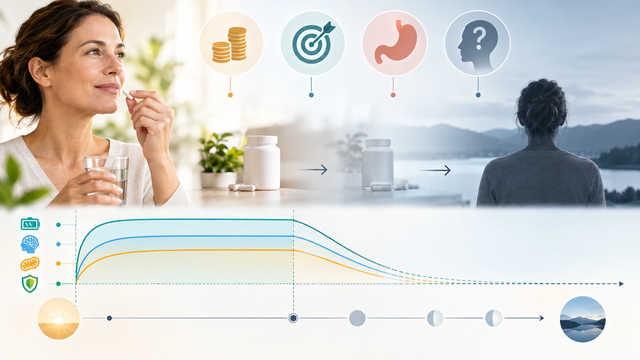
Small randomized trials in older adults suggest possible sleep-quality, drowsiness and physical-function benefits, but NMN is not an established sleep aid, stimulant or fatigue treatment.
 By
Dr. Khaled Mahmoud, MBBCh
Critical Care Medicine, Longevity Science & Editorial Direction
By
Dr. Khaled Mahmoud, MBBCh
Critical Care Medicine, Longevity Science & Editorial Direction
 Reviewed by
Dr. Amr Yasser, PhD
Cardiometabolic, Musculoskeletal, Gut & Bioavailability
Reviewed by
Dr. Amr Yasser, PhD
Cardiometabolic, Musculoskeletal, Gut & Bioavailability
 Reviewed by
Dr. Abdulla Mostafa, PhD
Cellular Senescence, Neurological, Mitochondrial & Brain-Ageing Biology
Reviewed by
Dr. Abdulla Mostafa, PhD
Cellular Senescence, Neurological, Mitochondrial & Brain-Ageing Biology
- Published
- Last reviewed
- Reading time
- 8 min
- Sources cited
- 5
On this page
NMN sleep, fatigue and energy research is promising but still early. Small trials in older adults report sleep, drowsiness or fatigue-related signals; NMN does not have a consistent stimulant-like effect and the evidence is not strong enough to treat insomnia or chronic fatigue.
NMN, sleep and energy: evidence map
| Claim | Human evidence | Conclusion |
|---|---|---|
| Better sleep quality | Small randomized older-adult trials | Preliminary positive signal |
| Less drowsiness | Timing RCT | Some afternoon-dosing signals |
| More subjective energy | Not consistently measured as a primary endpoint | Unproven |
| Less fatigue | Selected questionnaires / secondary outcomes | Preliminary |
| Keeps you awake | No consistent adverse-effect signal | Not established |
| Acts like caffeine | No | Different biology |
| Treats insomnia | No insomnia-treatment RCT | Unproven |
Why NAD+ could plausibly affect sleep and fatigue
NAD metabolism intersects with mitochondrial energy production and circadian biology. That makes sleep/wake effects biologically plausible. But complex symptoms like fatigue can result from anemia, thyroid disease, sleep apnea, depression, infection, cardiopulmonary disease, medications and many other causes.
A pathway mechanism is not an appropriate substitute for evaluating persistent fatigue.
Does NMN give you immediate energy?
There is no evidence that NMN acts like caffeine. NAD-related metabolites can change relatively quickly, but controlled trials generally evaluate function and sleep over weeks.
A noticeable “boost” after the first capsule is not impossible as a personal experience, but it cannot be assumed to be a pharmacologically validated effect.
Can NMN keep you awake at night?
Insomnia has not emerged as a consistent major adverse effect in the human evidence base. Individual users may report stimulation or sleep disruption, but controlled data do not establish a predictable insomnia effect.
If sleep changes after starting any supplement, changing dose timing or stopping and reassessing is more informative than adding another supplement to counteract it.
Does NMN help chronic fatigue syndrome?
No robust randomized trial establishes NMN as a treatment for ME/CFS. Fatigue in a defined disease cannot be inferred from drowsiness or performance outcomes in healthy older adults.
Why “energy” is a difficult NMN endpoint
NAD+ is required for redox reactions that support ATP production, so the phrase “cellular energy” is biochemically reasonable. The consumer leap—from participating in energy metabolism to making a person feel energized—is much less direct.
Subjective energy depends on sleep, mood, anemia, thyroid function, fitness, calorie intake, caffeine, medications and many other factors. A supplement can change a biochemical pathway without producing a noticeable sensation.
The 2022 morning-versus-afternoon trial in context
Kim and colleagues randomized older Japanese adults to placebo or 250 mg/day NMN given in the morning or afternoon for 12 weeks. The study examined sleep, fatigue-related measures and physical performance. [1]
Several secondary signals favored afternoon dosing, particularly around drowsiness and lower-body function. Other sleep and fatigue measures did not show a uniform NMN advantage. That mixed pattern is why the study should not be summarized as “NMN fixes sleep” or “take it at 2 p.m.”
The 2024 older-adult sleep study
Morifuji and colleagues reported increased blood NAD levels together with maintained walking speed and improved Pittsburgh Sleep Quality Index scores in an older-adult randomized trial. [2]
The study is supportive because it provides a second controlled human dataset involving sleep-related outcomes. But sleep was part of a broader trial, and the primary physical-performance endpoint was not a dramatic across-the-board positive. A dedicated insomnia trial would use sleep as the central prespecified outcome and ideally include objective actigraphy or polysomnography.
Why studies can disagree on sleep
Sleep questionnaires measure different constructs. Global sleep quality, daytime drowsiness, fatigue, sleep latency and total sleep time are not interchangeable. Small trials can also differ by baseline sleep problems, time of dosing, age and chance.
A review of early NMN trials has therefore described sleep results more cautiously than consumer articles that quote only the most positive subscale. This is a classic example of why endpoint-level reading matters.
Does NMN interact with the circadian clock?
NAD biology is linked to circadian signaling, but human trials have not established a clinically useful NMN timing effect. NAD metabolism and circadian signaling are biologically connected, including through NAD-dependent enzymes and daily metabolic rhythms. That provides a plausible reason timing could matter. It does not tell us the clinically optimal hour.
The human evidence is still too small to prescribe NMN as chronotherapy or to claim that taking it at the 'wrong' time disrupts circadian biology.
What happens if NMN feels stimulating?
Individual effects can differ from trial averages. If someone consistently notices difficulty falling asleep after later dosing, moving the dose earlier is a reasonable self-observation strategy. That practical adjustment should not be confused with proof that NMN is a stimulant.
It is also worth separating NMN from the rest of the stack. Coffee, pre-workouts, stimulating adaptogens and sleep loss are more established explanations for acute alertness than NMN.
Fatigue is a symptom, not a diagnosis
Persistent fatigue can reflect sleep apnea, iron deficiency, anemia, hypothyroidism, depression, cardiopulmonary disease, infection, under-fueling, medication effects and many other conditions. A longevity supplement should not become a diagnostic shortcut.
There is no robust randomized evidence that NMN treats ME/CFS, post-viral fatigue syndromes or unexplained chronic fatigue.
What about exercise-related fatigue?
Some physical-function and endurance studies report positive NMN signals, but those are distinct from everyday subjective energy. The amateur-runner trial measured exercise physiology, while older-adult trials assessed gait or functional tests. [3]
For the performance evidence, see NMN for exercise and muscle.
How strong is the overall evidence?
| Outcome | Evidence strength | Why |
|---|---|---|
| Raises blood NAD-related markers | Relatively strong | Repeated human studies |
| Improves sleep quality | Preliminary | Small trials; often secondary outcomes |
| Reduces daytime drowsiness | Preliminary | Timing-specific signals |
| Treats insomnia | Unproven | No definitive insomnia trial |
| Produces immediate energy | Unproven | Not a consistent primary endpoint |
| Treats chronic fatigue disorders | Unproven | No condition-specific efficacy evidence |
Human sleep and fatigue studies compared
| Study | Population | Main sleep/energy finding |
|---|---|---|
| Kim 2022 | Older adults | Timing-dependent drowsiness and physical-function signals |
| Morifuji 2024 | Older adults | Walking and sleep-quality signals |
| Longer-term observational/intervention work | Middle-aged/older adults | Selected sleep/metabolic measures, not a validated insomnia treatment |
Kim's randomized timing study is important because it contradicts the simplistic claim that NMN must always be taken in the morning. [4] Morifuji reported additional sleep-quality signals in older adults. [5]
2026 REM-sleep mechanism: what the mouse study adds
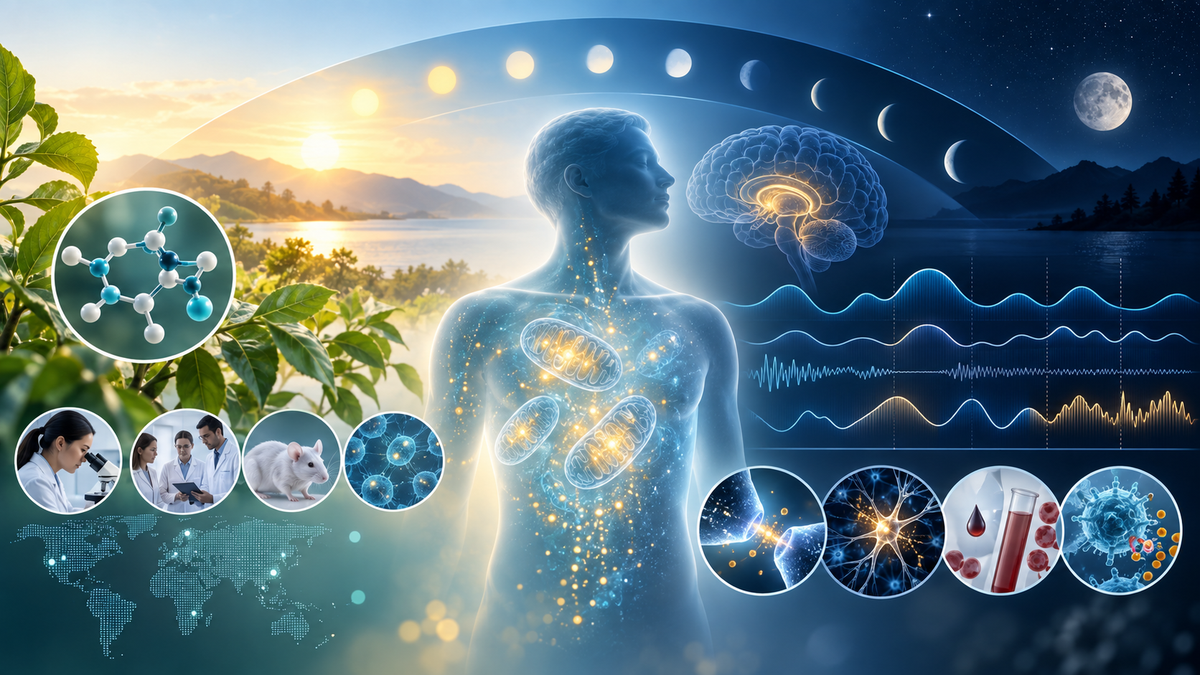
A 2026 iScience study identified a specific NMN-responsive sleep circuit in aged mice. NMN restored firing of REM-active bursting slow-oscillation neurons in the supramammillary nucleus toward younger levels and increased REM-related activity in the model. [6]
This gives the sleep hypothesis a more specific mechanism than “NAD+ supports energy.” It still does not establish that oral NMN treats insomnia or improves human REM sleep. The human sleep evidence remains based on small trials with subjective or actigraphy-related outcomes, while this new paper is preclinical neurobiology.
What “more energy” can mean
Energy can refer to cellular redox metabolism, exercise capacity, daytime alertness, fatigue severity or simply subjective motivation. These are not interchangeable outcomes. NMN clearly affects NAD-related biochemistry; it does not reliably behave like caffeine or another acute stimulant.
September 2026 synthesis: sleep and perceived fatigue remain unproven
The newest network meta-analysis separated perceived fatigue, exercise performance, cognition, quality of life and sleep rather than treating them as one “energy” outcome. Across 27 NAD+ precursor studies, no precursor significantly improved perceived fatigue, and no meaningful sleep-quality improvement was established. NMN did not show a cognitive-performance benefit in the network. [7]
That strengthens an important distinction on this page: small NMN trials can show sleep, drowsiness or daytime-function signals without establishing NMN as a treatment for insomnia, chronic fatigue or cognitive “brain fog.”
When fatigue should not be self-treated with NMN
Persistent fatigue can reflect sleep apnea, anemia, thyroid disease, depression, medication effects, infection, cardiopulmonary disease or other conditions. A supplement experiment should not delay evaluation when fatigue is new, severe or accompanied by weight loss, breathlessness, chest symptoms or other concerning features.
Related NMN guides
Bottom line
Sleep and fatigue are among the more intriguing secondary NMN outcomes because multiple small human studies point in the same general direction. The evidence is not yet strong enough to call NMN a sleep aid or fatigue treatment.
Frequently asked questions
Does NMN improve sleep?
Will NMN keep you awake?
Will NMN give me energy?
Should NMN be taken in the morning or at night?
Can NMN help fatigue?
Can NMN cause insomnia?
How long before NMN affects sleep or energy?
Sources & article history
Sources (5)
-
Effect of 12-Week Intake of Nicotinamide Mononucleotide on Sleep Quality, Fatigue, and Physical Performance in Older Japanese Adults: A Randomized, Double-Blind Placebo-Controlled Study Nutrients. 2022;14, 755.
-
Ingestion of β-nicotinamide mononucleotide increased blood NAD levels, maintained walking speed, and improved sleep quality in older adults in a double-blind randomized, placebo-controlled study GeroScience. 2024;46(5):4671-4688.
-
Nicotinamide mononucleotide supplementation enhances aerobic capacity in amateur runners: a randomized, double-blind study Journal of the International Society of Sports Nutrition. 2021;18, 54.
-
Nicotinamide mononucleotide stimulates the activity of bursting slow-oscillation neurons in the supramammillary nucleus and enhances REM sleep iScience. 2026;29(5):115741.
-
Domain-specific effects of NAD+ precursors on fatigue and functional performance: a systematic review and network meta-analysis Frontiers in Nutrition. 2026;13:1890335.