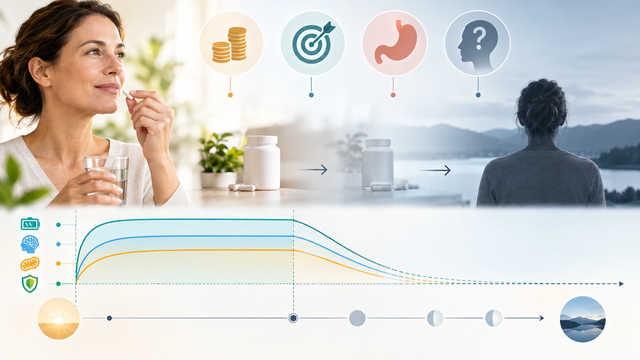
NMN and Diabetes: Insulin Sensitivity, Glucose & HbA1c Evidence
NMN improved muscle insulin sensitivity in one major prediabetes trial, but meta-analyses show no consistent benefit for fasting glucose or HbA1c. Here's how both findings can be true.
 By
Dr. Khaled Mahmoud, MBBCh
Critical Care Medicine, Longevity Science & Editorial Direction
By
Dr. Khaled Mahmoud, MBBCh
Critical Care Medicine, Longevity Science & Editorial Direction
 Reviewed by
Dr. Amr Yasser, PhD
Cardiometabolic, Musculoskeletal, Gut & Bioavailability
Reviewed by
Dr. Amr Yasser, PhD
Cardiometabolic, Musculoskeletal, Gut & Bioavailability
 Reviewed by
Dr. Abdulla Mostafa, PhD
Cellular Senescence, Neurological, Mitochondrial & Brain-Ageing Biology
Reviewed by
Dr. Abdulla Mostafa, PhD
Cellular Senescence, Neurological, Mitochondrial & Brain-Ageing Biology
- Published
- Last reviewed
- Reading time
- 6 min
- Sources cited
- 7
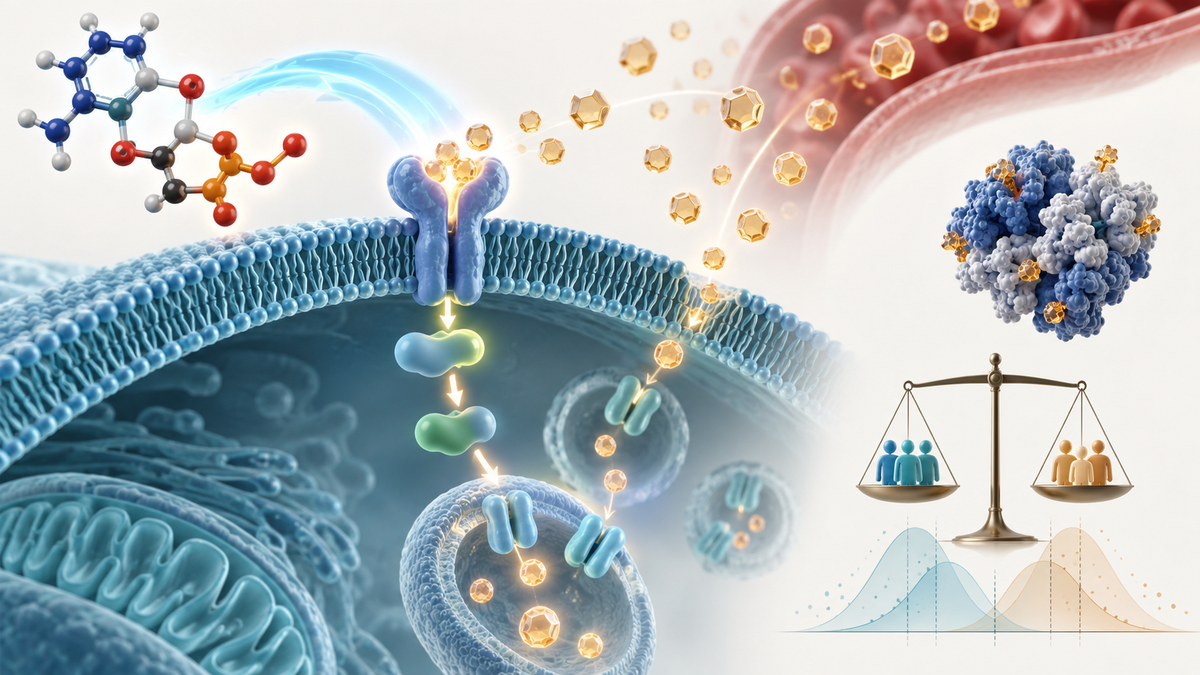
On this page
NMN diabetes research contains one important positive insulin-sensitivity trial, but the broader glucose-control evidence is mostly neutral. NMN should not be described as a diabetes treatment: pooled trials have not shown reliable reductions in fasting glucose, HbA1c or routine insulin-resistance markers.
NMN and diabetes: evidence summary
| Outcome | Evidence | Conclusion |
|---|---|---|
| Muscle insulin sensitivity | Positive RCT in postmenopausal women with prediabetes | Promising |
| Fasting glucose | Meta-analyses | No consistent pooled reduction |
| Fasting insulin | Meta-analyses | No consistent pooled reduction |
| HbA1c | Meta-analyses | No significant pooled benefit |
| HOMA-IR | Mixed; subgroup signals in some analyses | Uncertain |
| Physical function in older adults with diabetes | Randomized study | Disease-specific functional data |
| Retinal thickness in diabetes | 2026 secondary analysis | Exploratory |
| Diabetes prevention | No definitive trial | Unproven |
Why “insulin sensitivity” and “blood sugar” are not the same result
The strongest NMN metabolic trial used a hyperinsulinemic-euglycemic clamp, one of the most detailed research methods for measuring how tissues respond to insulin. Twenty-five postmenopausal women with prediabetes and overweight or obesity completed the study; 13 received 250 mg/day NMN and 12 placebo for 10 weeks. [1]
Insulin-stimulated glucose disposal increased, and skeletal-muscle AKT/mTOR insulin signaling changed. Yet hepatic and adipose-tissue insulin sensitivity did not improve, and clinically familiar measures such as fasting glucose, HbA1c, body composition, blood pressure and lipids did not show the same broad benefit. [2]
That is not a contradiction. A clamp asks how effectively insulin drives glucose disposal under controlled experimental conditions. Fasting glucose and HbA1c reflect different physiology over different timescales.
How large was the muscle insulin-sensitivity signal?
The original report described approximately a 25% improvement in muscle glucose disposal relative to pretreatment in the NMN group, with corresponding cellular signaling changes. [3]
The trial deserves attention precisely because it was randomized, double-blind and mechanistically deep. Its sample was still only 25 people, all postmenopausal women with a specific metabolic phenotype. Replication in men, younger adults and established type 2 diabetes is necessary before making a general metabolic claim.
What happened to NAD+ in the Yoshino trial?
PBMC NAD+ content increased after chronic NMN supplementation, while skeletal-muscle NAD+ concentration itself did not clearly rise. Muscle NMN-derived metabolites increased, suggesting altered NAD turnover. [4]
This is another reason a blood NAD measurement should not be treated as a direct proxy for every tissue. Different cells can regulate uptake, synthesis, turnover and degradation differently.
What do the meta-analyses show?
A 2024 meta-analysis pooled eight randomized trials involving 342 adults and found no significant benefit for fasting glucose, fasting insulin, HbA1c, HOMA-IR or the lipid profile. [5]
A larger 2025 synthesis included 12 studies with 513 participants. It again found that NMN increased blood NAD-related measures while most clinically relevant glucose and lipid endpoints did not significantly improve. Importantly, the authors judged seven studies to have some risk-of-bias concerns and five to have high risk. [6]
The 2026 broad meta-analysis reached the same general boundary: no significant pooled fasting-glucose or HbA1c improvement, with HOMA-IR trending downward but not meeting conventional statistical significance. [7]
What about lower-dose HOMA-IR findings?
A 2025 muscle/liver meta-analysis reported a dose-subgroup signal for HOMA-IR and a small ALT effect. [8] Subgroup analyses can generate useful hypotheses, but they are not a basis for declaring that low-dose NMN treats insulin resistance better than high-dose NMN. A prospective dose-ranging metabolic trial would need to test that directly.
NMN in older adults with type 2 diabetes
Akasaka and colleagues studied older patients with diabetes who also had impaired physical performance. [9] The trial expands the evidence beyond prediabetes but focuses heavily on physical function rather than demonstrating that NMN is a glucose-lowering drug.
A later paper examined retinal thickness using data from an older diabetic cohort. [10] Because it is a secondary analysis, it should not be counted as a separate independent diabetes trial or interpreted as established treatment of diabetic retinopathy.
Can NMN prevent progression from prediabetes to diabetes?
No trial has been large enough or long enough to answer that clinical question. Prevention studies typically need hundreds or thousands of participants and long follow-up because the outcome is conversion to diagnosed diabetes, not a short-term change in a laboratory pathway.
A ten-week improvement in muscle insulin sensitivity is a promising mechanistic signal. It does not demonstrate fewer future diabetes diagnoses.
NMN compared with established diabetes interventions
| Intervention type | Evidence maturity | Typical target |
|---|---|---|
| Weight loss, activity, dietary interventions | Large prevention and treatment evidence base | Insulin resistance, glucose control, cardiovascular risk |
| Metformin and guideline-directed medication | Large clinical evidence base | Glycemic control and condition-specific outcomes |
| GLP-1/SGLT2 and other indicated therapies | Large modern outcome programs for appropriate patients | Glycemia, weight and/or cardiovascular/renal outcomes depending on drug |
| NMN | Small RCTs and mechanistic studies | NAD biology; exploratory metabolic effects |
Could NMN interact with glucose-lowering medication?
No dedicated pharmacokinetic interaction trial establishes a major interaction with metformin, insulin or GLP-1 drugs. But a supplement capable of changing insulin sensitivity is not automatically physiologically irrelevant. People whose medication is being titrated should base decisions on measured glucose and clinical guidance rather than assumptions. See the NMN drug-interactions page.
What research would settle the diabetes question?
- A larger randomized trial in people with established type 2 diabetes.
- At least six to twelve months of follow-up for HbA1c and durability.
- Standardized background medication and prespecified hypoglycemia monitoring.
- Clamp or oral-glucose-tolerance measurements alongside routine HbA1c.
- Separate analysis of liver, adipose and muscle insulin sensitivity.
- Clinical outcomes such as progression from prediabetes, medication intensification or validated microvascular endpoints.
The evidence-based interpretation
NMN has one of the more interesting human metabolic signals in the longevity-supplement field: a carefully measured improvement in skeletal-muscle insulin sensitivity. The mature interpretation is not to ignore it and not to exaggerate it. The signal is real enough to justify larger trials, while pooled routine glucose outcomes remain too neutral to call NMN a diabetes treatment.
Related NMN guides
Bottom line
NMN and diabetes is a story of an important positive mechanistic trial inside a broader mostly neutral glucose-outcomes literature. The honest claim is that NMN may affect insulin sensitivity in certain populations—not that it treats or prevents diabetes.
Frequently asked questions
Does NMN lower blood sugar?
Does NMN improve insulin resistance?
Is NMN good for prediabetes?
Can NMN lower HbA1c?
Can people with type 2 diabetes take NMN?
Can NMN replace metformin?
Does NMN help diabetic neuropathy or retinopathy?
What dose of NMN was used for insulin sensitivity?
Sources & article history
Sources (7)
-
Nicotinamide mononucleotide increases muscle insulin sensitivity in prediabetic women Science. 2021;372(6547), 1224-1229.
-
Effects of Nicotinamide Mononucleotide on Glucose and Lipid Metabolism in Adults: A Systematic Review and Meta-analysis of Randomised Controlled Trials Current Diabetes Reports. 2024;25(1):4.
-
Efficacy of oral nicotinamide mononucleotide supplementation on glucose and lipid metabolism for adults: a systematic review with meta-analysis on randomized controlled trials Critical Reviews in Food Science and Nutrition. 2025;65(22):4382–4400.
-
Safety and Metabolism-Related Outcomes of Oral Nicotinamide Mononucleotide Supplementation in Adults: A Systematic Review and Meta-Analysis Nutrients. 2026;18, 2251.
-
Effects of Nicotinamide Mononucleotide Supplementation on Muscle and Liver Functions Among the Middle-aged and Elderly: A Systematic Review and Meta-analysis of Randomized Controlled Trials Current Pharmaceutical Biotechnology. 2025;26(13):2141–2152.
-
Effects of nicotinamide mononucleotide on older patients with diabetes and impaired physical performance: A prospective, placebo-controlled, double-blind study Geriatrics & Gerontology International. 2023;23(1):38-43.
-
Effect of Nicotinamide Mononucleotide on Retinal Thickness of Older Patients With Diabetes Mellitus: A Placebo-Controlled, Double-Blind Study Geriatrics & Gerontology International. 2026;26(5):e70516.