NMN and Cancer: Risk, Chemotherapy & Conflicting 2026 Evidence
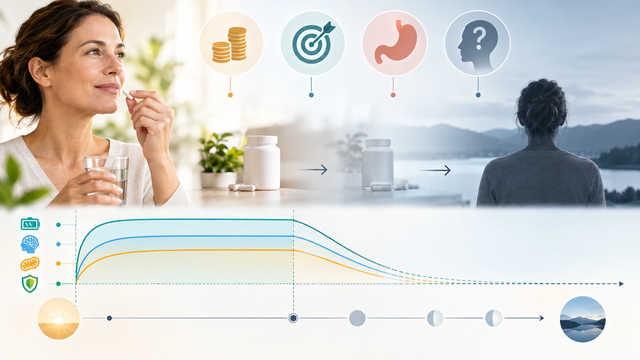
Two 2026 preclinical papers point in different directions: NMN supported chemotherapy resistance in pancreatic-cancer models but enhanced antitumor macrophage activity in a mesothelioma model. No human cancer benefit or causation is established.
 By
Dr. Khaled Mahmoud, MBBCh
Critical Care Medicine, Longevity Science & Editorial Direction
By
Dr. Khaled Mahmoud, MBBCh
Critical Care Medicine, Longevity Science & Editorial Direction
 Reviewed by
Dr. Amr Yasser, PhD
Cardiometabolic, Musculoskeletal, Gut & Bioavailability
Reviewed by
Dr. Amr Yasser, PhD
Cardiometabolic, Musculoskeletal, Gut & Bioavailability
 Reviewed by
Dr. Abdulla Mostafa, PhD
Cellular Senescence, Neurological, Mitochondrial & Brain-Ageing Biology
Reviewed by
Dr. Abdulla Mostafa, PhD
Cellular Senescence, Neurological, Mitochondrial & Brain-Ageing Biology
- Published
- Last reviewed
- Reading time
- 7 min
- Sources cited
- 3
On this page
NMN cancer research cannot be reduced to “safe” or “dangerous.” There is no human evidence that NMN causes cancer or treats it, while 2026 preclinical studies point in opposite directions depending on tumor context. Active cancer treatment deserves the most caution because one pancreatic-cancer model found reduced chemotherapy effectiveness.
For active cancer, “NMN is safe because NAD+ is natural” and “NMN feeds all cancer” are both too simplistic.
Why cancer and NAD+ are complicated
Every proliferating cell needs energy, redox control and DNA-repair capacity. Cancer cells often rewire these pathways. NAD+ can support metabolism and repair in normal tissues, but the same resources can be exploited by malignant cells.
At the same time, tumor immunity depends on immune-cell metabolism, and changing NAD+ availability can alter macrophages and other immune cells in ways that sometimes oppose tumor growth.
Why this question cannot be answered by “NAD+ is good” or “cancer needs energy”
NAD+ is fundamental to cellular metabolism, redox balance and DNA-repair signaling. Normal tissues need it, immune cells need it and cancer cells can need it. That means both pro-survival and antitumor effects are biologically plausible depending on context.
The cancer question is therefore not whether NAD+ is “good” or “bad.” It is what happens in a particular tumor, at a particular stage, under a particular treatment, with a particular dose and immune environment.
The pancreatic-cancer study: why oncologists should care
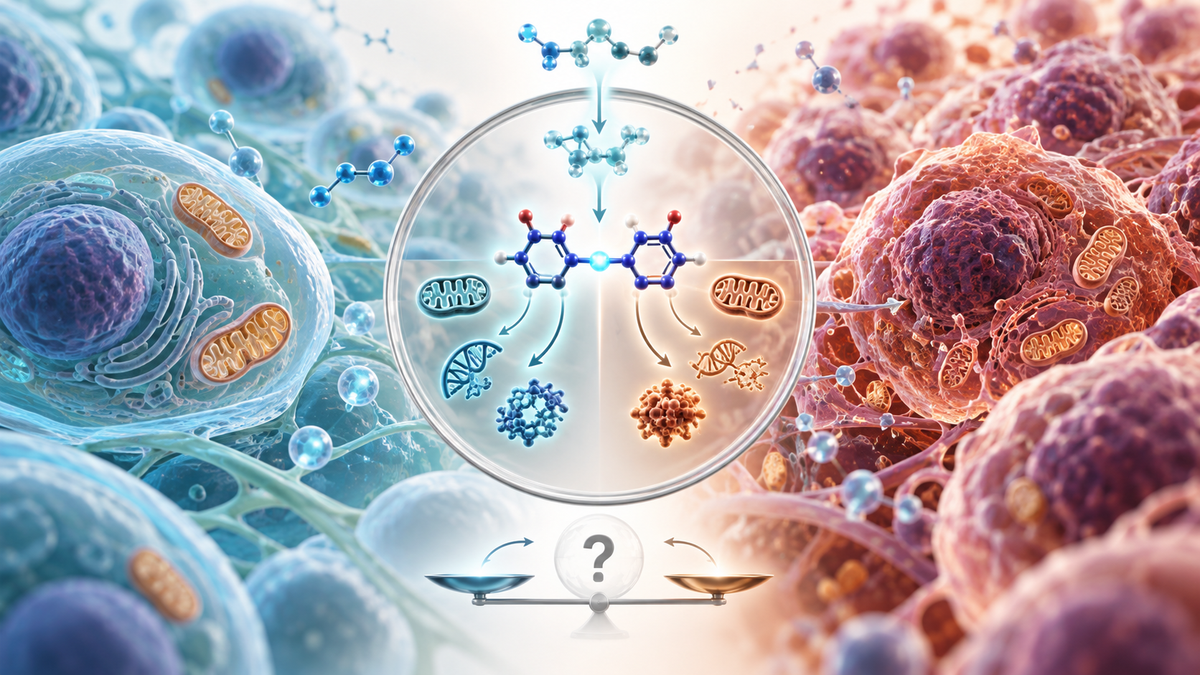
The 2026 Cancer Letters paper tested vitamin B3 derivatives in pancreatic ductal adenocarcinoma cells and mouse models. NMN increased intracellular NAD+, reduced oxidative stress under treatment pressure, enhanced DNA-repair signaling and reduced apoptosis in several experiments. [1]
Most importantly, NMN increased resistance to oxaliplatin, 5-fluorouracil and gemcitabine in model systems and reduced chemotherapy effectiveness in mice under tested conditions. [2]
That is not a human interaction trial. Yet it is more clinically relevant than a generic cell-growth study because it directly asks whether NAD precursors can alter response to commonly used chemotherapy stress.
The mesothelioma study: why the biology is not one-directional
In the opposing 2026 Molecular Therapy Oncology paper, high-dose NMN altered immune-cell NAD metabolism and shifted tumor-associated macrophages toward a more inflammatory M1-like phenotype. Tumor progression was suppressed in a murine mesothelioma model. [3]
This result does not prove that NMN is safe in pancreatic cancer or that the first study was wrong. One experiment centered on tumor-cell survival under chemotherapy; the other identified an immune-microenvironment effect in a different tumor type.
What do human NMN trials tell us about cancer risk?
Very little directly. Most randomized NMN trials enroll tens of participants and last weeks to months. They can identify common short-term symptoms and laboratory changes. They cannot reliably detect whether a supplement changes cancer incidence five or ten years later.
The 2026 meta-analysis is reassuring for short-term adverse events and liver enzymes but was not designed to answer carcinogenesis. [4]
Why cancer incidence requires a completely different evidence scale
Suppose a hypothetical supplement changed annual cancer risk by a small amount. A 12-week study with 40 participants would almost certainly see zero cancers in both groups even if a true long-term difference existed. Absence of cancer events in a short trial is therefore not evidence of long-term cancer neutrality.
This is the same reason drug carcinogenicity assessment relies on multiple evidence streams rather than short efficacy trials alone.
Active cancer versus cancer prevention versus survivorship
| Situation | What we know | Evidence-based stance |
|---|---|---|
| Healthy person asking about future cancer risk | No human causation signal; long-term data inadequate | Uncertain, not proven harmful or protective |
| Active cancer without treatment | No clinical NMN efficacy evidence | Do not use as anticancer therapy |
| Receiving chemotherapy | Concerning pancreatic-cancer preclinical interaction data | Oncology-team decision |
| Cancer survivor in remission | No universal survivor trial | Cancer-specific assessment |
| Cancer prevention | No incidence-prevention trial | Not established |
What about hormone-sensitive cancers?
There is no adequate human evidence showing that NMN is safe or unsafe specifically in estrogen-receptor-positive breast cancer, prostate cancer or other hormone-sensitive malignancies. These questions cannot be answered by the pancreatic or mesothelioma studies.
Ongoing endocrine therapy, targeted therapy and recurrence risk are additional reasons a survivor should discuss the supplement with the treating team.
Does NMN protect normal cells during chemotherapy?
No human trial has shown that NMN safely protects normal cells during chemotherapy without also affecting tumor response. A compound that protects normal tissues from treatment toxicity would be valuable if it did not also protect malignant cells. The pancreatic-cancer study illustrates exactly why that balance has to be tested rather than assumed. A cytoprotective mechanism can be beneficial in one tissue and undesirable in the tumor.
How NMN cancer marketing can go wrong in both directions
- Claiming NMN causes cancer from a preclinical model overstates causality.
- Claiming NMN prevents cancer because it supports DNA repair ignores tumor-cell biology.
- Claiming NMN treats cancer from a mouse immune study is clinically unsupported.
- Claiming short NMN trials prove long-term cancer safety misunderstands trial duration and statistical power.
- Claiming all cancers respond the same ignores tumor heterogeneity.
What evidence would change the answer?
Human observational follow-up could provide early long-term safety signals, but active-treatment questions require prospective oncology studies. The ideal evidence would be tumor-specific and therapy-specific, measuring response rate, progression and toxicity rather than only NAD biomarkers.
Our practical rule
For healthy adults, cancer concern is an unresolved long-term safety question rather than a demonstrated reason that NMN causes malignancy. For active cancer—especially cytotoxic chemotherapy—the threshold for caution is much lower because the preclinical interaction signal has direct treatment relevance.
The cancer evidence is context-dependent
| Evidence | Model | Finding | What it means for people |
|---|---|---|---|
| Pancreatic-cancer study, 2026 | Preclinical tumor models | NMN supported survival under several chemotherapy stresses | Reason for oncology caution during active treatment |
| Mesothelioma/macrophage study, 2026 | Preclinical immune-tumor model | Antitumor immune effects in that context | Shows NAD biology is not uniformly pro-tumor |
| Human NMN trials | Short-term adult supplementation | No clear cancer signal | Too small/short to answer carcinogenesis or recurrence risk |
The pancreatic-cancer paper is the most treatment-relevant warning signal in the current NMN literature. [5] The contrasting macrophage study underscores why the pathway cannot be labeled simply “cancer-promoting” or “cancer-fighting.” [6]
Why ordinary NMN trials cannot answer carcinogenesis
Most human studies follow dozens of people for weeks or months. Cancer incidence and recurrence are low-frequency, long-latency outcomes that usually require much larger cohorts and years of follow-up. “No cancers occurred in a short trial” is therefore weak evidence for long-term cancer safety.
What should a cancer survivor do?
There is no universal evidence-based recommendation for NMN after cancer treatment; decisions should be individualized with the oncology team. Survivorship is not one category. The relevance of NAD augmentation may differ by tumor type, treatment history, recurrence risk and ongoing endocrine, targeted or immune therapy. A blanket “safe after cancer” rule is not supported by evidence.
Related NMN guides
Bottom line
NMN and cancer is one of the clearest places where longevity marketing should yield to biological humility. Current data are preclinical and point in different directions. Healthy-adult safety trials do not prove long-term cancer safety, and mouse tumor studies do not prove human harm or benefit. Active cancer treatment deserves oncology-specific guidance.
Frequently asked questions
Does NMN cause cancer?
Does NMN feed cancer cells?
Can NMN fight cancer?
Can I take NMN during chemotherapy?
Is NMN safe after cancer treatment?
What about NMN after breast cancer?
Does raising NAD+ increase cancer risk?
Why do NMN cancer studies conflict?
Sources & article history
Sources (3)
-
Vitamin B3 derivatives support pancreatic cancer cell survival and chemotherapy resistance Cancer Letters. 2026;645:218334.
-
Nicotinamide mononucleotide enhances anti-tumor effect by resetting macrophages toward the inflammatory M1-like phenotype Molecular Therapy Oncology. 2026;34(2):201221.
-
Safety and Metabolism-Related Outcomes of Oral Nicotinamide Mononucleotide Supplementation in Adults: A Systematic Review and Meta-Analysis Nutrients. 2026;18, 2251.